What To Bring On A Madrid Bike Tour
Guided rides in Madrid include the bike and a guide, and most include a helmet and bottled water. Everything else, from sunscreen to a charged phone, is on you.
Short answer
"Bring photo ID, a water bottle, sunscreen, sunglasses, closed shoes, comfortable clothes, a phone with a full battery, and a small crossbody bag or daypack. Most Madrid tours provide the bike and helmet, but only nine of the 29 include bottled water, so the packing list depends on the tour you book.
Riding a bike through Madrid is one of the simpler activities to pack for, because the heavy item, the bicycle itself, is always provided. Most guided tours covered here include the bike and the guide in the ticket price. What varies is everything around the bike: whether a helmet comes with it, whether water is handed to you at the meeting point, and whether the price stays flat if your group changes size.
The differences matter. Two tours leaving from streets a few blocks apart can differ by a helmet, a bottle of water and ten dollars, and none of that is obvious until you are standing at the meeting point. This page lays out what to carry, what the operators provide, and how Madrid's specific conditions, dry summer heat, cool winter mornings and a helmet law for riders under 18, should shape the bag. For the broader question of how the ride formats compare, the Madrid highlights bike tour guide covers routes and operators in detail.
What Should You Bring On A Madrid Bike Tour?
Bring a small daypack or crossbody bag with photo ID, a filled water bottle, sunscreen, sunglasses, closed-toe shoes, weather-appropriate clothing, a fully charged phone and a small amount of cash or a contactless card. That covers every tour on this site. The bike is always provided and a guide comes with nearly every ride, so the packing problem is personal gear, not equipment, and almost all of it fits in one small bag.
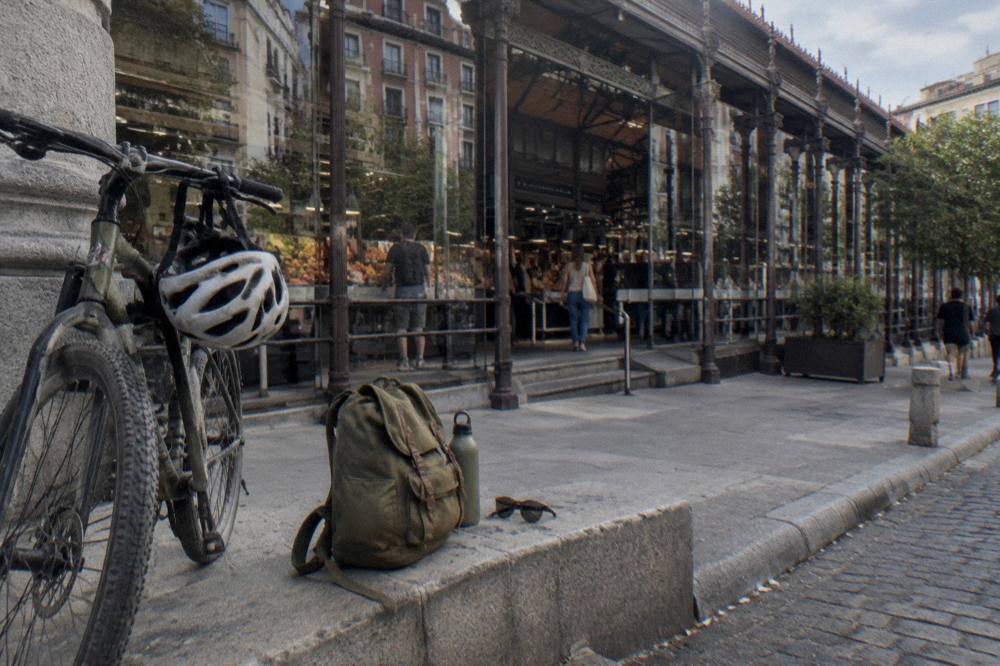
Start with the documents. A photo ID is worth carrying because several meeting points sit next to ticketed landmarks. A phone with a full battery serves as camera, map and booking confirmation in one, and a small power bank is a reasonable addition if you plan to photograph the whole ride.
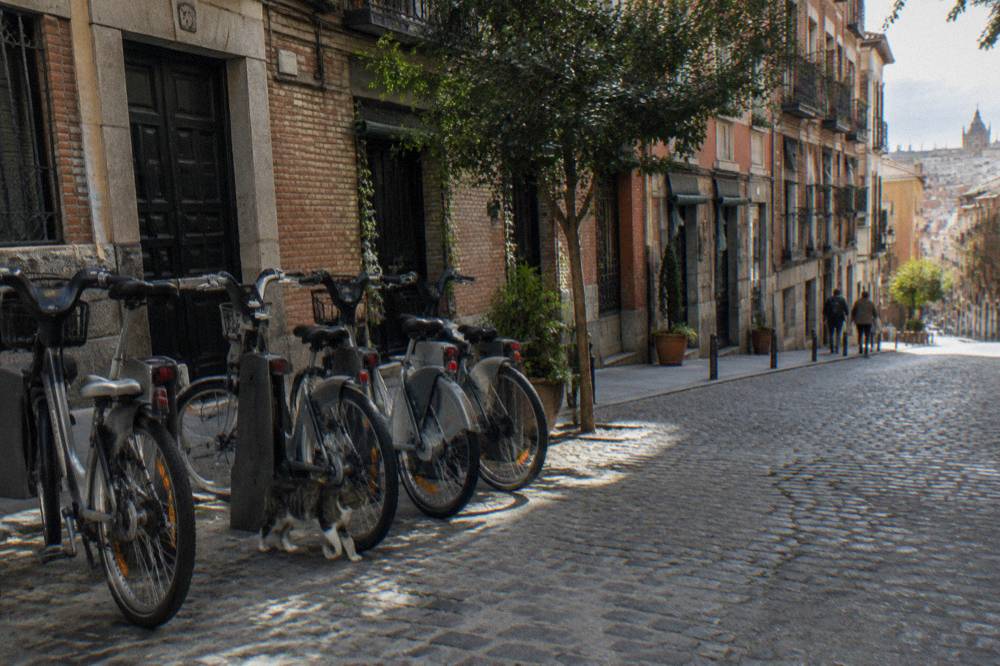
Footwear deserves more thought than it usually gets. Madrid's guided rides spend most of their time on flat terrain and calm streets, but classic-centre routes cross cobbled sections near the Royal Palace and Plaza Mayor where thin-soled shoes transmit every stone. Closed-toe shoes with a firm sole are the practical choice; sandals can work but lose on comfort and safety. Clothing guidance has its own section below, and it changes with the season more than visitors expect.
The bag itself should be small and wearable, not handheld. Riders need both hands on the bars through intersections, and a phone in one hand is both illegal under city rules and a genuine hazard. A crossbody bag worn tight, or a small daypack, works on every route here. Larger bags can usually be left at the meeting point, but ask the operator in advance rather than assuming; there is no universal left-luggage policy across the tours.
What Do The Tours Themselves Provide?
Nearly every tour covered here includes the bike and the guide in the price. Beyond those two constants, coverage splits: some tours add a helmet, some add bottled water, and a few add neither. The table below shows the extras for three popular rides, so you can match your packing list to what your specific tour already hands you at the meeting point.
| Tour | From price | What the ticket includes | What it does not |
|---|---|---|---|
| 3-Hour Highlights Bike Ride | $32.14 | Bike, helmet, guide, bottled water, choice of regular bike or e-bike | Food and drinks, gratuities, Royal Palace admission |
| Optional Tapas Highlights Ride | $33.00 | Bike, guide, optional tapas add-on | Bottled water, Royal Palace admission |
| Vintage Bike, Optional Tapas | $29.00 | Bike, helmet, guide, bottled water, vintage bike | Gratuities, Royal Palace admission |
Read the fine print in the right-hand column before you pack. The Optional Tapas Highlights Ride does not include bottled water, so riders on that tour carry their own from the start. The vintage ride runs larger groups, up to 50 riders, while the highlights ride caps at 15; group size does not change the packing list, but it does change how much space you have in a photo stop. E-bike and pedal-bike choices are offered on the highlights ride, so riders who want the easier option should confirm e-bike availability when booking rather than on the day.
The three rides above are the ones most visitors compare first, and they also illustrate the price band for classic three-hour centre tours, from $29.00 to $33.00 per person before extras. If you are still choosing between them, the selection below puts the most-reviewed option next to the two tapas-flavoured alternatives:
One more distinction that trips people up: a tapas option is not a meal. Only one tour on this site, the 5-Hour Food E-Bike, All Inclusive, includes an actual lunch in the ticket. The two tapas tours above sell food as an add-on, which means riders on them should either book the add-on or pack for a post-ride meal. The meeting points cluster in the centre, near C. de Felipe IV, C. del Espejo and the surrounding streets, so a café stop afterwards is easy in practice; the meeting-point guide has the details.
How Much Water And Sun Protection Do You Need In Madrid?
Plan on at least half a litre of water for a two-hour ride and a full litre for three hours in summer, plus SPF 30 or higher sunscreen, sunglasses and a hat for stops. Madrid's Retiro weather station sits at 667 metres of elevation, and its climate records reflect dry air and strong sun; the city averages about 100 clear days a year, and July means daily highs around 32.1 °C.
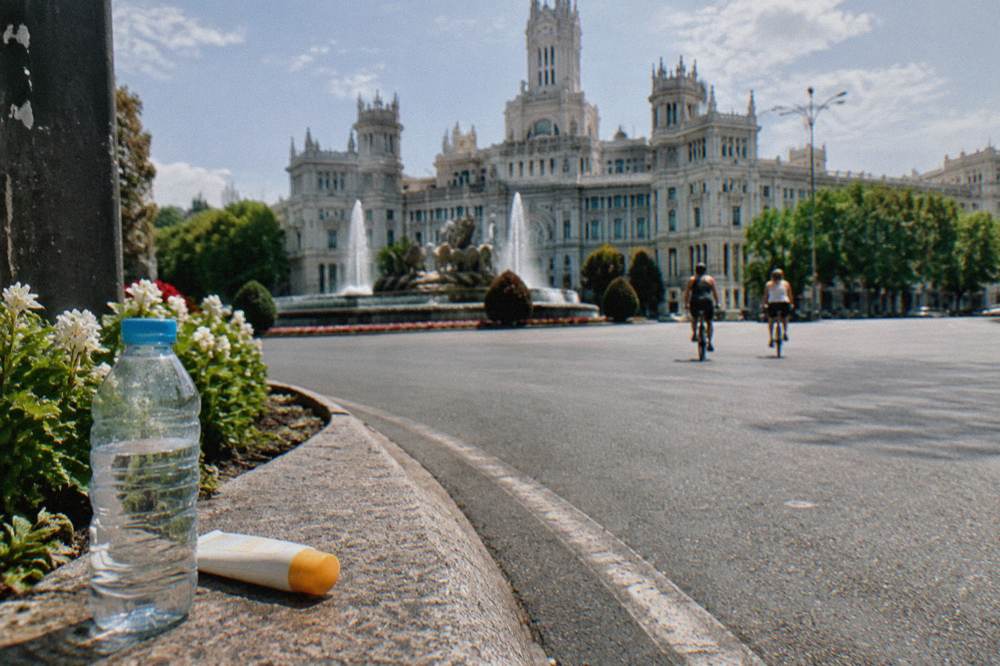
The climate numbers come from the official AEMET normals recorded at Madrid Retiro, and they tell a clear story. July and August each average just 1.7 rain days, which is why the rain jacket can stay home in summer while the water bottle cannot. The trade-off is heat: mean daily maximums of 32.1 °C in July and 31.3 °C in August, on a bike, in direct sun, for three hours. Riders booking the 3-Hour Highlights Bike Ride get bottled water in the ticket, and that single bottle is a start rather than the whole answer on a July afternoon.
Sun protection is the item visitors most often under-pack. Sunscreen needs to go on before the ride and ride along in the bag for reapplication at a stop, because three hours of city cycling exposes more skin than three hours of walking. Sunglasses do double duty against glare and against the dust and insects that come with any urban ride. October is the wettest month at 60 mm of rain, and November follows at 58 mm, so from early autumn onward add a packable rain layer; one operator's tour description notes its rides run rain or shine, with a rain poncho available for purchase.
For a deeper look at the summer problem, the cycling Madrid summer heat guide works through timing, hydration and route choice month by month.
What Should You Wear On A Madrid Bike Tour?
Wear comfortable, breathable clothing you can move in, closed-toe shoes with a firm sole, and layers you can shed or add. From May through September that means light fabrics and sun cover; from November through March it means a warm mid-layer and a windproof outer, since January averages just 6.3 °C. Helmets are provided on many tours, so skip bulky hairstyles and bring a hair tie.
Layering is the operative principle because Madrid swings hard between day and evening. Summer evenings after a 32 °C afternoon can feel cool on a moving bike, and winter rides that start comfortably at noon can end in a cold wind. A light layer tied around the waist or stuffed in the daypack costs nothing to carry and solves both problems. Avoid long loose scarves or wide-flowing trousers that can catch on a chain or a pedal; fitted or tapered legs are the safer choice on any bike.
- City Highlights Rides$29
- Parks And Madrid Río Rides$33.29
- Night And Sunset Rides$40.18
- Day Trips From Madrid$40.18
- E-Bike Tours$41.33
- Private Bike Tours$43.63
Footwear repeats the point from the first section because it is the one clothing item that affects safety rather than just comfort: firm, closed soles on cobbles. Colour is a minor consideration, but light colours measurably help in July and August. If your tour includes the Retiro or the riverside paths, expect some unpaved sections where a slightly sturdier shoe again pays off. The full clothing question, including what works for evening rides, has its own page in the what to wear bike tour Madrid guide.
The helmet question deserves a direct answer, and the do you need a helmet on a Madrid bike tour post covers it in full. The short version: Madrid's city rules make helmets mandatory for riders under 18 and recommended for adults, and the tours that include a helmet in the ticket list it explicitly, so check your specific tour and bring your own only if it does not.
What Should Families And Beginners Pack?
Families should pack snacks, a small first-aid item like plasters, and extra water per child. There is no universal minimum age across these tours, so confirm child-seat and age rules with the operator before you go. Beginners should pack confidence-boosters: padded shorts are optional, a fully charged phone is not, and arriving fifteen minutes early matters more than any gadget.
Children burn through water faster than adults relative to size, and a snack prevents the mid-ride mood collapse that no amount of scenery fixes. The group-size caps on the small-group tours, 8 to 15 riders on most, mean a family booking can fill much of the group, which usually makes for a calmer pace. Age and equipment rules for children are set per operator, not by the city, so ask on the booking page rather than relying on general advice; this site prints no minimum ages beyond what each operator states.
Beginners have a simpler list, because the guided format removes most decisions. The route, the pace and the traffic handling belong to the guide, and Madrid's central streets move slowly enough that new cyclists manage them well; the Madrid bike tour for beginners guide walks through that in detail. If a three-hour first ride feels long, the 2.5-Hour Bike or E-Bike tour, rated 4.5 across 815 reviews from $31.00 per person, is a proven shorter entry point:
Both formats let the rider choose a regular bike or an e-bike, which is the single most useful beginner option in Madrid given the gentle but persistent rises toward Retiro and the western parks.
Should You Bring Cash, A Phone Or A Camera?
Bring a phone with a full battery and a contactless card, plus a small amount of cash if you plan to buy tapas, a coffee or a poncho. Madrid is overwhelmingly card-friendly, but tour add-ons and small kiosks occasionally prefer cash. A dedicated camera is optional; a phone handles photos well, and one tour is built entirely around them.
The phone is the single most useful object in the bag: booking confirmation, map, camera and emergency contact in one. Carry it in a pocket or bag, never in hand, since Madrid's city cycling rules prohibit using a phone while riding, along with headphones connected to any audio device. A power bank earns its space on longer days, especially if the ride is one stop among several on your itinerary.
Money questions cluster around the add-ons. The tapas options on two of the tours above are paid extras, one operator sells rain ponchos and bottled water on board, and the coffee-and-tea line on one tour is an excluded item rather than an included one. A contactless card covers nearly everything in Madrid, but a modest cash buffer keeps an optional food stop frictionless.
Photography-minded riders have a purpose-built option. The Photo Ride, Small Group, rated 5.0 across 71 reviews from $56.25 per person, caps the group at 8 and spends its three hours on photo stops with a photographer-guide, so riders who want the images should carry their phone or camera charged and ready. It is one of four tours on this site with a perfect 5.0 rating, and the only one of them that is a photo tour by design:
For everyone else, the standard advice holds: bring the phone, keep it accessible, and let the stops do the work.
What Does Madrid Weather Mean For Your Packing?
Madrid's dry, continental climate means summer packing is about heat and sun, autumn and spring about a rain layer, and winter about real warmth, with January averaging 6.3 °C. October is the wettest month at 60 mm and November follows at 58 mm, while July and August combine 32 °C daytime highs with barely two rain days each, so the bag changes more here than in coastal Spain.
The seasonal logic, using AEMET's normals for the Retiro station:
| Season | Typical daytime high | Rain days per month | Packing emphasis |
|---|---|---|---|
| Winter, Dec to Feb | 10.0 to 12.0 °C | 5.2 to 6.8 | Warm layers, gloves, windproof outer |
| Spring, Mar to May | 16.3 to 22.2 °C | 4.1 to 7.3 | Light layers, packable rain jacket |
| Summer, Jun to Aug | 28.2 to 32.1 °C | 1.7 to 3.4 | Water, sunscreen, sunglasses, light colours |
| Autumn, Sep to Nov | 13.5 to 26.4 °C | 3.3 to 6.9 | Layers, rain layer from October |
Two details surprise visitors. First, the dryness: 421 mm of rain across the whole year is low by European standards, so the rain jacket is a contingency, not a daily carry, except in October and November. Second, the strength of the sun at 667 metres of elevation, which makes sunscreen a year-round habit rather than a summer one. Thunderstorm activity peaks in May and June, worth knowing if you are booking a sunset ride in late spring. If you are choosing your travel dates around the ride, the best time to cycle Madrid guide compares the months in detail.
Winter riders should take the cold seriously on a bike, because wind chill turns a mild 10 °C afternoon into a cold one at cycling speed. Gloves and a windproof layer matter more than a heavy coat, which then becomes a burden on any climb. Whatever the season, Madrid Bike Tours recommends checking your specific tour's included list before packing, because the difference between bringing water and being handed it is exactly the kind of detail that shapes the bag.
| Item | Summer | Winter | Provided by most tours? |
|---|---|---|---|
| Bike and guide | Needed | Needed | Yes, on nearly every tour |
| Helmet | Recommended for adults | Recommended | Included on many, check your tour |
| Bottled water | Essential, 1 L or more | Useful, 0.5 L | Included on several, not all |
| Sunscreen SPF 30+ | Essential | Recommended | No |
| Sunglasses | Essential | Useful | No |
| Rain layer | Rarely needed | Useful | No, purchasable on one tour |
| Warm gloves | Not needed | Essential | No |
Common Questions About What To Bring On A Madrid Bike Tour
What Should You Bring On A Madrid Bike Tour?
Photo ID, a water bottle, sunscreen, sunglasses, closed-toe shoes, comfortable layered clothing, a charged phone and a contactless card. The bike and guide are always included; helmets and bottled water depend on the tour, so check your specific booking page.
Do Madrid Bike Tours Include Water?
Several do, including the 3-Hour Highlights Bike Ride and the Vintage Bike tour, both of which list bottled water as included. The Optional Tapas Highlights Ride lists bottled water as not included, so riders on that tour carry their own.
Do You Need To Bring A Helmet?
Usually not. Many tours include a helmet in the ticket, and the city requires helmets only for riders under 18, recommending them for adults. Check whether your specific tour includes one before packing your own.
What Should You Wear On A Madrid Bike Tour?
Breathable, comfortable clothes you can move in, with layers for the season and closed-toe shoes with a firm sole for the cobbles. Light colours in summer, a windproof layer and gloves in winter, and nothing loose that could catch in the chain.
How Much Water Do You Need For A Madrid Bike Tour?
At least half a litre for a two-hour ride and a litre or more for three hours in summer. Madrid's dry heat and summer highs around 32 °C make hydration the most important item on the list.
Do You Need To Bring Cash?
A contactless card covers almost everything in Madrid, but bring a small cash amount for tapas add-ons, coffee stops or a rain poncho on the one tour that sells them on board.