Do You Need A Helmet On A Madrid Bike Tour?
Madrid helmet rules for cyclists explained: what the city requires, what changed in Spain in October 2026, and which guided Madrid bike tours hand you a helmet at the meeting point.
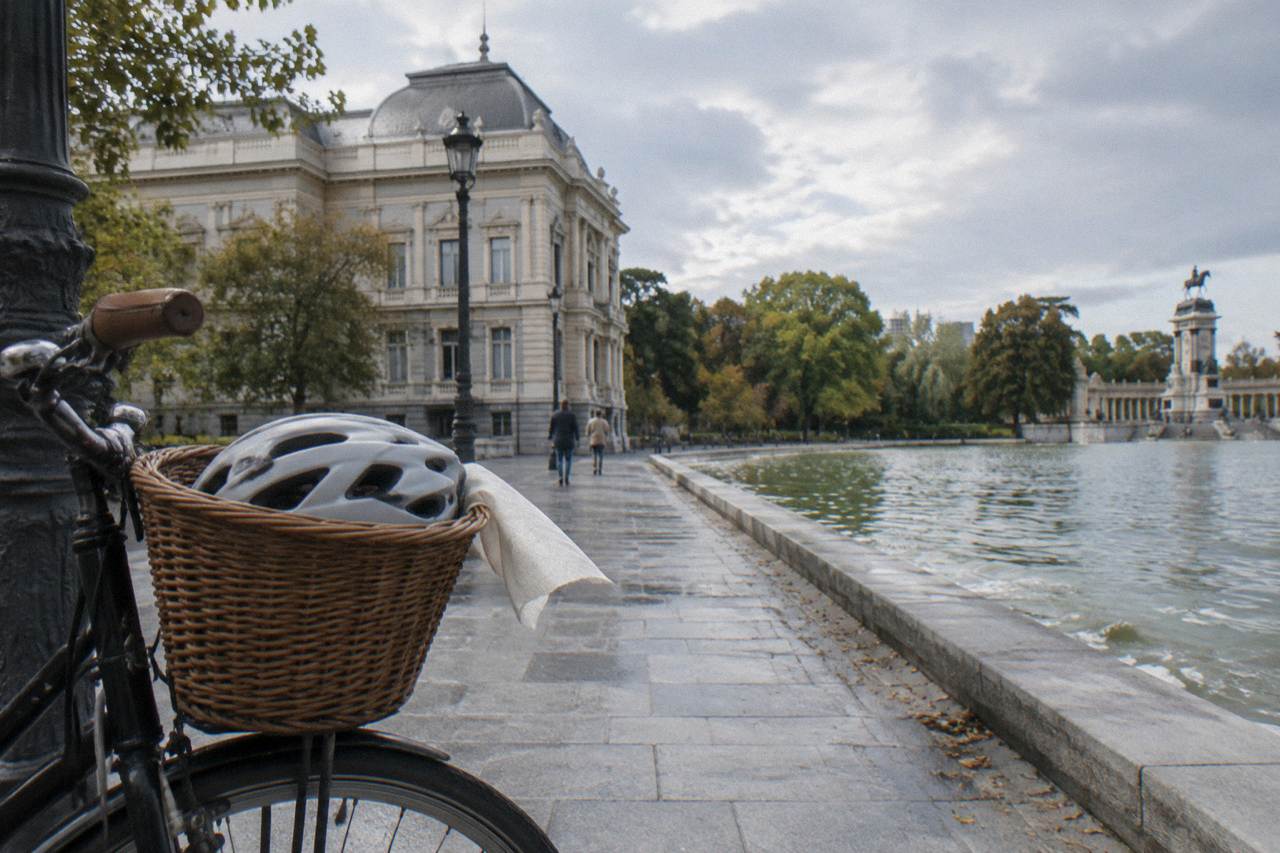
No law forces an adult on a guided Madrid bike tour to wear a helmet inside the city. The Ayuntamiento de Madrid makes helmets mandatory for riders under 18 and recommends them for everyone else. In practice, most guided options either include a helmet in the ticket or offer one, so the decision is less about legality and more about comfort and personal preference on Madrid's streets.
That distinction trips up a lot of visitors, because Spain's national rules and Madrid's city rules do not say exactly the same thing, and a reform that took effect on 1 October 2026 changed parts of the national picture again. A quick tour of the three layers, the city ordinance, the national traffic regulation, and the 2026 reform, settles the question for a rider joining a guided tour in central Madrid.
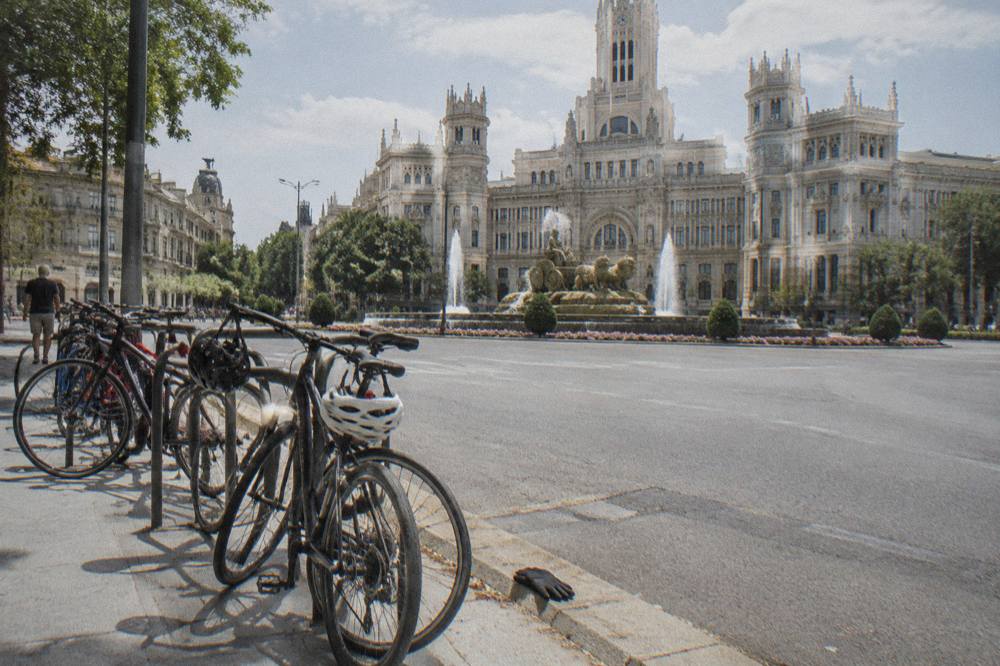
The first layer is local. Madrid's Oficina de la Bici, the city council's cycling office, states plainly that a helmet is mandatory for anyone under 18 riding a bike in the city and recommended for adults. It becomes mandatory for adults only when cycling is an economic activity: delivery riders, rental fleet riders and anyone transporting passengers. For other adult riders, the city treats a helmet as advice, not obligation.
The second layer is national. The Reglamento General de Circulacion, Spain's consolidated traffic regulation, requires helmets on interurban roads and, in the pre-reform text, made them mandatory for under-16s on all roads. Madrid's stricter under-18 rule governs inside the city. Since guided Madrid tours ride urban streets, the city rule is the one that applies to the rides described on this site.
“Super fun way to explore Madrid and see some of the sights! All the stops were great and we covered ones on both sides of the city. Abdul was a great guide and provided really interesting background on each stop! We did the e-bikes and appreciated them when we had to deal with some of the hills.”
The third layer arrived on 1 October 2026. The reform announced by the DGT, Spain's traffic authority, on 23 June 2026 removed the exemptions that had allowed some interurban cyclists to ride without a helmet. For city riding the reform changes little for ordinary adult tourists, but it signals the direction of travel: helmets are being treated as standard equipment, not optional gear. Riders who plan to combine a city tour with a countryside ride, for example out toward El Escorial or Segovia, should read the interurban rule as a firm requirement.
Madrid tours handle the helmet question differently, and the sections below spell out exactly which tickets include one, what the law says, and what to consider for children and e-bike riders. Before that, one practical note: none of this is legal advice, it is a plain-language summary of published rules, and the guide at your meeting point has the final word on equipment for the ride you join. A reader checking helmet rules is usually close to booking, and the tour descriptions state gear inclusions clearly, so the booking page is the place to confirm before you pay.
- City Highlights Rides$29
- Parks And Madrid Río Rides$33.29
- Night And Sunset Rides$40.18
- Day Trips From Madrid$40.18
- E-Bike Tours$41.33
- Private Bike Tours$43.63
What Are The Helmet Rules For Cyclists In Madrid?
Inside Madrid, the city rule is: under 18, helmet mandatory; adult, helmet recommended; adult riding as an economic activity, helmet mandatory. The city FAQ also bans phones and connected headphones while riding, applies standard alcohol limits to cyclists, and requires a white front light and red rear light at night. Helmets for adult leisure riders remain a recommendation, not a requirement.
The Oficina de la Bici FAQ is the source for the city position, and it is refreshingly direct. Bikes belong on the carriageway, riding in the centre of the lane where appropriate, with bike lanes optional unless a sign makes them mandatory. Two cyclists may ride side by side in one lane when it is safe, but not in a reserved bus lane. Pavements and pedestrian streets are closed to bikes except signed bike-pavements, where the cap is 10 km/h, and children under 12 may ride on park paths and, with an adult on foot, on pavements at a walking pace.
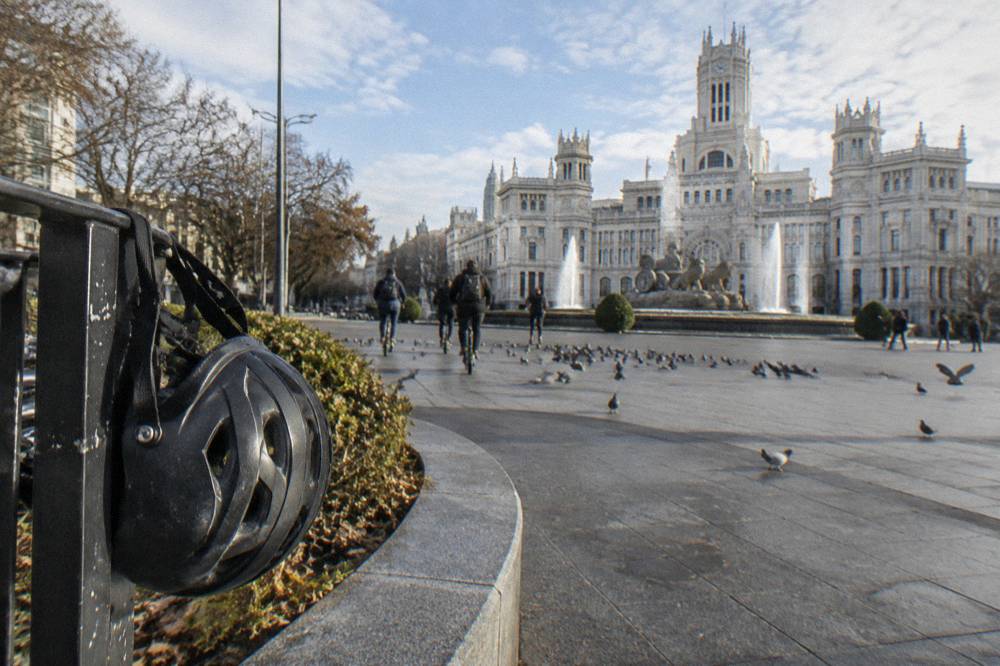
For helmets specifically, the FAQ draws the economic-activity line clearly. Riders cycling as an economic activity (bike rental, delivery, passenger transport) must wear a helmet, and they also need civil-liability insurance. A guided tour sits in an interesting spot here: the guide, who is riding as part of their job, falls under the mandatory rule, while the guests, who are riding for leisure, do not. That is why Madrid rules make a helmet mandatory for anyone riding as an economic activity, while for adult guests it stays a recommendation.
The national picture reinforces rather than overrides the city one for urban riding. The consolidated regulation requires motor vehicles to keep at least 5 m behind a cyclist in the same lane, treats a cycling group as one unit when overtaking, and sets the same alcohol limits for cyclists as for drivers: 0.5 g/l blood or 0.25 mg/l breath. Anyone who wants the full national framework can read it in the consolidated Reglamento General de Circulacion on the BOE site, and the city specifics are in the Oficina de la Bici frequently asked questions published by the Ayuntamiento.
There is a common shortcut claim that helmets are simply mandatory in Spain, and it is wrong in both directions: wrong for adults in Spanish cities, where the rule is a recommendation, and incomplete for under-18s in Madrid, where the city threshold of 18 is stricter than the older national text's 16. A visitor summarizing the rule for the family should remember one line: kids under 18 in Madrid wear a helmet because the city says so, adults wear one because it is sensible, and the tour operator supplies them on many rides regardless.
Which Madrid Bike Rides Include A Helmet?
Many guided Madrid rides include a helmet in the ticket, but not all state it. The 3-Hour Highlights Bike Ride from $32.14 per person, rated 4.9 across 1,989 reviews, lists helmet, bike, guide, bottled water and a group cap of 15 as included. Several other popular rides state the same, while a number of well-reviewed options simply say nothing about helmets, which means asking before booking.
This is where the booking page matters more than the law. Since an adult is not legally required to wear a helmet in the city, operators treat it as a service question, and practice varies. The table below summarizes what the tour descriptions state for a selection of the rides covered on this site. Where a row says not stated, the description does not mention helmets either way, and the right move is a quick question through the booking page before paying.
| Tour | From price per person | Duration | Helmet stated |
|---|---|---|---|
| 3-Hour Highlights Bike Ride | $32.14 | 3 hours | Included |
| Small-Group Highlights Ride | $40.18 | 3 hours | Included |
| Photo Ride, Small Group | $56.25 | 3 hours | Included |
| Optional Tapas Highlights Ride | $33.00 | 3 hours | Not stated |
| Vintage Bike, Optional Tapas | $29.00 | 3 hours | Included |
| 2.5-Hour Bike or E-Bike | $31.00 | 2.5 hours | Not stated |
| Small-Group E-Bike Gems | $51.66 | 3 hours 15 minutes | Not stated |
| 5-Hour Food E-Bike, All Inclusive | $102.17 | 5 hours | Not stated |
| Sunset and Night Lights E-Bike | $45.00 | 2 hours | Included |
| Private Classic Bike Ride | $43.63 | 3 hours | Included |
Two things jump out of that table. First, price is a poor predictor: the $29.00 vintage ride states a helmet while some rides twice that price do not mention one. Second, the not-stated rows are not promises of bare heads, they are silence: on those tours the booking page simply does not mention helmets either way. The tour description on the booking page lists the gear each ride includes.
The featured ride on this page, the 3-Hour Highlights Bike Ride, is a good example of the confident case. It meets at C. de Felipe IV, 10, beside Retiro, caps the group at 15, lets each rider choose a regular bike or an e-bike, and lists the helmet alongside the bike, the guide and bottled water in the inclusions. Free cancellation is stated on the booking page, which matters for travellers who decide on gear questions after reserving. For a wider angle on what else the format covers, the Madrid highlights bike tour guide walks through the route and the practicalities.
“Loved the ride. Really enjoyed seeing the city by bike, riding through Retiro Park and having a lovely break for coffee and tapas. Our tour guide was excellent.”
A reader planning around children has a separate consideration, covered in full below, because the under-18 rule changes the question from preference to requirement. And riders weighing the electric option can skip ahead to the e-bike section, since the weight and speed of those bikes shape the helmet decision more than any paragraph of law.
What Changed With The Helmet Law In Spain In 2026?
On 1 October 2026 a reform of the Reglamento General de Circulacion took effect, announced by the DGT on 23 June 2026. It removes the exemptions that let some cyclists ride without a helmet on interurban roads, so a helmet is now required there for everyone. In cities, adult leisure riders keep the recommendation-only status, and the change most visible on Madrid streets is professional riders in helmets and vests at all times.
The reform's headline for cyclists is the end of the interurban exemption. Before October 2026, riders on interurban roads could avoid a helmet under certain exemptions in the old text, and the reform removed them, so all cyclists must now wear one on interurban roads. Those exemptions are gone. For Madrid-based cyclists this matters most on rides that leave the city: a self-guided trip into the Sierra or a rail-and-ride day out toward Segovia now falls under a hard helmet requirement, not a recommendation. Guided tours that state a helmet inclusion, like the Segovia e-bike day ride, which lists helmet included, already cover it. If you're also wondering whether the city itself rewards riders, our honest look at Madrid as a cycling city weighs the hills, heat, and traffic you'll face closer to home.
Inside the M-30, nothing in the reform obliges an adult tourist to wear a helmet. The delivery-rider rules, helmet and reflective vest at all times, with the fines attached to those specific cases, target professional riders, and the reform also raised the bar for e-scooters, with a minimum age of 15 and mandatory helmets. None of that transfers to a visitor pedalling a tour bike between Plaza Mayor and Retiro.
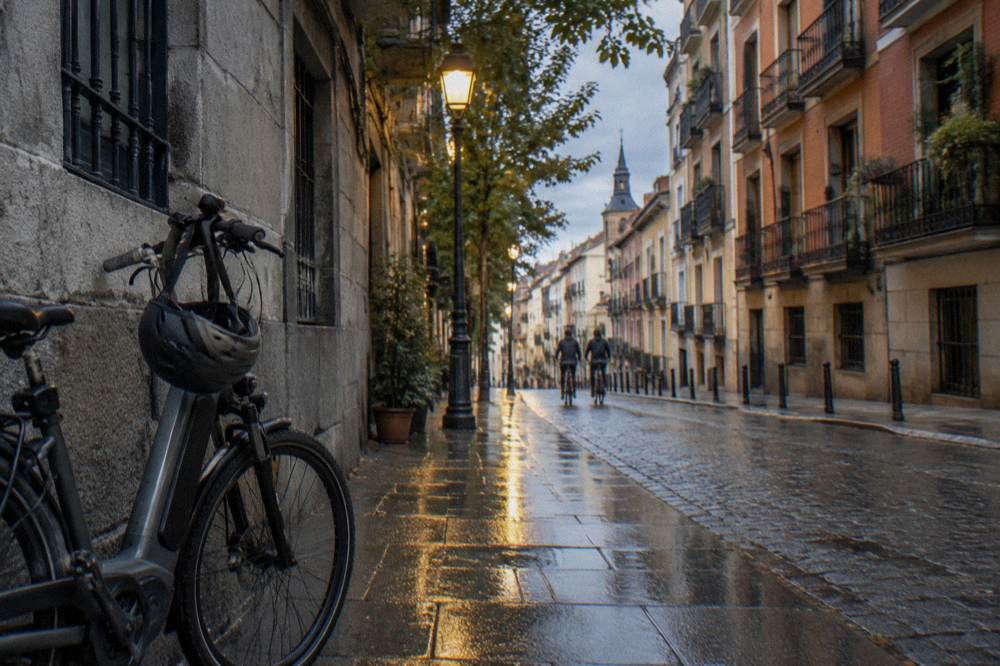
The direction of policy is easy to read. A country that removes helmet exemptions on open roads and puts vests on professional riders is not trending toward laxer head protection. Many Madrid tour operators supply a helmet with the ride anyway, even though in the city only riders under 18 must wear one. The reform is documented in the DGT press release of 23 June 2026, which is the primary source for what changed and when it took effect.
One caution for readers scanning summaries elsewhere: figures circulate online about fines for ordinary cyclists without helmets on interurban roads. The DGT text ties its 200 EUR grave-infraction fines to the professional rider cases named in the release, and this article prints no general cyclist fine, because none is stated in the verified sources. The safe summary for a visitor: wear the helmet the tour gives you, ask for one where the description is silent, and treat any countryside riding as a helmet-required activity.
Do E-Bike Tours Have Different Helmet Rules?
Legally, no: an e-bike in Madrid is a bicycle for helmet purposes, so the same under-18 mandatory, adult recommended rule applies. Practically, the case for wearing one is stronger, because e-bikes carry more weight and hold higher speeds with less effort, and several e-bike tours state helmet inclusion, including the Sunset and Night Lights E-Bike at 4.9 from 17 reviews.
Spanish law places pedal-assist electric bicycles in the same category as regular bicycles, distinct from the throttled, type-approved vehicles the 2026 reform targets with its e-scooter rules. A pedal-assist e-bike ridden on a guided tour is a bike. That means the helmet paragraphs above apply unchanged, and a rider over 18 on a city e-bike tour is in recommendation territory.
“From arrival to departure we were treated like royalty. Sergio was very patient with us first time e-bikers. We explored the city and learned its history. What a great experience. Highly recommend this tour. Will tell our friends in the states to come visit Sergio for a wonderful adventure.”
The physics argument does the rest. An e-bike weighs noticeably more than a city bike and holds its speed with barely any effort, which means more kinetic energy in a fall and less reaction time in Madrid's tighter lanes. Riders who skip helmets on lazy beach cruisers often wear them on e-bikes for that reason alone. Among the e-bike options on this site, the ones that state helmet inclusion include the Sunset and Night Lights E-Bike, from $45.00 for two hours, and the E-Bike Panoramic Views, Parks ride from $41.33, the latter of which also lists a small bottle of water.
For riders choosing between formats, the electric bike versus regular bike comparison covers speed, hills and effort across Madrid's terrain. The helmet question folds into that decision rather than standing apart from it: the faster and heavier the machine, the weaker the case for a bare head, whatever the city rule permits.
The vintage ride above is the counter-example worth knowing about. It is a classic bicycle format, from $29.00 per person, rated 4.9 across 1,151 reviews, capped at 50 riders, and it states helmet, bottled water and guide in the inclusions. Riders who want the relaxed, low-speed format and the helmet anyway get both on that ticket, with optional tapas as an add-on rather than a fixed stop.
What Should Children Wear On A Madrid Bike Tour?
In Madrid, anyone under 18 on a bike must wear a helmet, full stop; that is the Ayuntamiento rule and it applies on tours as much as anywhere else. Families booking a guided ride should confirm child helmet sizes and any child-seat or trailer arrangements through the booking page, because the tour descriptions vary in what they state about young riders, and the law leaves no discretion for teens.
This is the one part of the helmet question with a clean legal answer. The city FAQ sets the threshold at 18, which is stricter than the pre-reform national text's 16, and for visitors the practical consequence is simple: a 16-year-old on a Madrid tour wears a helmet because Madrid says so, even though a summary of national rules might suggest otherwise.
“Sergio was an excellent guide. A private tour is highly recommended as it gave our group som flexibility. 3 hour trip was a good length and included a welcomed stopp (our initiative) in the Retiro parc for some coffee and soaking up the surroundings. It was the highlight of our visit as far as activities go.”
For younger children the equipment questions multiply, and the tour descriptions here do not state minimum ages, weight limits or fitness grades; for those details, check the booking page. The booking page is the right channel for child-seat questions, tag-along bikes and helmet sizing. Families weighing the whole format can start with the Madrid bike tour with kids guide, which covers the practicalities of riding with children in the city, from route temperament to pacing.
A related note for parents who plan to ride independently with children: the city allows under-12s on pavements and pedestrian zones at up to 5 km/h with an adult on foot, and on park paths, which means the law imagines young children in a mix of settings that a guided tour never uses. On a tour, everyone rides the carriageway or the bike lane, and everyone under 18 wears a helmet. Booking a tour that states helmet inclusion for the whole family removes the last equipment question before the ride starts.
Should You Wear A Helmet On A Madrid Bike Tour Even If It Is Not Required?
For an adult in the city, the honest answer is that a helmet is a judgement call the law leaves to you, and most riders on guided tours take one when it is offered. The reasons to accept are concrete: cobbles, busy roundabouts and the stop-start rhythm of a highlights route. The reasons riders decline are comfort in July heat, and the low speeds of a group ride led by a guide.
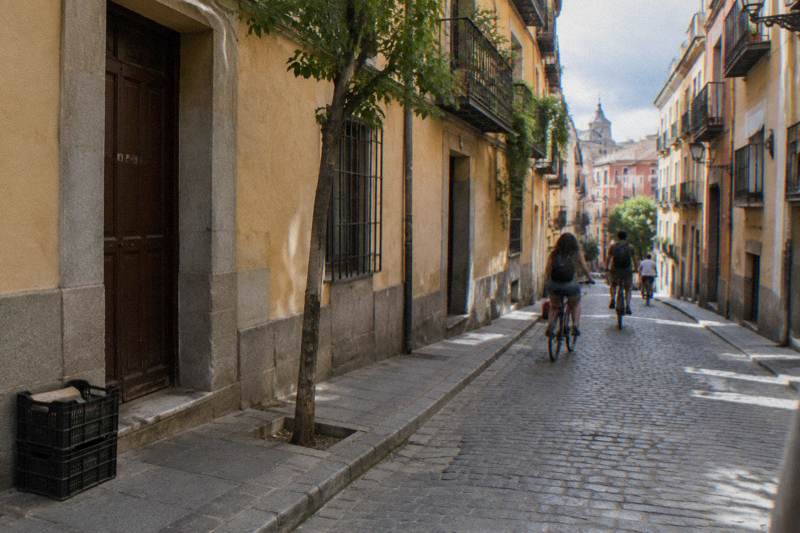
Madrid's central streets mix wide, calm avenues with narrow, cobbled lanes where surface quality matters more than traffic. A group ride moves at guide pace, often slower than a solo commuter, which is the strongest argument riders make for skipping. Against that, a fall at any speed onto stone edges is a head injury risk, and the helmet is already in the price on many tickets, so the marginal cost of wearing one is nil.
“Benja was a wonderful guide and so informative! We rode all over central Madrid hitting all the highlights. Benja was engaging, knowledgeable, and even took us to his favorite coffee spot. A great way to see the city! I was traveling with my teenage daughter and we felt completely safe. Definitely recommend!”
Summer heat is the real friction point. July in Madrid averages a mean maximum of 32.1 °C with barely two rain days a month, per the AEMET normals for the Retiro station, and a helmet on a July afternoon is genuinely warmer than bare hair. Riders tackling that season should read the cycling Madrid summer heat guide for timing and hydration, and treat the helmet as one input in a broader heat plan rather than a standalone decision. October, the wettest month at 60 mm, and the shoulder months bring cooler air and lower sun, and make the helmet an easy call.
The site's own position, stated plainly, is that Madrid Bike Tours recommends accepting a helmet whenever the tour offers one, because the rules trend stricter each year and because every tour that includes one has already priced it in. Riders who decline where the law permits should at least confirm the tour allows it, since some operators ask all guests to wear what is supplied, as a matter of their own policy rather than municipal law.
The tapas option above, from $33.00 per person and rated 4.9 across 1,633 reviews, is one of the rides whose description does not mention helmets either way. It is a useful example of the not-stated case: nothing about the ticket suggests bare heads, and the practical reading is that gear questions go through the booking page before payment. With free cancellation stated, a rider can reserve, ask, and adjust.
Common Questions About Helmets On Madrid Bike Rides
Do You Need A Helmet On A Madrid Bike Tour?
No, not by law if you are an adult riding inside the city. Madrid requires helmets for riders under 18 and recommends them for adults. Many guided tours include a helmet in the ticket anyway, so check the inclusions on the booking page before deciding.
Is A Helmet Mandatory For Adults Cycling In Madrid?
Only for adults riding as an economic activity, such as delivery or rental-fleet riders. For a tourist or a leisure rider over 18, the helmet is a recommendation from the city, not a requirement. On interurban roads outside the city, the October 2026 reform made helmets mandatory for everyone.
Do Children Have To Wear Helmets On Madrid Bike Tours?
Yes. The Ayuntamiento de Madrid rule makes helmets mandatory for anyone under 18 riding a bike in the city, and tour operators apply it on their rides. Confirm child sizes and child seats through the booking page when you reserve.
Which Madrid Tours Provide Helmets?
Several popular rides state helmet inclusion, among them the 3-Hour Highlights Bike Ride from $32.14, the Small-Group Highlights Ride from $40.18, the Photo Ride from $56.25, the vintage ride from $29.00 and the Sunset and Night Lights E-Bike from $45.00. Others do not mention helmets, so ask through the booking page before paying.
Do E-Bike Riders Need Helmets In Madrid?
Legally an e-bike is treated like a bicycle, so the same under-18 mandatory, adult recommended rule applies. Because e-bikes are heavier and sustain higher speeds, most riders and several operators treat helmets as standard on e-bike tours, and some e-bike tickets list one as included.
Can You Join A Tour Without Wearing A Helmet?
Where the law leaves it to adults, some operators still ask all guests to wear the supplied helmet under their own policy. The reliable approach is to state your preference through the booking page before reserving, since the guide at the meeting point applies the operator's rule, not the city's recommendation.