Is Madrid Good For Cycling?
An honest answer to whether Madrid works for cyclists: hills, heat, traffic, rules, parks and bike-share, and what a guided ride takes off your plate.
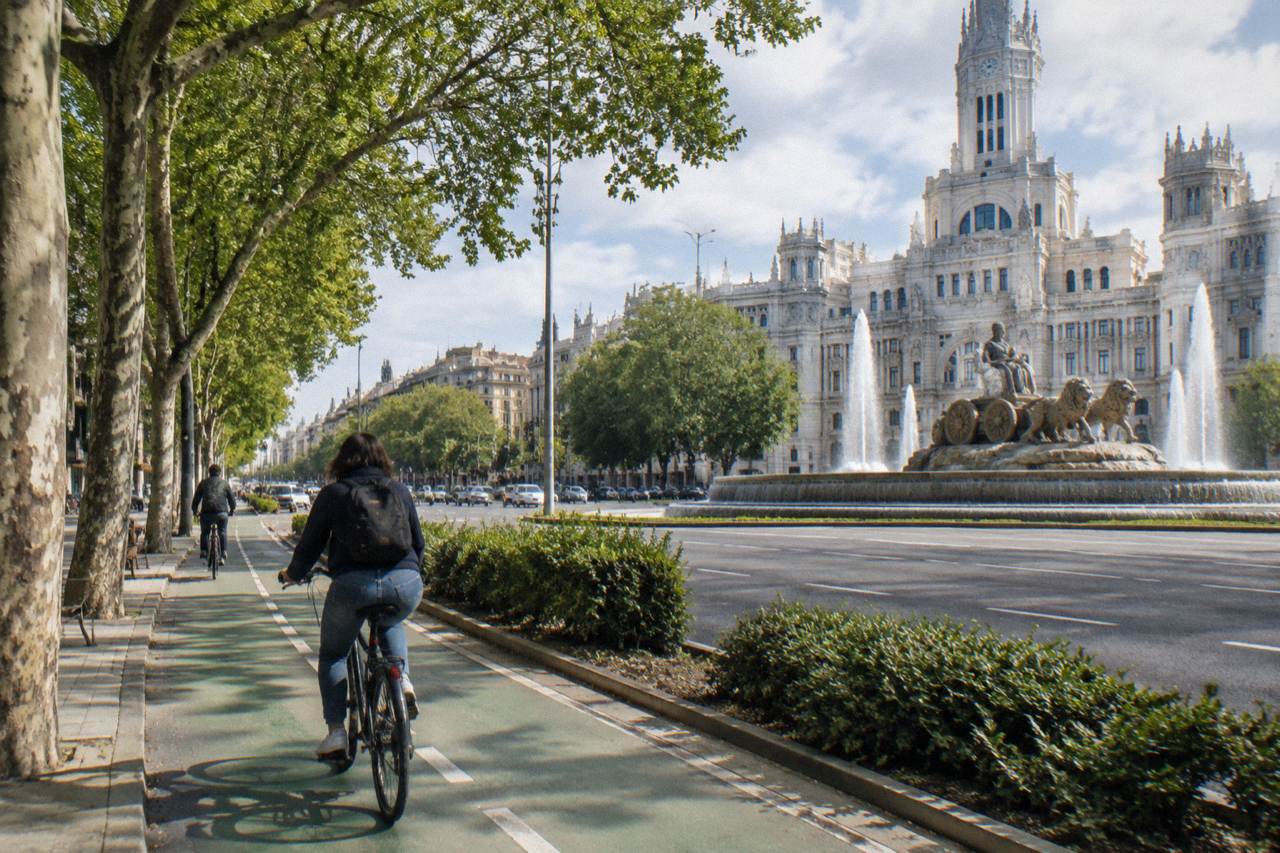
Yes, with caveats worth knowing before you roll out. Madrid has a large public bike-share network, broad car-free park circuits and a city centre where bikes legally ride on the carriageway. Against that stand real summer heat, a centre that tilts uphill away from the river, and rules that differ from much of northern Europe. A guided ride solves most of the friction at once. For the practical side, the BiciMAD explained guide covers how the city's e-bike share works, what it costs, and when a guided tour makes more sense.
That is the short version. The longer version depends on when you visit, where in the city you plan to ride and how much of the planning you want to do yourself. Madrid rewards cyclists who understand its layout: the historic core is compact and mostly gentle, the western edge drops toward the Manzanares river and climbs back, and the big parks, Retiro, Casa de Campo and the riverside paths, are where the city feels built for two wheels. Many of those parks and riverside paths cost nothing to enjoy, and our guide to enjoying Madrid on a zero budget shows how a paid bike ride can still slot into a cheap day out.
For a visitor whose real question is whether to ride at all, a guided tour answers it directly. The three rides below cover the centre, the classic highlights with a tapas option, and a vintage-bike alternative, all with a guide who handles routing, traffic judgment and the bike itself.
How Hilly Is Madrid For A Cyclist?
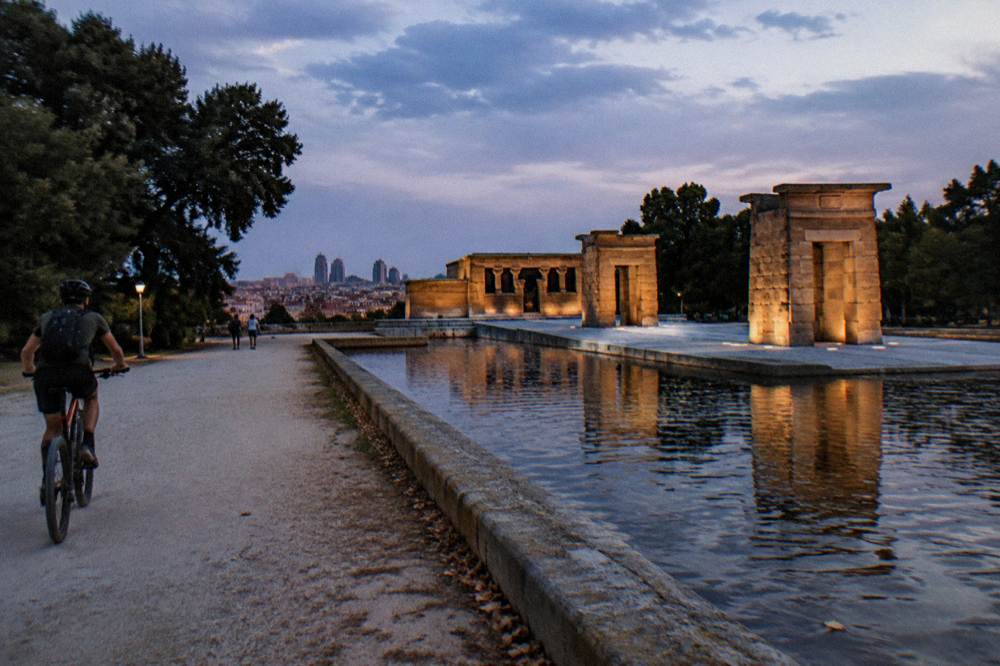
Madrid is hillier than its flat reputation suggests, though the gradient stays manageable for a casual rider on a regular bike. If you want the climbs to disappear almost entirely, an e-bike does exactly that, and that flexibility is why so many Madrid tours let you choose either bike type at one booking. The city sits on a plateau at roughly 667 metres above sea level, and the geography is a story of shallow steps rather than walls: the centre is comparatively level, everything west and south of the royal area slopes down toward the Manzanares, and everything on the far bank climbs again toward Casa de Campo and the western districts. For a casual rider on a regular bike, the classic sightseeing loop stays within comfortable limits, and an electric bike flattens the rest.
“From arrival to departure we were treated like royalty. Sergio was very patient with us first time e-bikers. We explored the city and learned its history. What a great experience. Highly recommend this tour. Will tell our friends in the states to come visit Sergio for a wonderful adventure.”
The practical question is direction. Riders who start near the river and finish in the centre do the climb first and coast home; riders who start at the top, around Retiro or the Paseo del Prado, enjoy a downhill second half. Tour operators pick their meeting points in the historic core: C. de Felipe IV beside Retiro, C. de los Jardines near Puerta del Sol and C. del Espejo by the royal palace district all sit in the centre of the city.
If hills are a genuine concern, the fix is cheap. Several tours offer a choice of regular bike or e-bike at the same booking, among them the "Small-Group Highlights Ride" from $40.18 per person and the "2.5-Hour Bike or E-Bike" from $31.00 per person, where the rider picks the bike type. Dedicated e-bike tours start around $41.33 per person for the "E-Bike Panoramic Views, Parks" ride. A rider who wants a fuller picture of the electric option can read the Madrid e-bike tour guide and the electric versus regular bike comparison.
Is Madrid Too Hot For Cycling?
July and August are genuinely hot, with mean daily maxima of 32.1 °C and 31.3 °C and barely a rainy day between them, but spring and autumn are close to ideal and even summer works with an early start and some shade planning. The verified AEMET normals for the Retiro station show the shape of the year: January averages 6.3 °C, May 16.7 °C, July 25.6 °C overall, and September falls back to a pleasant 20.9 °C mean. Rain is rarely the problem; Madrid records only about 59 rain days a year, and the two driest months are precisely the two hottest.
| Month | Mean temp | Mean daily max | Rain days |
|---|---|---|---|
| March | 11.2 °C | 16.3 °C | 4.1 |
| May | 16.7 °C | 22.2 °C | 7.3 |
| July | 25.6 °C | 32.1 °C | 1.7 |
| September | 20.9 °C | 26.4 °C | 3.3 |
| November | 9.9 °C | 13.5 °C | 6.5 |
The planning advice follows from the numbers. In summer, ride before midday or after the evening cools, carry more water than feels reasonable, and treat shade as a route-planning input; Retiro's tree cover and the riverside paths are kinder than the exposed squares of the centre. Several tours include bottled water in the ticket, among them the "3-Hour Highlights Bike Ride" and the "1.5-Hour Express Ride", though the tapas highlights tour lists bottled water as not included, so bring your own on that one. In the shoulder months, from April to June and September to October, heat stops being a constraint and the only real weather question is a rainy day in October or November, the two wettest months at 60 and 58 mm. Riders wanting the full month-by-month picture can check the Madrid weather by month guide, and the cycling Madrid summer heat guide covers hot-season tactics in detail.
What Are The Cycling Rules In Madrid?
Madrid's core rules are simple and learnable in a minute: bikes ride on the carriageway in the centre of the lane, pavements and pedestrian streets are off limits, and a helmet is mandatory for anyone under 18 while merely recommended for adults in the city. The city's own cycling FAQ, published by the Ayuntamiento de Madrid through its Oficina de la Bici, states that bikes belong on the carriageway, positioned in the centre of the lane, and that bike lanes are optional unless a sign makes them mandatory. Two cyclists may ride side by side in one lane where it is safe, but not in a reserved bus lane. Pavements and pedestrian streets are closed to bikes except signed bike-pavements, where the cap is 10 km/h. Phones in hand and headphones connected to an audio device are both prohibited.
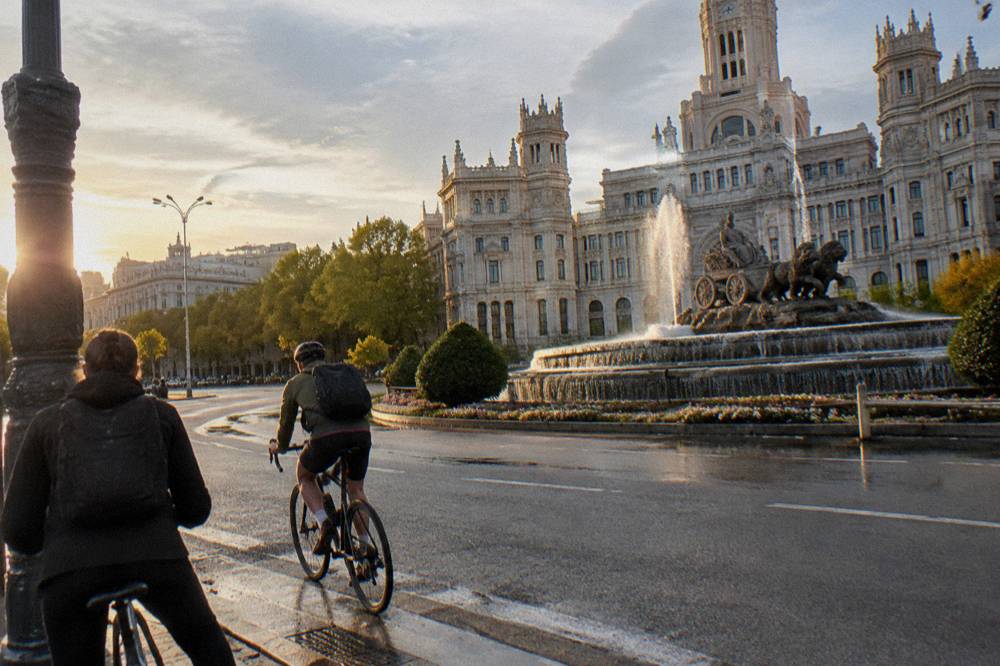
Helmet law has a nuance worth getting right. In Madrid, the helmet is mandatory for anyone under 18 and recommended for adults, per the city FAQ; nationally, the consolidated traffic regulation required it on interurban roads and for under-16s everywhere, and a reform approved in June 2026 and in force from 1 October 2026 removed the interurban exemptions, so all cyclists now need one on interurban roads. The DGT press release on the reform also tightened overtaking rules, requiring drivers to slow by at least 20 km/h below the limit when passing a cyclist on an interurban road. For a visitor riding inside the city with a tour operator, none of this requires homework: tours that include a helmet list it on the booking page, and the guide carries the route judgment.
One more rule shapes route choice. Bikes are prohibited on the M-30 ring motorway and its access ramps, which is one reason guided routes stick to the surface street grid and the parks. The national alcohol limit applies to cyclists like any other road user, 0.5 g/l blood, a reminder that a tapas ride with wine is a tasting, not a pub crawl. The full legal detail is in the cycling rules in Spain guide.
- City Highlights Rides$29
- Parks And Madrid Río Rides$33.29
- Night And Sunset Rides$40.18
- Day Trips From Madrid$40.18
- E-Bike Tours$41.33
- Private Bike Tours$43.63
Is Traffic In Madrid A Problem For Cyclists?
Central Madrid traffic is real but slow, and the streets a visitor actually rides are either speed-calmed, signed for bikes or fully car-free, which is why guided groups thread the centre comfortably while a solo first-timer might not enjoy the busiest junctions. City rules explicitly allow two-way cycling on ciclocalles, on single-platform residential streets with a 20 km/h limit, and on signed 30 km/h streets. Cyclists legally take the centre of the lane on ordinary streets, and drivers are required to keep at least 5 metres behind a cyclist in the same lane under the national regulation.
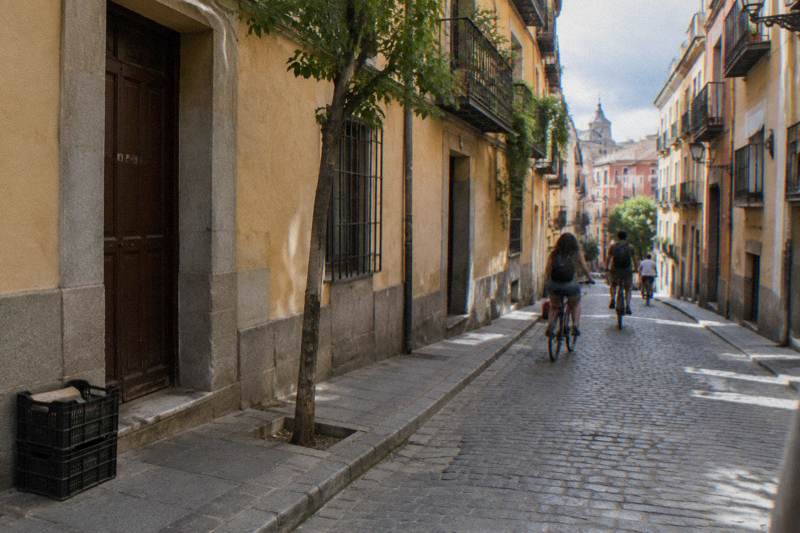
The honest caveat: confidence matters. A rider unused to urban cycling will find Gran Vía and the big round junctions no place to learn, and the smart routes parallel the arteries on quieter streets, exactly the routing a local guide supplies. First-timers can build that confidence with the Madrid bike tour for beginners guide, and the broader safety picture, framed as traffic and street-surface advice rather than crime, is covered in is cycling in Madrid safe. Cobblestones and old setts in the historic core deserve steady hands and moderate speed, one more argument for a guide who knows which side street avoids the roughest paving.
Which Madrid Parks Are Good For Cycling?
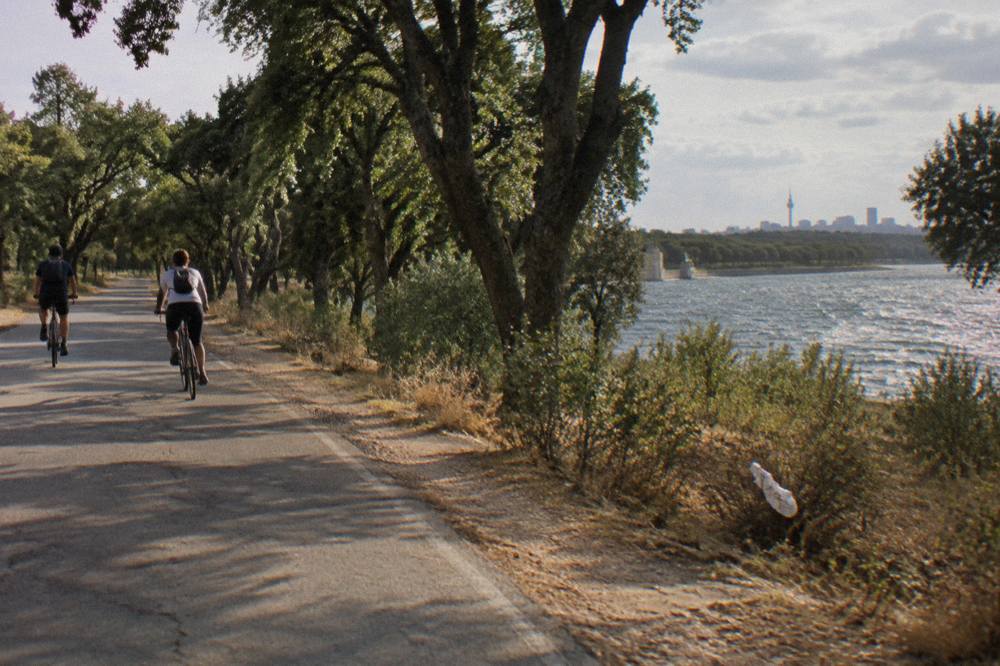
Retiro, Casa de Campo and the riverside park of Madrid Río are the three that matter, and together they give Madrid a genuine claim to being a park-cycling city, with Casa de Campo large enough that guided tours pair it with the riverside, starting from the city centre. The city's tourism office confirms cycling is allowed there with a 20 km/h speed cap, on paved roads and wide dirt paths only, with no cross-country riding or informal trails, as described on the esmadrid cycling page. Two dedicated options serve the western green belt: the "Parks and Riverside Bike Ride" from $40.18 per person and the "Casa de Campo E-Bike" from $44.00 per person.
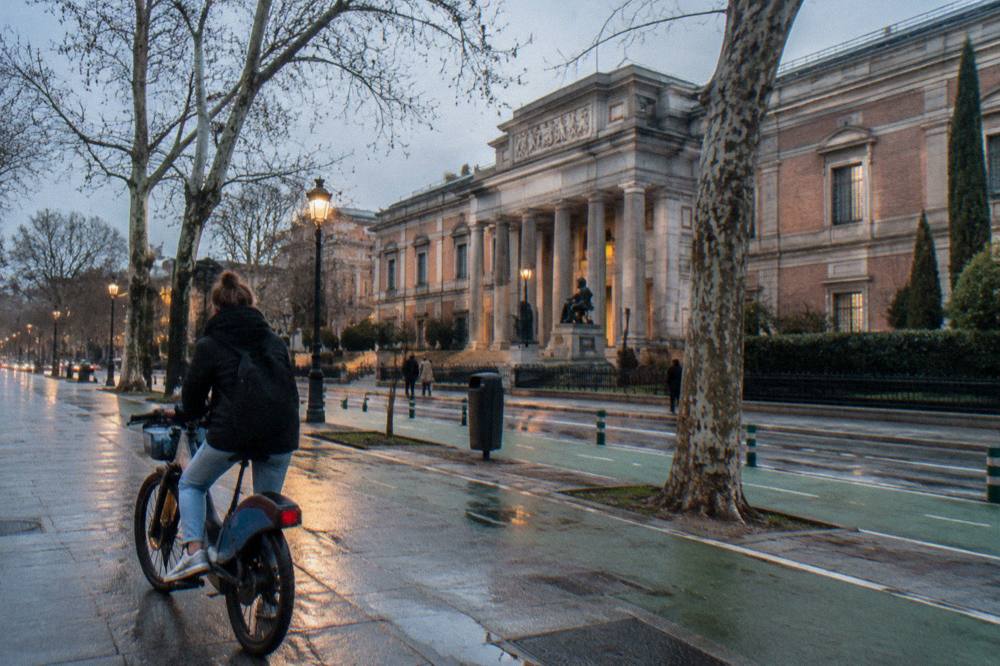
In Retiro, cycling is allowed on the shared paths with pedestrians first and a slow pace expected; the city's park rules ask cyclists to yield, and the exact numeric limits on park paths are contested between sources, so the working rule is simply slow and pedestrian-priority. Two dedicated options serve it: the "Retiro History Ride", a 2-hour regular-bike tour from $33.29 per person with 8 reviews so far, and the semi-private "Retiro E-Bike, Semi-Private" at 4.1 across 28 reviews from $44.77. Detail on both parks is in the Retiro Park bike tour guide and the Casa de Campo bike tour guide.
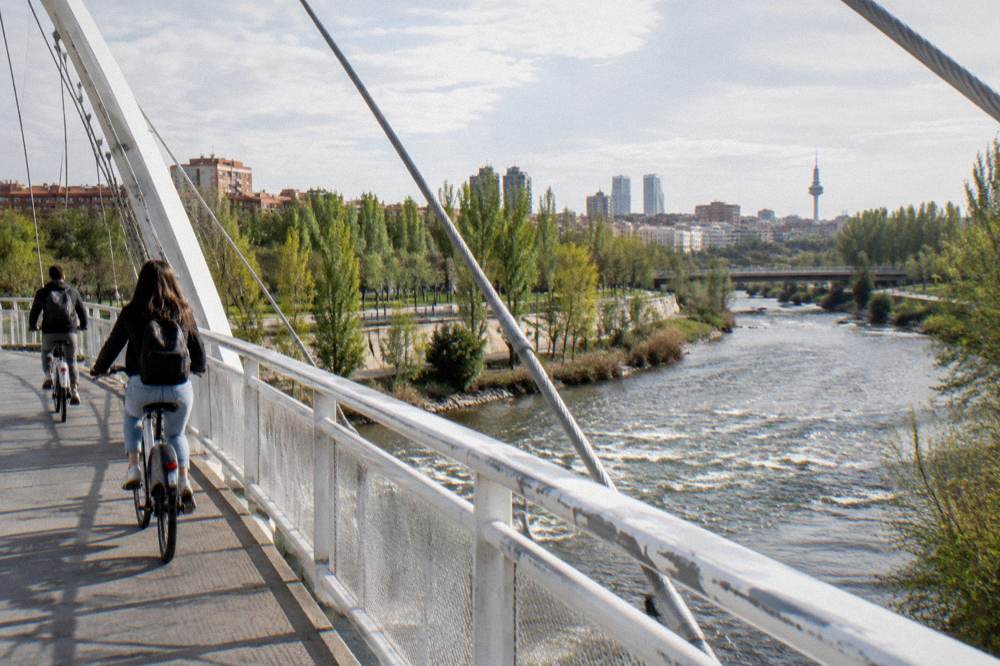
Madrid Río, the linear park along the Manzanares, links the royal district down to the wider green west, and its riverside path is a flat, easy cruise beside the water. The Madrid Río bike ride guide covers how it fits into a route.
“Sergio was an excellent guide. A private tour is highly recommended as it gave our group som flexibility. 3 hour trip was a good length and included a welcomed stopp (our initiative) in the Retiro parc for some coffee and soaking up the surroundings. It was the highlight of our visit as far as activities go.”
Do You Need Your Own Bike In Madrid?
No: the municipal BiciMAD system puts 8,385 electric bikes at 683 stations across 21 districts for short self-guided hops, and every guided tour supplies the bike in the ticket, so a visitor never needs to arrange independent wheels unless they want them. Per the official BiciMAD page, the basic fare is 0.50 EUR for the first 30 minutes, another 0.50 EUR for the second 30, then 3 EUR per further half hour, with a 10 EUR 30-day pass for unlimited trips up to 30 minutes each. The minimum age is 14, registration runs through an app, and the helmet rule follows the city standard, mandatory under 18. Two visitor-relevant quirks: the Tourist Travel Pass does not include BiciMAD, and Casa de Campo has no docking station inside the park, the nearest sits at Príncipe Pío.
| Option | What You Get | Best For |
|---|---|---|
| BiciMAD share bike | Electric bike, 0.50 EUR first 30 min, self-guided | Solo rides, short hops, repeat visitors |
| Guided regular-bike tour | Bike, guide, route, from $29.00 per person | First visit, highlights, context |
| Guided e-bike tour | E-bike, guide, route, from $41.33 per person | Hills, heat, longer distances |
The share system rewards riders who already know where they are going. A first-time visitor faces junctions, one-way planning, park access rules and bike retrieval logistics all at once, which is the case for a guided ride laid out in the bike rental guide versus tour comparison. Carrying a bike on transit is limited: city buses take only a folded hand-luggage-size bike, one per bus, and Renfe carries folding bikes free as hand luggage up to 180 cm folded; non-folding bike rules on Madrid's Metro and Cercanías are inconsistent across sources, so check before relying on them.
Should A First-Time Visitor Cycle Madrid With A Guide?
For a first visit, a guided ride is the format that answers every objection on this page at once, and the most reviewed option costs from $32.14 per person while carrying a 4.9 rating across 1,989 reviews. A guide supplies the bike, the route, the traffic judgment, the water on some options and the pacing, leaving the visitor to look up rather than down. The "3-Hour Highlights Bike Ride" meets at C. de Felipe IV beside Retiro, with regular bike or e-bike at the rider's choice, a group capped at 15, helmet, bottled water and free cancellation. If a classic set of wheels sounds more appealing than a standard rental, our guide to Madrid's vintage bike tour covers how the retro bikes handle the city's hills and how the ride compares with other guided options.
“This was a fabulous bike tour of Madrid! Please do this if you want to see all the main sights and get lots of interesting information. Even on a hot day the biking was easy and stops were always in a shady spot. Our guide was Gomi and I can honestly say he is one of the best guides we have ever had! Thank you for a brilliant 3 hours. My husband was very sad when the tour ended!!”
The alternatives sharpen the choice. The "Optional Tapas Highlights Ride" at 4.9 across 1,633 reviews from $33.00 per person pairs the classic centre with a tapas add-on you select, and the "Vintage Bike, Optional Tapas" ride at 4.9 across 1,151 reviews from $29.00 per person is the lowest from-price among heavily reviewed options, on a vintage bike with groups up to 50. Riders comparing formats can start with are bike tours worth it in Madrid and is an e-bike tour in Madrid worth it, or go straight to the Madrid highlights bike tour guide.
What Does A Bad Cycling Day In Madrid Look Like?
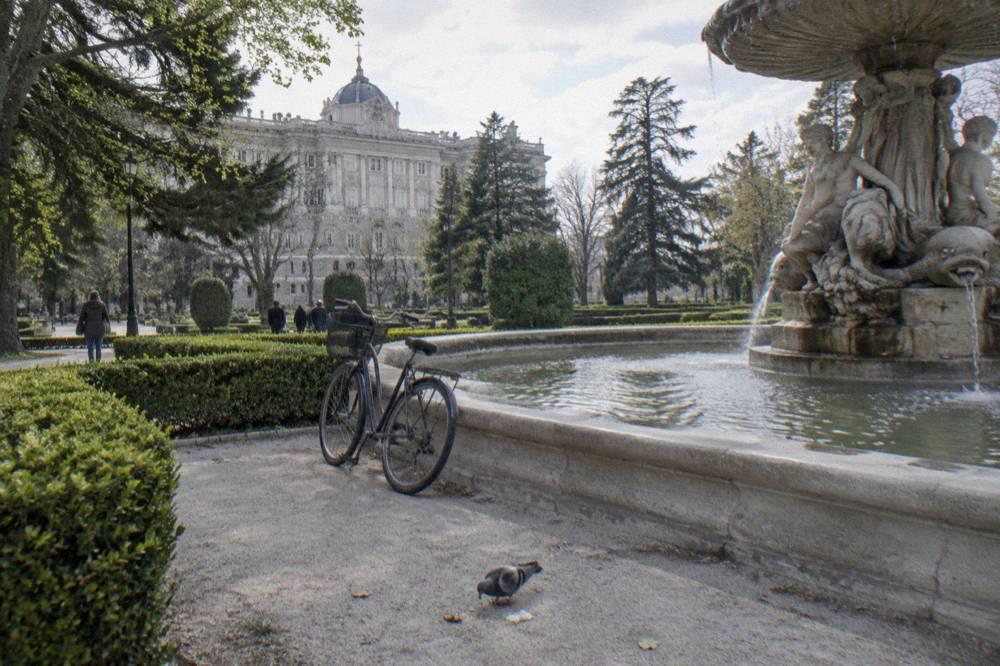
The honest downside case is a hot August afternoon, a regular bike, a self-planned route that crosses the centre at rush hour and a rider who did not know bikes stay off the pavement; every one of those elements is avoidable with a little planning, and that is the point of laying them out plainly. Heat: start early or pick an evening slot, and note that one tour, the "Sunset and Night Lights E-Bike" at 4.9 across 17 reviews from $45.00, exists precisely to move riding out of the sun. Traffic: parallel the arteries on calm streets or follow a group. Rules: the pavement ban and the under-18 helmet rule are the two most common stumbles.
Rain is the weakest excuse of all. Madrid averages fewer than 60 rain days a year and the sunniest stretch, July with about 17.5 clear days, coincides with the heat. One operator states plainly that its tours run rain or shine, with a 2 EUR poncho if you did not bring one, which captures the local attitude to weather. For packing and clothing, the what to wear guide and what to bring guide close the loop.
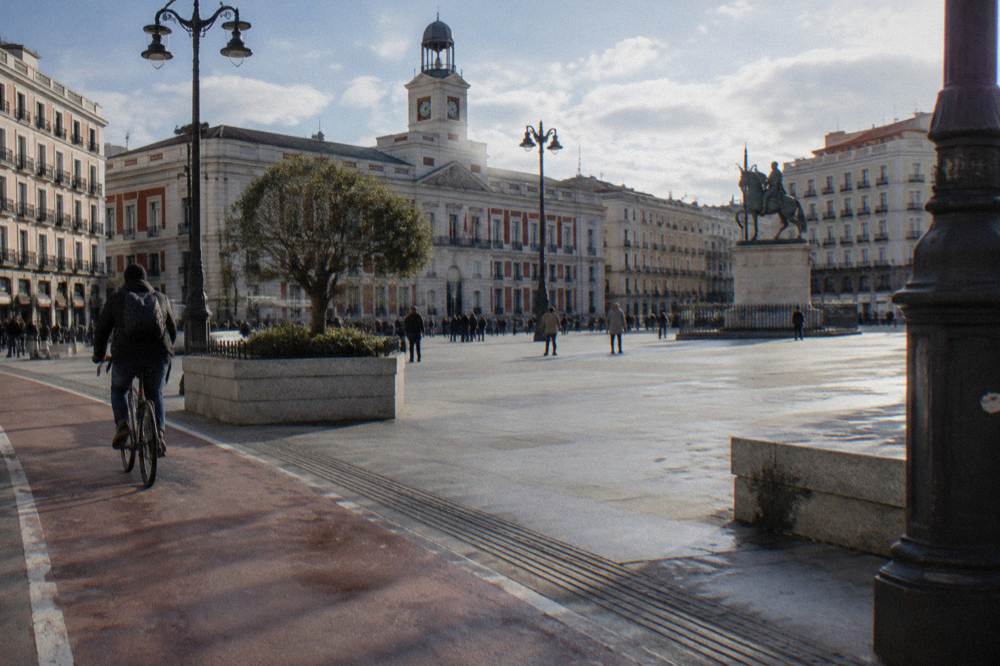
The Verdict On Madrid As A Cycling City
Madrid is a good cycling city for visitors who match the format to the conditions: parks and riverside paths for relaxed riding, an e-bike for hills and summer, and a guided group for a first taste of the centre, with the sharpest rides covering the highlights in about three hours at prices from $29.00. The raw ingredients are strong, a huge electric bike-share network, three major rideable green spaces, a dry climate and a centre compact enough to cross in an afternoon. The frictions are equally real: heat in high summer, cobbles and traffic in the core, and a rule set that expects bikes on the road.
Madrid Bike Tours exists because that balance tilts positive once someone else holds the map. The Madrid Bike Tours
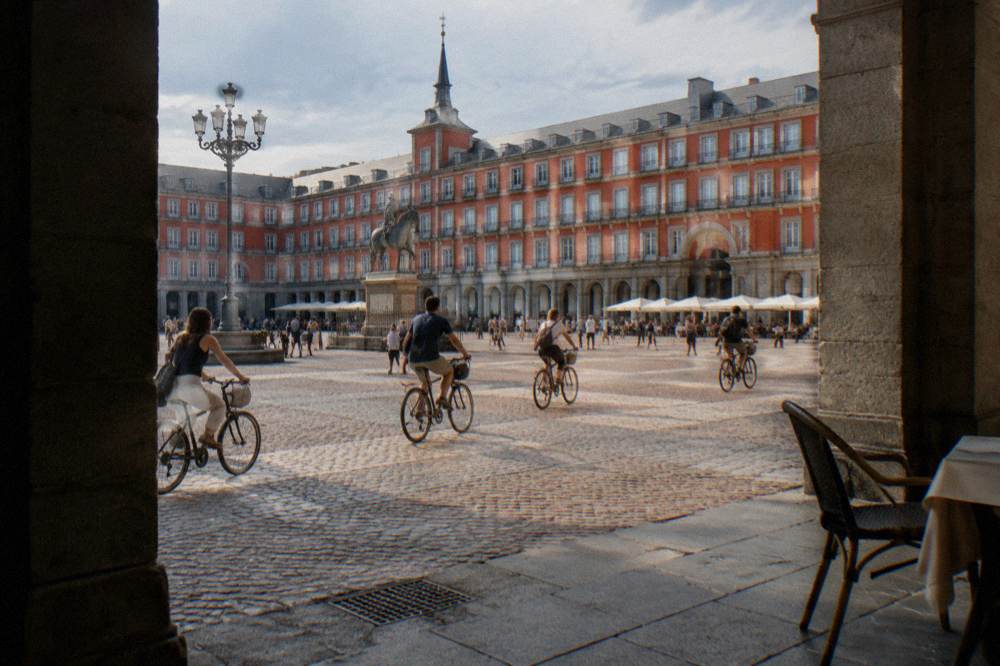
Common Questions About Cycling In Madrid
Is Madrid Good For Cycling?
Yes, with conditions. The city offers a large electric bike-share network, three major rideable parks and a dry climate, offset by real summer heat, a centre that climbs away from the river and urban traffic. Most first-time visitors find a guided tour the easiest way to enjoy it.
Can You Cycle In Retiro Park?
Yes, cycling is allowed on Retiro's shared paths with pedestrians given priority and a slow pace expected. Two guided options ride there: the Retiro History Ride, from $33.29 per person, and the semi-private Retiro e-bike tour, from $44.77 per person.
Do You Have To Wear A Helmet Cycling In Madrid?
In Madrid the helmet is mandatory for riders under 18 and recommended for adults, per the city's cycling FAQ. Nationally, since 1 October 2026, all cyclists must wear one on interurban roads. Many tours include a helmet in the ticket; the booking page states which.
Is Madrid Flat Enough For A Regular Bike?
The historic centre is mostly gentle, but the city slopes down to the Manzanares river and climbs back on the west side. Plenty of visitors ride regular bikes happily; anyone concerned about gradients can choose an e-bike, often at the same booking price on tours that offer both.
Is BiciMAD Worth Using As A Visitor?
It can be. The basic fare is 0.50 EUR for the first 30 minutes on an electric bike, registration is via an app, and stations cover 21 districts. Note the Tourist Travel Pass does not include BiciMAD, and there is no docking station inside Casa de Campo.
When Is The Best Time Of Year To Cycle In Madrid?
April to June and September to October combine mild temperatures with low rainfall. July and August average daily maxima above 31 °C but have the clearest skies; ride early or late in the day then. October and November are the wettest months.