Madrid Weather By Month For Planning Outdoor Days
Madrid sits on a high plateau at 667 metres, which gives it dry summers, crisp winters and a rainfall pattern that concentrates in autumn. Here is how that plays out month by month for anyone planning a ride.
Short answer
Madrid's hottest months are July and August, with mean daily maxima of 32.1 and 31.3 degrees and barely two rain days each. The wettest months are October at 60 mm and November at 58 mm. January averages 6.3 degrees, and the year brings about 421 mm of rain over roughly 59 rain days.
What Is The Weather Like In Madrid Across The Year?
Madrid has a continental Mediterranean climate shaped by altitude: the Retiro weather station, at 667 metres above sea level, records hot dry summers, cool winters and most rain falling in autumn. The annual mean temperature is 15.0 degrees, with about 421 mm of rain spread over roughly 59 rain days and about 100 clear days a year. July and August dominate the heat, October and November the rain. If you're planning to see the city on two wheels, our packing checklist for a Madrid bike tour explains how to prepare for both the summer heat and the autumn showers.
Those figures come from the AEMET climate normals recorded at the Retiro observatory, the reference station for the city, covering the 1981 to 2010 period. For a cyclist the pattern matters more than any single number. Summer days are long, dry and hot, with mean daily maxima above 31 degrees in both July and August, while nights stay warm at around 19 degrees. Winter flips the picture: January means drop to 6.3 degrees with mean daily minima of 2.7 degrees and about six frost days a month.
The dryness is the detail most visitors underestimate. With only 59 rain days a year and 100 clear days, the odds of a fully dry visit are high in almost any month except late October and November. Thunderstorm activity peaks in May and June, at 2.9 and 2.8 storm days respectively, which means spring rides occasionally end under clouds even when the morning looked clear. Snow is genuinely rare: January averages one snow day and December under one.
Here is the full monthly picture from the AEMET Retiro normals, the same table that drives the rest of this guide.
| Month | Mean C | Mean daily max C | Mean daily min C | Rain mm | Rain days | Clear days | Sun hours |
|---|---|---|---|---|---|---|---|
| January | 6.3 | 9.8 | 2.7 | 33 | 5.7 | 7.8 | 149 |
| February | 7.9 | 12.0 | 3.7 | 34 | 5.2 | 6.9 | 158 |
| March | 11.2 | 16.3 | 6.2 | 25 | 4.1 | 7.5 | 211 |
| April | 12.9 | 18.2 | 7.7 | 45 | 6.7 | 5.4 | 230 |
| May | 16.7 | 22.2 | 11.3 | 50 | 7.3 | 4.6 | 268 |
| June | 22.2 | 28.2 | 16.1 | 21 | 3.4 | 9.4 | 315 |
| July | 25.6 | 32.1 | 19.0 | 12 | 1.7 | 17.5 | 355 |
| August | 25.1 | 31.3 | 18.8 | 10 | 1.7 | 13.6 | 332 |
| September | 20.9 | 26.4 | 15.4 | 22 | 3.3 | 8.1 | 259 |
| October | 15.1 | 19.4 | 10.7 | 60 | 6.9 | 6.3 | n/a |
| November | 9.9 | 13.5 | 6.3 | 58 | 6.5 | 7.1 | 144 |
| December | 6.9 | 10.0 | 3.6 | 51 | 6.8 | 6.9 | 124 |
Reading the table as a rider: March, April, May, June, September and October all offer mean maxima between 16 and 28 degrees, which is comfortable cycling weather by almost any standard. The AEMET normals page for Madrid Retiro is the primary source for every figure above.
Grouping the twelve months into rider seasons makes the same numbers easier to plan around, and it is the grouping the rest of this page uses.
| Season | Months | Mean max range C | Rain days per month | Riding character |
|---|---|---|---|---|
| Cool season | December to February | 9.8 to 12.0 | 5.2 to 6.8 | Bright, crisp, best at midday, layers needed |
| Shoulder spring | March to May | 16.3 to 22.2 | 4.1 to 7.3 | Ideal riding, occasional afternoon storms |
| High summer | June to August | 28.2 to 32.1 | 1.7 to 3.4 | Dry and hot, ride early or late in the day |
| Shoulder autumn | September to November | 13.5 to 26.4 | 3.3 to 6.9 | Best in September and early October, wet by November |
Which Are The Hottest Months For Cycling In Madrid?
July and August are the hottest months, with mean daily maxima of 32.1 and 31.3 degrees respectively, mean nightly minima near 19 degrees, and only about 1.7 rain days each. Sun hours peak at 355 in July. Heat, not rain, is the planning problem in these two months.
The altitude helps and hurts at once. Dry air means the heat feels less heavy than in coastal cities, and mornings before eleven stay pleasant even in August. But the plateau also loses heat fast after sunset, so a rider who starts early can comfortably finish by midday and spend the afternoon indoors. Guided rides that keep a three hour format, like the most reviewed option covered here, the 3-Hour Highlights Bike Ride at 4.9 across 1,989 reviews from $32.14 per person, typically slot into those morning windows; the booking page shows the exact start times on offer.
For a season by season overview of which rides pair well with which months, the best time to cycle in Madrid guide goes deeper on timing, while this page stays with the weather itself.
The tapas add-on is optional on both, so a hot day can end with shade and a cold drink rather than a scheduled stop.
If midday heat is the concern, an e-assist or an evening format changes the equation. More on the evening option in the August section below.
How Hot Is Madrid In August?
August in Madrid averages 25.1 degrees overall with a mean daily maximum of 31.3 degrees and a mean nightly minimum of 18.8 degrees. Rain is almost absent, at 10 mm across about 1.7 rain days, and the city logs 332 sun hours. It is a dry, steady heat rather than a humid one.
Locals treat August as the month to leave the city, which has a side effect visitors appreciate: traffic thins, and the streets of the centre feel calmer. For cyclists the practical advice is simple. Ride before eleven or after six, carry more water than seems reasonable, and treat the middle of the day as time for museums. The city's own cycling FAQ notes that bikes belong on the carriageway in the centre of the lane, and a rider combing the shade line at the pavement edge is doing it wrong anyway.
An evening format suits August particularly well. The Sunset and Night Lights E-Bike runs two hours from $45.00 per person, rated 4.9 across 17 reviews, meeting on Calle de Santiago, and it moves the whole ride into the hours when the plateau has already started cooling. The booking page lists an e-bike, helmet and guide; food, hotel transfer and accident insurance at 1.85 EUR are not included.
Beyond timing, hydration matters on any summer ride. Several tours include bottled water, among them the 3-Hour Highlights Bike Ride from Retiro, but bottled water is not a meal and not unlimited: bring a second bottle on an August day. The deeper dive on riding through the hottest weeks is in cycling in Madrid summer heat, which covers timing, routes and what to carry.
When Does It Rain Most In Madrid?
October is the wettest month in Madrid at 60 mm of rain, followed closely by November at 58 mm. Both average about seven rain days. Spring is wetter than it looks too, with May at 50 mm and April at 45 mm, while July and August are the driest months at 12 and 10 mm.
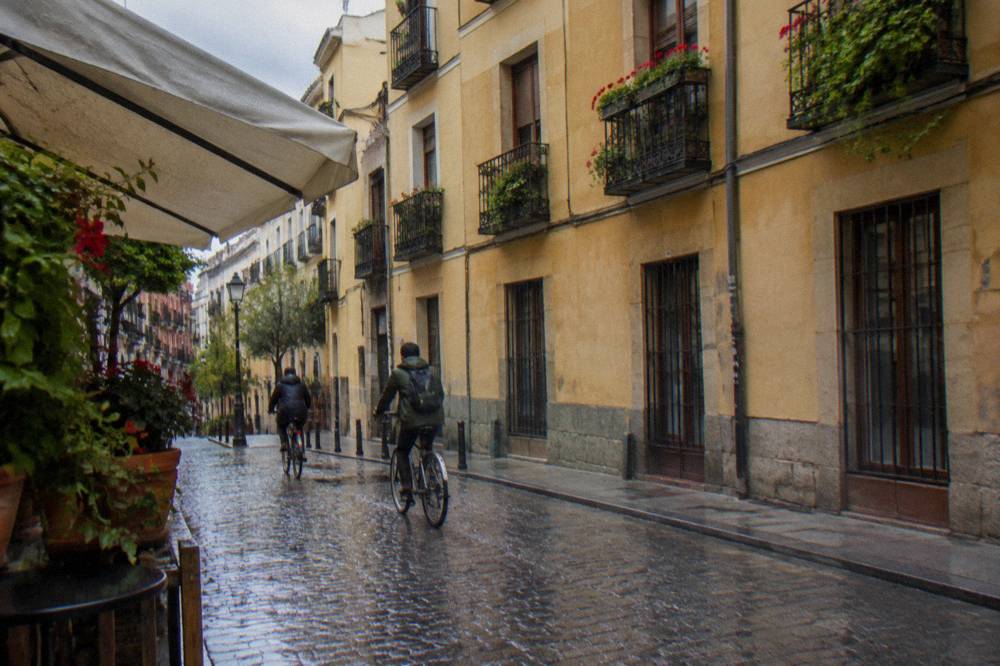
The autumn peak is the number that shapes local plans. Early October often still feels like summer, but by late October the Atlantic fronts start arriving, and November combines that rain with falling temperatures: the mean maximum drops from 19.4 degrees in October to 13.5 in November. A visitor booking outdoor days in that window should build flexibility into the itinerary rather than assume a washout, since even November only averages 6.5 rain days.
One operator detail is worth knowing before the rain section ends: the Small-Group Bike or E-Bike ride states it bicycles rain or shine and sells a rain poncho on board at 2 EUR, with bottled water at 1 EUR. Most other options simply come with free cancellation, so a genuinely grey forecast is a reason to check the cancellation terms on the booking page before committing to a date.
Spring rain behaves differently. April and May showers tend to come as short, heavy bursts between clear spells, and the thunderstorm count actually peaks in May and June. The odds of a full day lost to rain in April are lower than the 45 mm total suggests, because that rain often falls in a couple of afternoon hours.
Is Winter A Good Time For A Madrid Bike Ride?
Yes, within limits. December and January mean 6.9 and 6.3 degrees with mean maxima of 10.0 and 9.8 degrees, and rain runs 51 and 33 mm. Frost averages about six days in January and about four and a half in December, and snow about one day in January. Midday rides in winter are cool, bright and often excellent.
- City Highlights Rides$29
- Parks And Madrid Río Rides$33.29
- Night And Sunset Rides$40.18
- Day Trips From Madrid$40.18
- E-Bike Tours$41.33
- Private Bike Tours$43.63
Winter in Madrid is not the grey drizzle of northern Europe. The city logs 7.8 clear days in January and 6.9 in December, and the low humidity means midday sun has real warmth in it. A ride starting at eleven and finishing by two catches the best of the day. The catch is the wind chill on a moving bike: 10 degrees standing still feels markedly colder at cycling speed, so layers matter more than the thermometer suggests. The what to wear on a Madrid bike tour guide covers the layering system in detail.
One rule change matters for anyone riding beyond the city edge in winter. Following the reform announced by the traffic authority in June 2026 and in force since 1 October 2026, helmet exemptions on interurban roads are removed, so all cyclists must wear one there. Within Madrid itself the city rule already required helmets for under 18s and recommends them for adults, as the city cycling FAQ states. Several tours include a helmet in the ticket; where that is not stated, the booking page shows what gear comes with the ride.
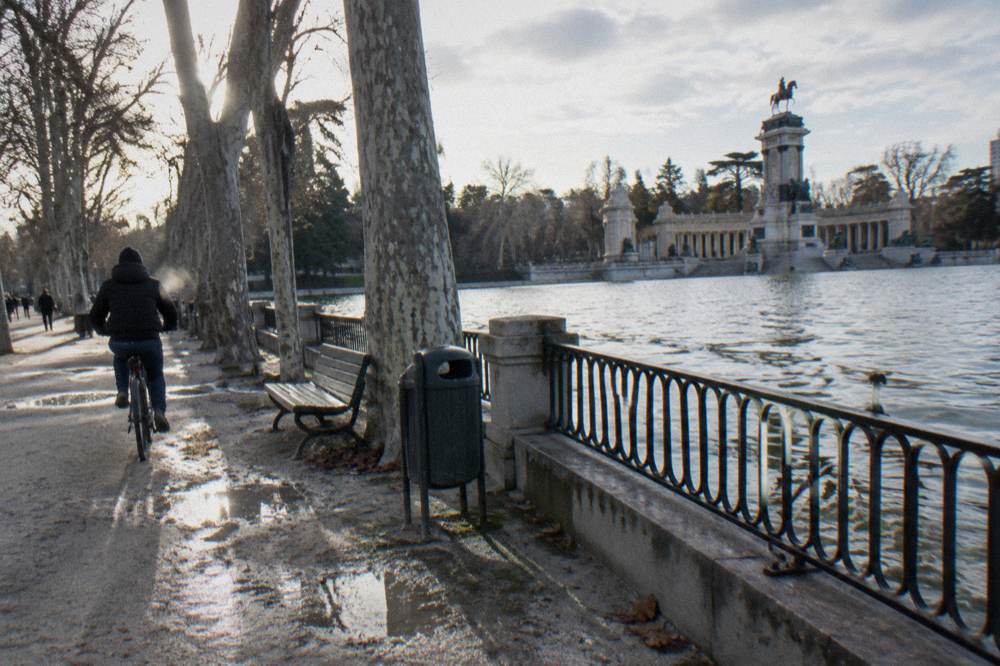
For winter specifically, the shorter format rides have an advantage. The 1.5-Hour Express Ride, from $30.00 per person with 4.8 across 31 reviews, fits neatly inside the warmest part of a December day. The 2.5-Hour Bike or E-Bike ride, from $31.00 per person at 4.5 across 815 reviews, is another mid-length option that does not commit a cold rider to three hours in the saddle.
What Should You Wear Cycling In Madrid In Spring And Autumn?
Plan for a 10 degree swing between morning and afternoon. March swings from 6.2 to 16.3 degrees mean, April from 7.7 to 18.2, October from 10.7 to 19.4. Light removable layers, a windproof outer and full sun protection cover both seasons. Rain shells matter more in April, May and October than anywhere else on the calendar.
Spring and autumn are the two seasons where a single outfit fails twice a day. The AEMET minima and maxima in the table above are the honest guide: a rider leaving at nine in April starts in single digit shade and finishes in the high teens. A base layer, a mid layer that fits in a bag, and sunglasses handle almost every such day. May is warmer, 11.3 to 22.2 degrees, and the first genuinely hot afternoons appear late in the month.
Footwear and gloves are the autumn details. By November the mean maximum is only 13.5 degrees and morning starts near 6 degrees, and hands on handlebars feel it first.
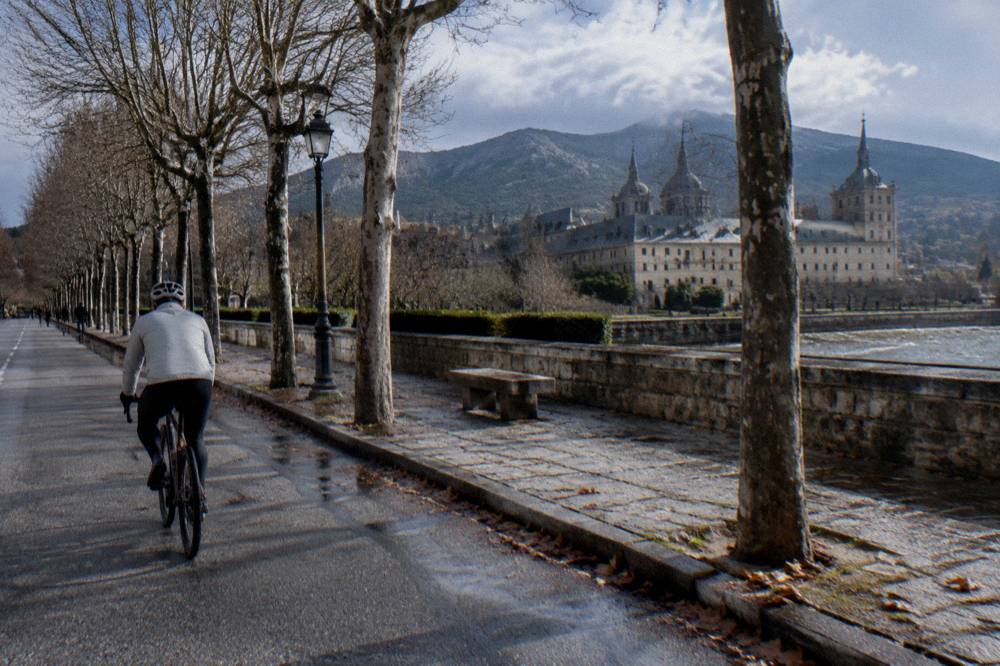
The clothing maths for the two shoulder seasons, month by month, looks like this.
| Month | Morning start C | Afternoon high C | Layers to carry |
|---|---|---|---|
| March | 6.2 | 16.3 | Base layer plus warm mid layer plus windproof |
| April | 7.7 | 18.2 | Base layer plus mid layer plus light shell |
| May | 11.3 | 22.2 | Base layer plus removable mid layer, sunscreen |
| September | 15.4 | 26.4 | Base layer, sunscreen, light layer for shade stops |
| October | 10.7 | 19.4 | Base layer plus mid layer plus rain shell |
| November | 6.3 | 13.5 | Full layering plus gloves and warm head cover |
For families planning shoulder season trips, the Madrid bike tour with kids guide covers timing around school holidays and naps, which matters more than the weather table once small riders are involved.
Which Madrid Tours Suit Each Season?
Match the format to the month. Morning city highlights rides work year round, including the 3-Hour Highlights Bike Ride from $32.14. Evening and sunset formats suit June to September. Long all inclusive rides fit spring and autumn best. Park and riverside routes shine in April, May and October, when shade and water are pleasant rather than a retreat.
The pairings below use the tour figures directly. Every tour includes a bike, most are guided rides, and all but one offer free cancellation.
| Tour | Duration | Rating | From price | Best season fit |
|---|---|---|---|---|
| 3-Hour Highlights Bike Ride | 3 hours | 4.9, 1,989 reviews | $32.14 | Any month, morning slot |
| Optional Tapas Highlights Ride | 3 hours | 4.9, 1,633 reviews | $33.00 | Spring and autumn, tapas after dark |
| Vintage Bike, Optional Tapas | 3 hours | 4.9, 1,151 reviews | $29.00 | Mild months, relaxed pace |
| Sunset and Night Lights E-Bike | 2 hours | 4.9, 17 reviews | $45.00 | June to September evenings |
| 5-Hour Food E-Bike, All Inclusive | 5 hours | 5.0, 44 reviews | $102.17 | Spring and autumn, lunch indoors at midday |
| Parks and Riverside Bike Ride | 3 hours 15 minutes | 4.8, 29 reviews | $40.18 | April, May, October shade |
The 5-Hour Food E-Bike deserves its slot in the shoulder seasons. Five hours across a July afternoon would be punishing, but across an April or October day it splits the ride around an included lunch, with a group capped at five and bottled water in the ticket. It is rated 5.0 across 44 reviews, one of only three options here with a perfect score over more than 40 reviews. The others are the Photo Ride at 5.0 across 71 reviews and the Private Classic Bike Ride at 5.0 across 50 reviews, from $43.63 per person.
The Parks and Riverside Bike Ride, 4.8 across 29 reviews from $40.18 per person with a group cap of 10, leans on the Madrid Rio corridor and its shade. Casa de Campo, which several park routes touch, has its own verified cycling rules: a 20 km/h cap, no cross-country riding or trails, and paved roads and wide dirt paths only, as the official park guidance sets out.
Does Madrid Weather Ever Force Tour Cancellations?
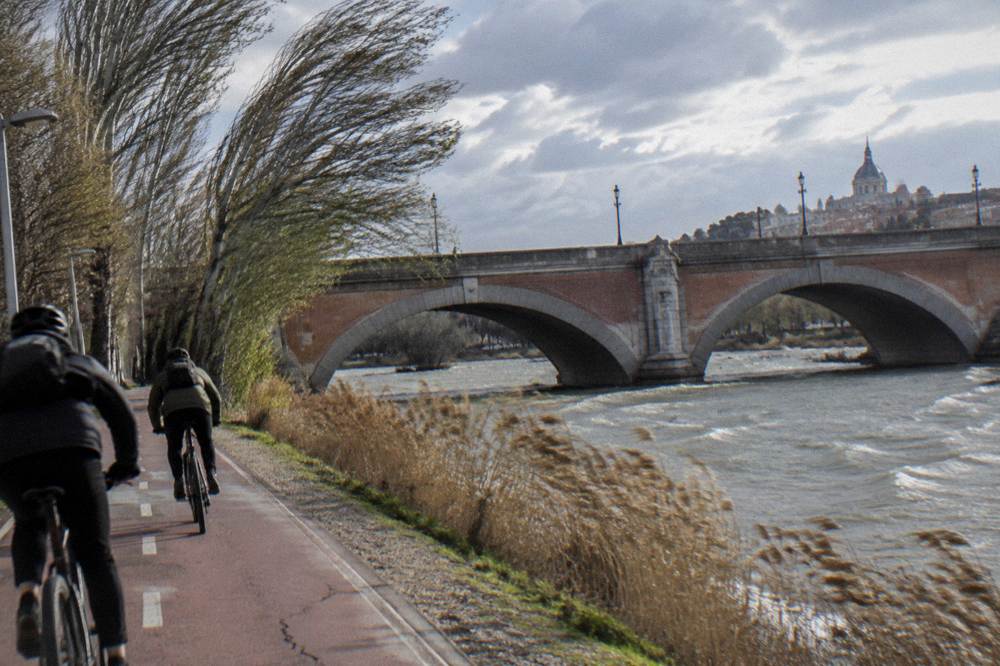
Rarely for rain, occasionally for extremes. Every tour except one lists free cancellation on its booking page, and one operator notes its rides run rain or shine. One exception exists: the Private E-Bike Highlights and Parks ride lists weather dependent cancellation and no free cancellation, so its terms deserve a read before booking in a changeable month.
Reading cancellation terms is a two minute job that saves an afternoon. Tours that include free cancellation let a rider move a date if the forecast turns, which in a city with 59 rain days a year is a reasonable safety net rather than paranoia. The weather dependent exception above, from $215.83 per person with the total depending on group size, is also the most expensive option on the site, so the terms carry real money.
Heat works differently from rain. For July and August, the booking page for each tour shows the start-time slots actually on offer. The practical move in high summer is to book a morning or evening format and keep the midday for indoor sights, a pattern the things to do in Madrid guide pairs well with rides. If you're still weighing whether the price makes sense, the guide to whether Madrid's guided tours justify their cost compares what several tickets actually bundle against what reviewers say.
For riders using the public bike system as a backup rather than a guided tour, BiciMAD runs 8,385 electric bikes across 683 stations in 21 districts, with the first 30 minutes at 0.50 EUR. It is a useful plan B when a guided slot is full, though the tourist travel pass does not include it.
Between the seasons, the honest summary is that Madrid is a year round cycling city with two windows that need care: midday in July and August, and the wettest stretch from late October through November. Every other month offers mean daily maxima between 10 and 28 degrees, which covers almost every rider's comfort band. For anyone weighing the whole decision, the are bike tours worth it in Madrid post weighs cost against value, and the deeper planning picture is on Madrid Bike Tours.
Common Questions About Madrid Weather By Month
How Hot Is Madrid In August?
August averages 25.1 degrees overall with a mean daily maximum of 31.3 degrees and a mean nightly minimum of 18.8 degrees. Rain is minimal at 10 mm over about 1.7 rain days, and the city sees 332 sun hours. Ride early or late in the day and the heat is manageable.
When Is The Best Month To Cycle In Madrid?
May, June, September and early October offer the best balance: mean daily maxima between 19 and 28 degrees, manageable rain, and long daylight. March and April are cooler and occasionally showery, while July and August suit only morning or evening rides.
What Is The Wettest Month In Madrid?
October, at 60 mm of rain across about 6.9 rain days, narrowly ahead of November at 58 mm. By contrast July and August see just 12 and 10 mm, making them the driest months on the calendar.
Is Madrid Too Cold For Cycling In Winter?
No. December and January mean daily maxima reach 10.0 and 9.8 degrees with roughly seven clear days each, and snow averages about one day in January. Midday rides with layers are comfortable; frost averages about six days in January and just over four in December.
Does It Rain More In Spring Or Autumn In Madrid?
Autumn. October and November total 118 mm between them, while April and May total 95 mm. Spring rain more often falls as short afternoon storms, with thunderstorm days peaking in May and June, whereas autumn fronts can bring longer spells of rain.
Do Madrid Bike Tours Get Cancelled For Weather?
Rarely. Most tours described here state free cancellation on the booking page and operators describe riding in light rain. One exception, the Private E-Bike Highlights and Parks ride, lists weather dependent cancellation and does not state free cancellation, so check its terms before booking.