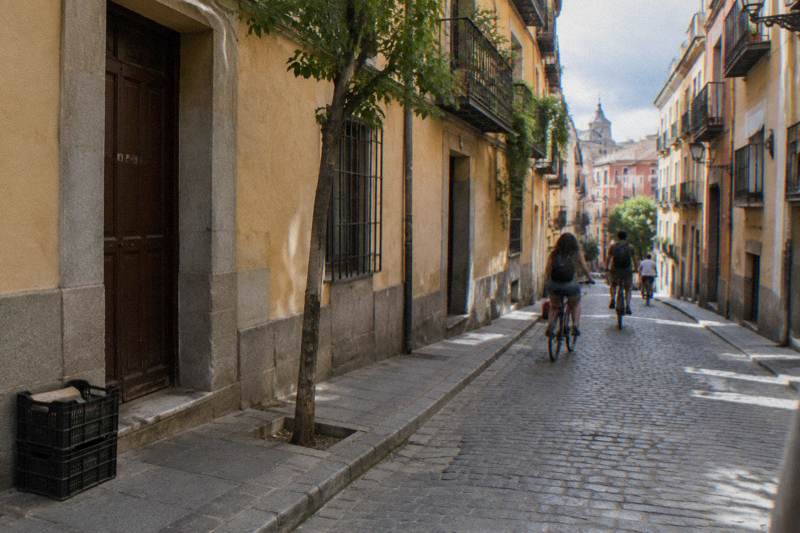
What Not To Do When Cycling In Madrid
The common cycling mistakes visitors make in Madrid, from pavement riding to headphones and heat, with the city rules behind each one and how guided rides handle them.
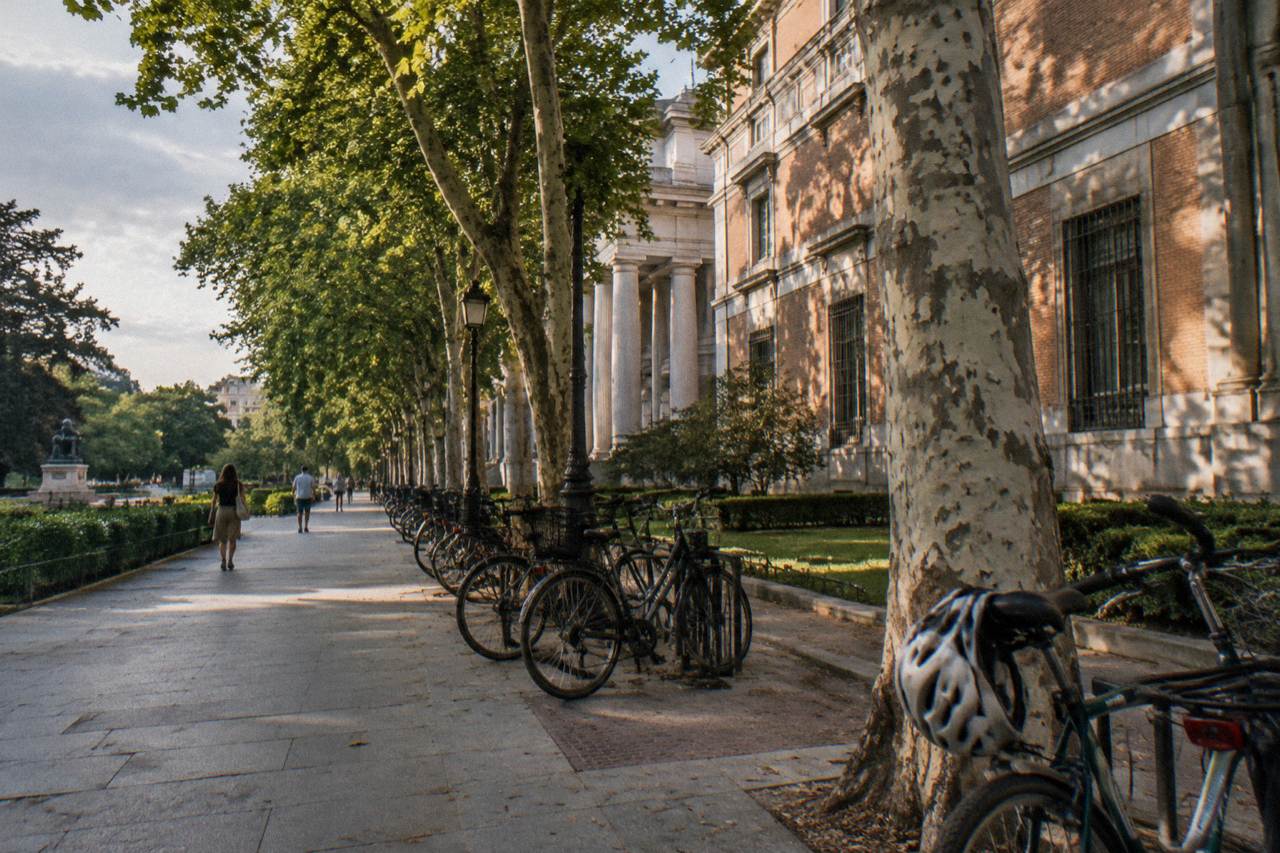
The mistakes that matter in Madrid are riding on pavements or pedestrian streets, using a phone or connected headphones, running red lights, riding the M-30 and its access ramps, and pedalling through July and August afternoons without water or shade. Each of these is either prohibited by city rules or a documented health risk in the Madrid climate, and all are easy to avoid with a little planning.
Madrid is a genuinely bike-friendly city in layout: a compact centre, calm residential streets, the Madrid Río parkland and Casa de Campo all within a short ride of the historic core. What catches visitors out is not the terrain but the rules. Spain's national traffic regulation and the city's own cycling FAQ set expectations that differ from northern Europe or the Americas in small, specific ways. If you'd rather let a local guide handle the planning, our overview of Madrid's guided cycling tours, routes and prices walks you through every option.
Most of the errors below come from three habits: treating the pavement as a bike lane, treating the bike as a pedestrian vehicle at crossings, and treating Madrid summer like a mild version of home. None of these needs a lawyer to untangle. The Madrid Bike Tours site covers the practical side elsewhere; this page is the list of things to simply not do.
One shortcut works better than any other: joining a guided ride puts a local between you and the rulebook. The 3-Hour Highlights Bike Ride, from $32.14 per person and rated 4.9 across 1,989 reviews, includes the bike, a helmet and a guide, with bottled water in the ticket; a solo explorer making every mistake at once saves nothing. Meeting points across the tour list sit in the central districts or by Retiro, so the first kilometres are calm ones under supervision rather than a solo navigation test.
Can You Ride A Bike On The Pavement In Madrid?
No. The Ayuntamiento de Madrid's cycling FAQ is explicit that bikes belong on the carriageway, riding in the centre of the lane, and that pavements, pedestrian streets and pedestrian zones are closed to bikes except signed bike-pavements limited to 10 km/h. Under-12s get a narrow exception with an adult on foot, not adult visitors.
- City Highlights Rides$29
- Parks And Madrid Río Rides$33.29
- Night And Sunset Rides$40.18
- Day Trips From Madrid$40.18
- E-Bike Tours$41.33
- Private Bike Tours$43.63
This is the single most common visitor error, and it is easy to understand why: in much of the world the pavement feels like the safe place for a bike. In Madrid the opposite is true. The city's position, published in the Oficina de la Bici FAQ, is that the road is the bike's place and bike lanes are optional unless a sign makes them mandatory. Riding in the middle of the lane is not arrogance here; it is the recommended position, and drivers keep at least 5 m behind a cyclist in the same lane under the national regulation.
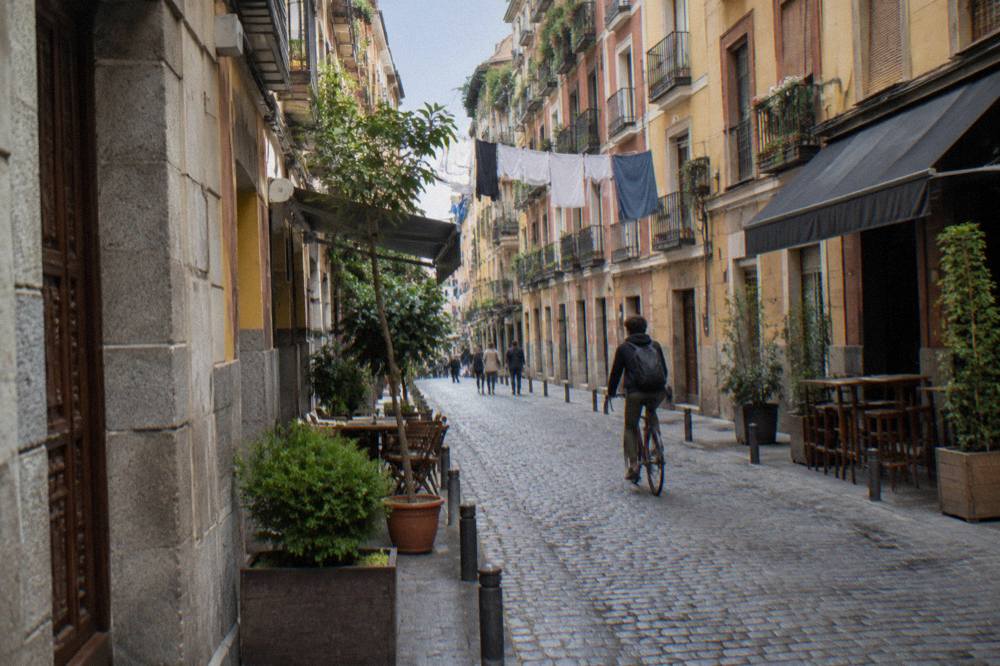
Two related traps sit inside this rule. First, pedestrian priority zones in the old centre are not bike infrastructure even when they look like plazas with room to spare; dismount and walk. Second, park paths are rideable but the speed discipline is strict and the numbers conflict between sources, so the practical instruction is simple: ride slow and give pedestrians the right of way, every time. A useful habit is to treat any space where tables and strollers outnumber pedestrians as walking territory, and remount only on the carriageway.
Guided tours handle this without lecture. The Small-Group Highlights Ride from $40.18 per person, rated 4.8 across 95 reviews, threads the Centro streets with a guide who knows which stretches are pedestrian-only, and the group cap of 15 keeps the group manageable on narrow lanes. That knowledge is exactly what a first-time visitor lacks, and it is the quiet argument for riding with a local at least once before exploring alone.
Is It Illegal To Use Your Phone Or Headphones While Cycling In Madrid?
Yes. The city FAQ bans both holding a phone and wearing headphones connected to any audio device while riding, matching the national regulation that treats a cyclist like any other vehicle operator. This is not a grey area or a courtesy suggestion, and it applies equally to rental bikes, tour bikes and BiciMAD share bikes.
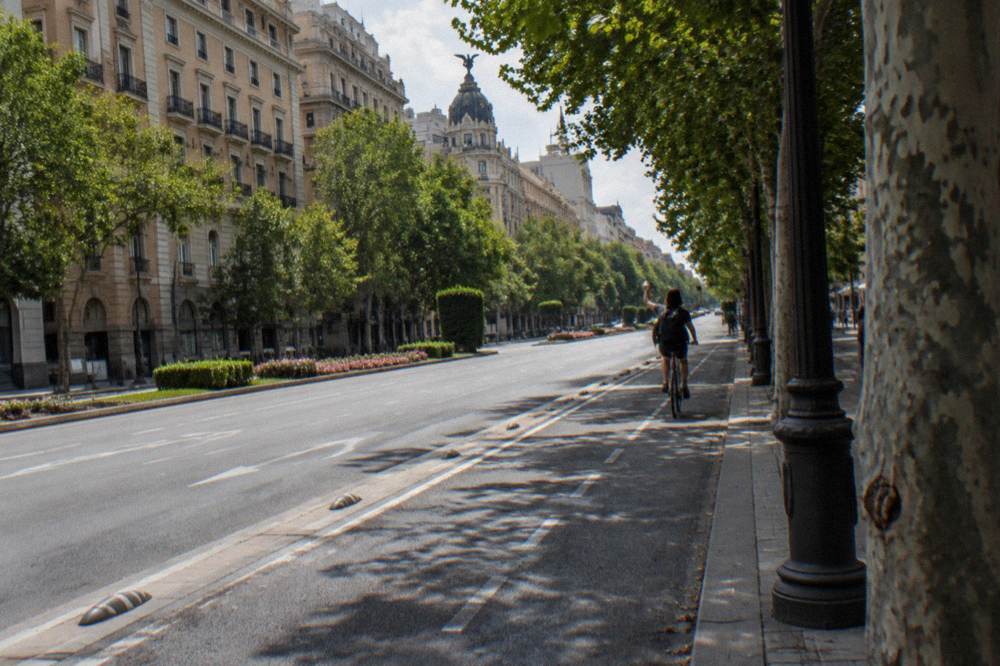
The reasoning is straightforward: a cyclist in Madrid traffic is a vehicle in traffic, and a vehicle operator needs full hearing. One earbud feels harmless and is still a connected audio device. Navigation is the usual excuse, and the workaround is cheap: mount the phone before setting off, check it stopped, or follow a guide who already knows the route. The deeper background on Spanish traffic law, including how cyclists must be treated by overtaking cars, is in the consolidated Reglamento General de Circulacion on the BOE site.
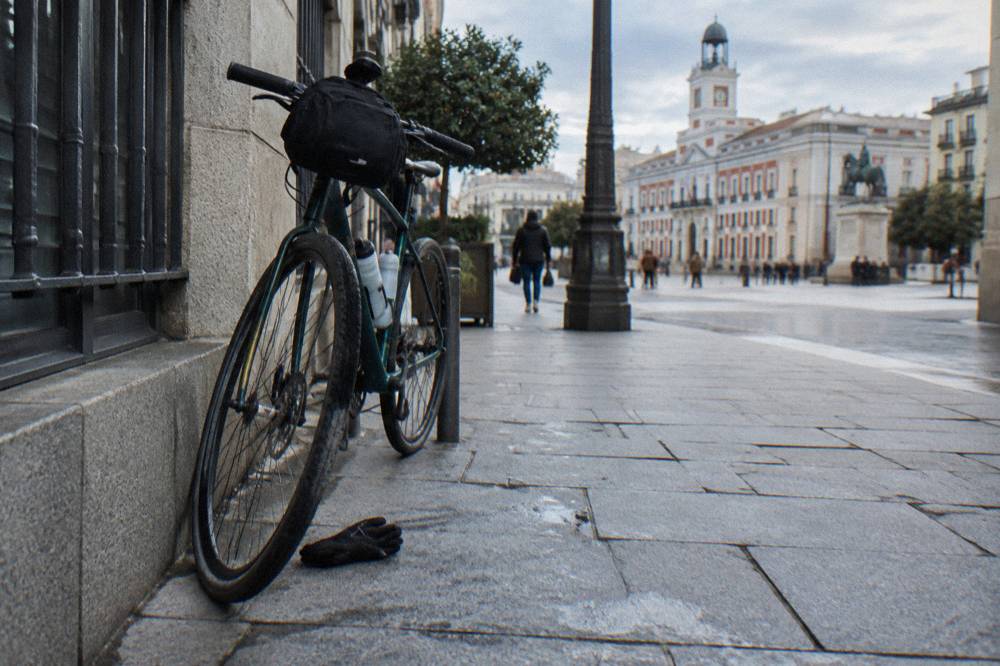
There is a second, quieter reason to drop the headphones: guided rides are talkative. The commentary is half the product on the highlights tours, and the 2.5-Hour Bike or E-Bike ride, from $31.00 per person and rated 4.5 across 815 reviews, moves through the historic core at a pace where the guide's callouts about upcoming turns matter. Split attention costs you the ride you paid for even when it breaks no rule.
The Optional Tapas Highlights Ride makes the same point from the food side: from $33.00 per person and rated 4.9 across 1,633 reviews, it pairs the guided ride with an optional tapas stop, which is a much better place for the phone than the saddle.
Can You Cycle After Drinking In Madrid?
Not above the legal limit. Spanish traffic law sets the same alcohol ceiling for cyclists as for drivers, 0.5 g/l in blood or 0.25 mg/l in breath. A glass of wine at lunch is a personal call; a tapas crawl followed by a ride across town is the mistake that turns a good evening into a serious problem.
This matters in Madrid more than in most capitals because the city's evening culture runs late and the bike is the natural way home from dinner. The honest advice is to treat the bike like car keys after more than a single drink with food. The night-ride format solves this neatly: a guided sunset or night tour puts you on the bike before dinner, not after, with the guide setting the pace. The sunset ride guide covers that format in detail.
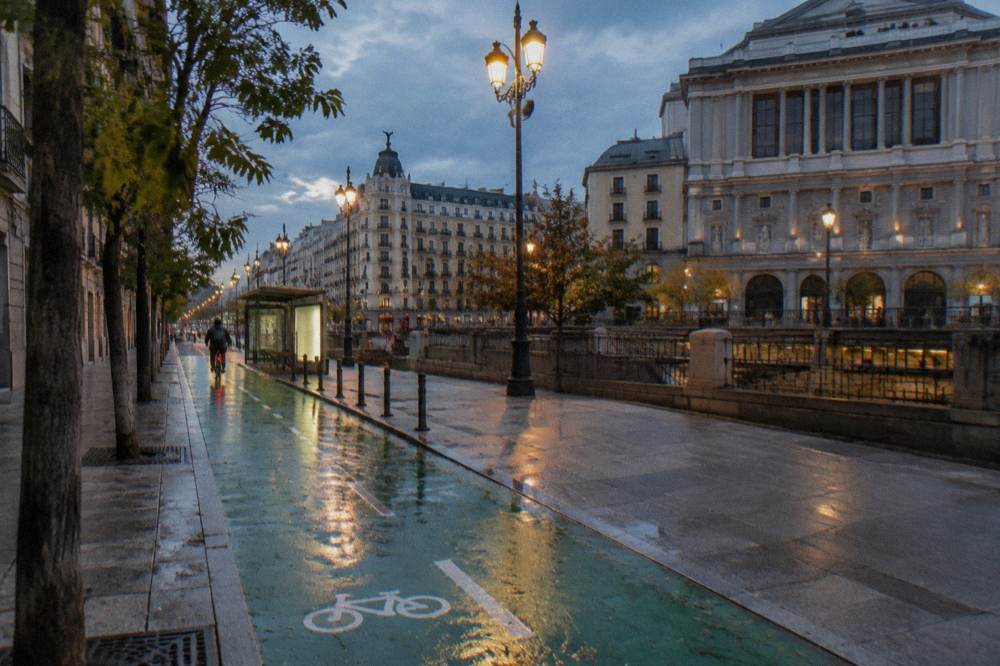
A related do-not that visitors rarely consider: riding without lights after dark. The national regulation requires a light or reflective element visible at 150 m on interurban roads, and the city FAQ asks for a front white and rear red light at night plus a rear reflector at all times in Madrid. A rented or shared bike taken out at night deserves a check of its lights before departure. A quick walk around the bike in the daylight, tyres included, prevents most of the small evening failures that end a ride early.
Where Are Bikes Banned In Madrid?
The M-30 ring motorway and its access ramps are closed to bikes outright, per the city FAQ, and Casa de Campo has its own speed cap of 20 km/h with cross-country and single-track trails off limits. Tunnels are rideable only with front and rear lights, and the bus lanes reserved for buses are out of bounds for side-by-side riding.
The M-30 point sounds obvious until a mapping app suggests it. Navigation apps optimise for cars and will cheerfully route a bike onto a motorway access ramp; the fix is to check the route type before following it. Inside the city the tunnels are the edge case: legal with lights, unpleasant without them, and generally worth avoiding on a first visit.
Casa de Campo deserves its own warning because it looks like open country. The park authority's guidance, published on esmadrid.com, caps riding at 20 km/h and restricts bikes to paved roads and wide dirt paths; the narrow trails are for walkers. The Casa de Campo guide covers the park's riding in full, and the Parks and Riverside Bike Ride, from $40.18 per person and rated 4.8 across 29 reviews, does the routing with a guide and a 10-rider cap.
| Mistake | What the rule says | Where it is stated |
|---|---|---|
| Riding the pavement | Prohibited except signed bike-pavements, max 10 km/h | City cycling FAQ |
| Phone in hand | Prohibited while riding | City cycling FAQ |
| Headphones connected to audio | Prohibited while riding | City cycling FAQ |
| Riding above 0.5 g/l blood alcohol | Prohibited for cyclists as for drivers | National traffic regulation |
| Running a red light | Applies to bikes; right turn on red only where signed | City cycling FAQ |
| Riding the M-30 or its ramps | Prohibited to bikes | City cycling FAQ |
| Cross-country trails in Casa de Campo | Off limits; 20 km/h cap on allowed paths | Park guidance |
One update worth knowing: a reform approved in June 2026 and in force since 1 October 2026 tightened national rules further, removing helmet exemptions on interurban roads and requiring drivers overtaking cyclists there to slow at least 20 km/h below the limit. The DGT press release has the detail; for city riding the practical effect is minor, but day rides beyond the city edge should plan on a helmet being required.
Two rules in the table deserve extra emphasis because they catch visitors out. The right turn on red is not a default here: it is legal only where a sign permits it, so riders from countries where it is standard should hold at the line. And the 0.5 g/l blood alcohol limit applies to cyclists as it does to drivers, so a long lunch with wine can rule out an afternoon ride. A quick pre-ride check covers the rest: lights fitted if the route touches a tunnel, phone mounted rather than held, headphones left out.
At source, the split is simple: the city cycling FAQ holds most of the rules, national traffic regulation sets the alcohol limit, and park guidance governs Casa de Campo.
What Do Tourists Get Wrong About Lane Position And Traffic Lights?
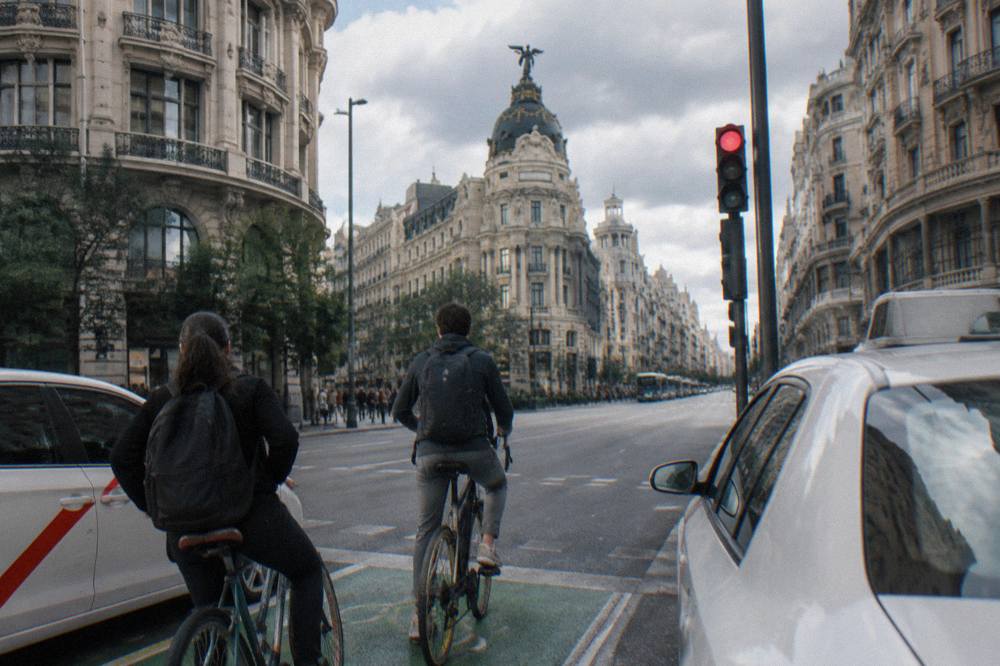
Three things: hugging the kerb instead of taking the centre of the lane, treating red lights as optional for bikes, and assuming bike lanes are mandatory. Madrid's FAQ asks cyclists to ride the carriageway centred, obey every red light with a right turn on red only where signed, and use bike lanes only when a sign requires it.
The kerb-hugging instinct feels polite and reads as danger to local drivers. A cyclist squeezed against the kerb invites close passes and gets caught in drain covers and parked-car doors; the centred position is what the city's own guidance prescribes, and the 5 m following distance motor vehicles must keep is built around it. Riding two abreast is allowed in a single lane unless conditions make it risky, though not in a reserved bus lane, so a pair of friends can talk while riding.
Red lights are the rule visitors most often test, usually by following a local across a junction. Some locals do jump lights; the FAQ is unambiguous that the signals apply to bikes. On a guided ride this resolves itself, since the group stops as one. Riders going alone through the Centro will find the cycling rules in Spain page useful for the national framework behind the city text. The Vintage Bike, Optional Tapas ride, from $29.00 per person and rated 4.9 across 1,151 reviews, is a good example of the group-stop rhythm; groups run with up to fifty riders, and a tour guide leads the way throughout.
How Hot Is Too Hot For Cycling In Madrid?
July and August are the months to respect, with mean daily maxima of 32.1 and 31.3 °C respectively and barely two rain days each, per the AEMET climate normals for Madrid Retiro. The mistake is not cycling in Madrid summer, it is riding between early afternoon and late evening without water, shade breaks or an e-bike.
The climate record for the Retiro station, published by AEMET, shows the shape of a Madrid year: June through August delivers over 300 sun hours a month with almost no rain, while October and November are the wettest at 60 and 58 mm. Summer mornings before 11:00 and evenings after 20:00 are pleasant; the middle of the day is the slot to spend indoors. May, June and September hit the sweet spot of warmth without peak heat, and May and June carry the highest thunderstorm counts, so a morning check of the sky is worth it then.
| Month | Mean daily max (C) | Rain days | Clear days | Riding note |
|---|---|---|---|---|
| May | 22.2 | 7.3 | 4.6 | Warm, watch for thunderstorms |
| June | 28.2 | 3.4 | 9.4 | Ride mornings |
| July | 32.1 | 1.7 | 17.5 | Early or late only, carry water |
| August | 31.3 | 1.7 | 13.6 | Early or late only, consider e-bike |
| September | 26.4 | 3.3 | 8.1 | Comfortable |
| October | 19.4 | 6.9 | 6.3 | Wettest month, pack a layer |
Heat planning is covered in depth on the cycling in Madrid summer heat page. Two tour-side facts help: several Madrid rides include bottled water in the ticket, including the 3-Hour Highlights Bike Ride and the 1.5-Hour Express Ride from $30.00 per person, rated 4.8 across 31 reviews, which suits a hot day precisely because it is short. E-bike options across the tour list cut effort, and effort is what generates body heat.
Common Questions About Cycling Mistakes In Madrid
What Not To Do When Cycling In Madrid?
Ride the pavement or pedestrian streets, hold a phone or wear connected headphones, jump red lights, enter the M-30 or its ramps, ride above the alcohol limit, and push through peak July and August heat without water. Those are the errors the city FAQ, the national regulation and the climate record all call out.
Do You Have To Wear A Helmet On A Madrid Bike Tour?
In Madrid the helmet is mandatory for riders under 18 and recommended for adults, per the city FAQ. Many tours include a helmet in the ticket; check the booking page for the specific ride. Since October 2026 a helmet is required for all cyclists on interurban roads under national rules.
Can You Ride Two Abreast In Madrid?
Yes, two cyclists side by side are allowed in one lane unless conditions make it risky, and never in a reserved bus lane, per the Oficina de la Bici FAQ. Groups of riders count as a single unit when a car overtakes them.
Are Bikes Allowed On The Madrid Metro?
Folding bikes are allowed without a time limit on several sections of the network and non-folding bikes face a time restriction, per esmadrid.com. The precise hours vary; check Metro de Madrid directly before travelling with a bike.
Is Cycling In Madrid Safe For Visitors?
The rules above exist in Spanish law, with the 5 m overtaking distance written into the national regulation. The main risks are heat, cobblestones and traffic in the busy core rather than crime. The is cycling in Madrid safe discussion covers the question in full.