Cycling Rules In Spain: Helmets, Lights And Road Etiquette
Spain's cycling rules come from two layers, a national traffic regulation and city ordinances, and Madrid adds its own stricter helmet age. Here is what each layer says, what changed in October 2026, and what it means for a visitor on two wheels.
Short answer
In Madrid, helmets are mandatory for riders under 18 and recommended for adults, bikes ride on the carriageway, pavements are off limits, and lights are required at night. Nationally, the alcohol limit is 0.5 g/l and, since 1 October 2026, helmets are mandatory on all interurban roads with no exemptions.
What Are The Basic Rules For Cycling In Spain?
Spain's cycling rules live in the Reglamento General de Circulacion, the national traffic regulation, and they treat a bicycle as a vehicle with full road rights and duties. Cyclists ride on the carriageway, obey traffic lights, keep to a 0.5 g/l blood alcohol ceiling, and may ride two abreast in a single lane. Bike lanes are generally optional unless a sign makes them mandatory. For a sense of how those rules play out in the capital, this honest guide to cycling in Madrid weighs the hills, heat and traffic against the city's parks and bike-share.
The national text, published through the official consolidated regulation on the BOE site, sets the default position for every cyclist in the country: the carriageway, not the pavement. Under-12s are the single narrow exception, and only where a municipal ordinance allows it, and only with an adult walking alongside. Bike lane use is preferred but compulsory only where the specific R-407a sign is posted, which is rarer than many visitors assume.
A few of the national rules matter more to a tourist than they might first appear. Alcohol limits for cyclists match those for car drivers: 0.5 g/l blood or 0.25 mg/l breath, and the regulation is enforced. Riding with a phone in hand or headphones connected to an audio device is prohibited. At night or in poor visibility on interurban roads, at least one light or reflective element must be visible from 150 metres. None of this is exotic; it is ordinary vehicle law applied to a bicycle.
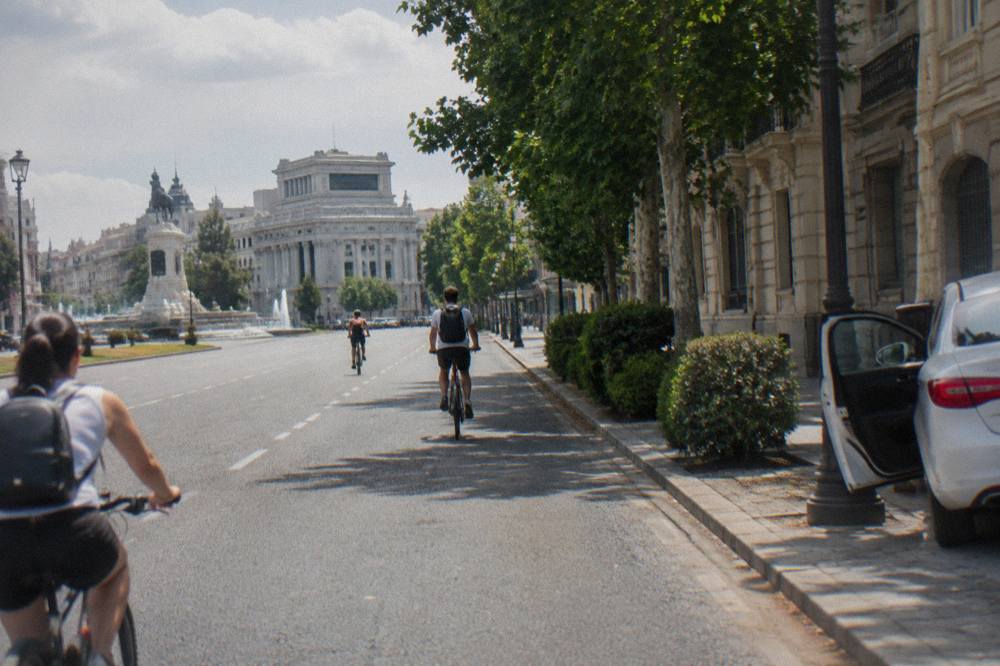
Madrid layers its own ordinance on top. The city's Oficina de la Bici FAQ confirms the national default for the capital: bikes belong on the road, ideally in the centre of the lane, with the right-hand lane preferred on multi-lane streets. Two riders side by side are allowed in one lane unless conditions make it risky, and never in a reserved bus lane. Pavements, pedestrian streets and pedestrian zones are closed to bikes except signed bike-pavements, where the ceiling is 10 km/h.
Do You Have To Wear A Helmet On A Bike In Spain?
It depends on your age and where you ride. In Madrid city, the Ayuntamiento rule is that helmets are mandatory for everyone under 18 and recommended for adults. Nationally, the consolidated regulation set the age at under 16 on all roads, but since 1 October 2026 helmets are mandatory for every cyclist on interurban roads, with the old exemptions removed.
This is the single most confused topic in Spanish cycling law, because three texts give three answers and all three are current in their own scope. The consolidated national regulation said under-16s on all roads, with adults required only on interurban roads unless exempted (heat, steep climbs, medical reasons). Madrid's city ordinance is stricter for the capital: under 18, full stop, per the city FAQ. And the reform approved by the Council of Ministers, announced on 23 June 2026 and in force from 1 October 2026, removed the interurban exemptions entirely, so an adult on a country road now wears a helmet regardless of the weather or the hill.
- City Highlights Rides$29
- Parks And Madrid Río Rides$33.29
- Night And Sunset Rides$40.18
- Day Trips From Madrid$40.18
- E-Bike Tours$41.33
- Private Bike Tours$43.63
For a visitor riding inside Madrid, the practical rule is the city one. Under 18 means a helmet, and the city attributes that rule to the Ayuntamiento directly. For adults in the city centre a helmet is recommended, not mandatory, unless the person is riding as an economic activity, meaning delivery, rental or passenger transport work, in which case it is mandatory along with civil-liability insurance. Tour riders are not in that category, and while many guided tours on this site include a helmet in the ticket, others leave it unmentioned, so check the booking page before you ride. The question of what a tour provides is covered in the helmet question for guided rides.
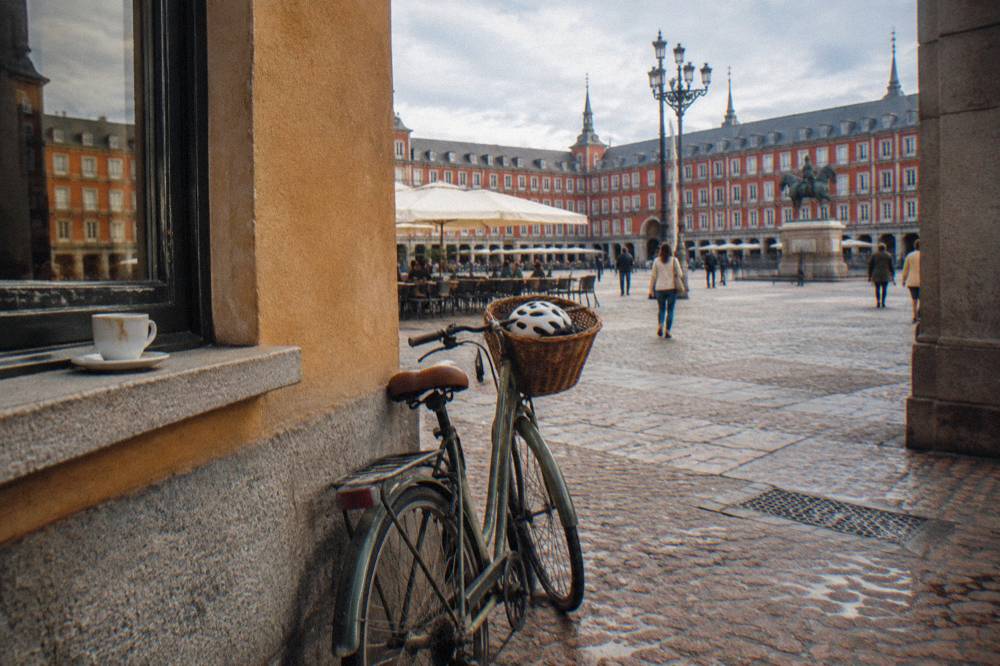
The table below keeps the three scopes straight, because almost every summary you will read merges them into one wrong answer.
| Scope | Who must wear a helmet | Source |
|---|---|---|
| Madrid city streets and parks | Mandatory for riders under 18; recommended for adults. | Ayuntamiento de Madrid, Oficina de la Bici FAQ |
| National, urban roads outside Madrid | Riders under 16 under the consolidated text; cities may set stricter local rules | Reglamento General de Circulacion |
| Interurban roads, from 1 Oct 2026 | Every cyclist, no exemptions | DGT reform announcement of 23 June 2026 |
One caution: the fine figures that circulate online mostly misattribute a 200 EUR penalty to ordinary cyclists. The DGT press release of 23 June 2026 attaches that 200 EUR figure to specific grave cases, including delivery riders without a helmet or reflective vest. It does not announce a general 200 EUR fine for a tourist riding bare-headed in Retiro, and no such general fine should be stated.
Where Are You Allowed To Ride In Madrid?
On the carriageway, in bike lanes where they exist, and on park paths wide enough and signed for cycling; not on pavements, not on pedestrian streets, and never on the M-30 or its access ramps. Park riding means slow speeds and pedestrian priority, and in Casa de Campo the speed ceiling is 20 km/h.
The centre-of-the-lane advice surprises visitors most. Madrid's own FAQ tells cyclists to ride in the middle of the lane on the carriageway, which is not aggression but visibility: it stops drivers attempting a squeeze-past that leaves centimetres. On multi-lane roads the right-hand lane is preferred. Two abreast is legal in one lane unless risky, so guided groups can ride in pairs instead of a long single file when conditions allow.
Parks are where the rules get genuinely murky. The city FAQ describes cycling allowed on park paths wider than 3 metres at a slow pace with pedestrians first, and an even slower pace when there is no separate pedestrian space at busy times. A 2026 regional order is reported to set a different figure, and because the two conflict, neither number should be treated as settled; ride slowly and give pedestrians priority, full stop. The one firm park number is Casa de Campo's 20 km/h cap, along with its ban on cross-country riding and single-track trails: paved roads and wide dirt paths only. See the official park guidance on esmadrid.com. Riders planning the western parks can pair that with the Casa de Campo ride guide.
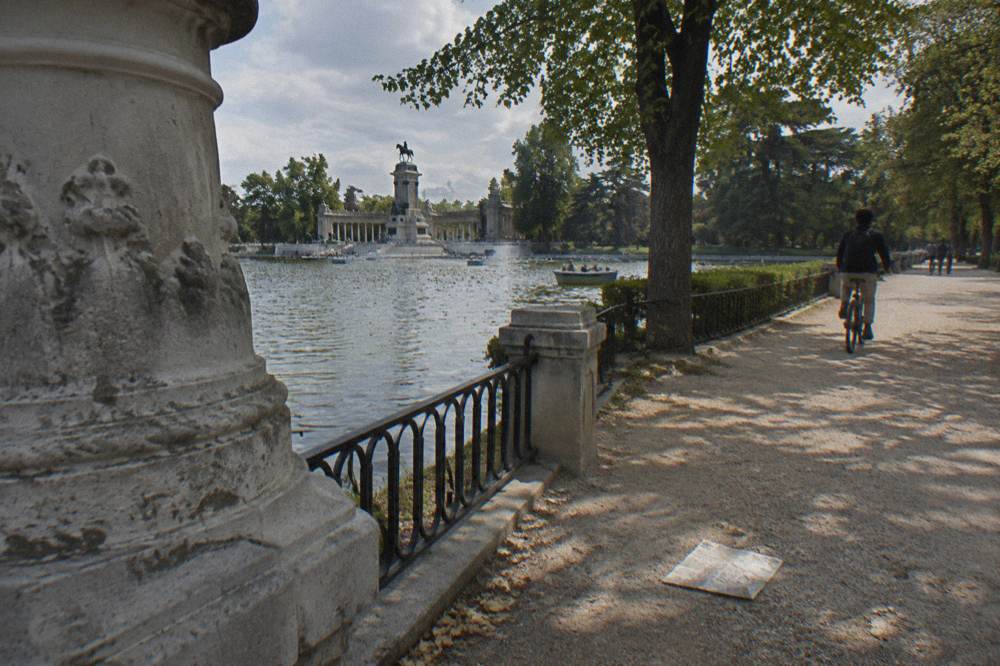
The M-30, the ring motorway around the city core, is closed to bikes along with all its access ramps. City tunnels are open to bikes with front and rear lights, ridden with care. Red lights apply to bicycles exactly as to cars, and a right turn on red is legal only where a sign permits it.
| Location in Madrid | Bikes allowed? | Condition |
|---|---|---|
| Carriageway | Yes | Centre of lane; right-hand lane on multi-lane roads |
| Bike lanes | Yes, optional unless signed mandatory | Prefer the lane where one is signed |
| Pavements and pedestrian streets | No | Exception: signed bike-pavements at max 10 km/h |
| Park paths | Yes, on wide paths | Slow, pedestrians first; Casa de Campo max 20 km/h |
| M-30 and access ramps | No | Prohibited outright |
| City tunnels | Yes | Front and rear lights, ride with care |
How Do Overtaking And Group Riding Rules Work?
Spanish law is unusually specific here: motor vehicles must keep at least 5 metres behind a cyclist in the same lane, cyclists may ride two abreast in one lane, a cyclist group counts as one unit when being overtaken, and since October 2026 a car passing a cyclist on an interurban road must slow at least 20 km/h below the limit.
The 5-metre following rule comes from article 153.4 of the national regulation and applies on urban roads, which covers Madrid's streets. It exists so that overtaking drivers drop their speed and leave room, and it gives a rider legal standing to hold the centre of the lane rather than hug the kerb. The two-abreast rule has a similar logic: a pair of riders is a shorter obstacle to overtake than a long single-file line, so riding side by side is legal unless conditions make it risky or the lane is a reserved bus lane.
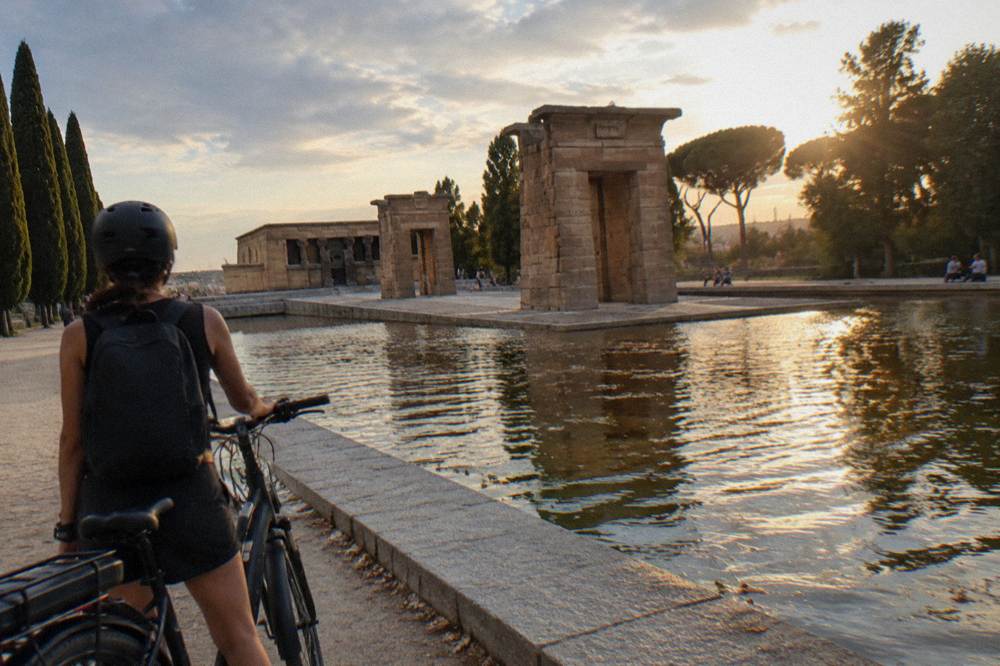
The 2026 reform sharpened the interurban side of the equation. Overtaking a cyclist on a road between towns now requires the passing driver to reduce speed by at least 20 km/h below the posted limit, a requirement that applies whenever a motor vehicle passes someone riding a bike. None of this changes what a city visitor does day to day, but it explains the road culture: drivers in Madrid are, broadly, trained to expect bikes in the lane and to give them room, which is one reason the city ranks as comfortable for cycling, a question examined in detail in is Madrid good for cycling.
What Changed In The October 2026 Reform?
Three things matter to cyclists: the helmet exemptions on interurban roads were removed, so every cyclist on those roads now wears one; delivery riders must wear a helmet and reflective vest at all times; and drivers overtaking cyclists on interurban roads must slow at least 20 km/h below the limit. The changes took effect on 1 October 2026.
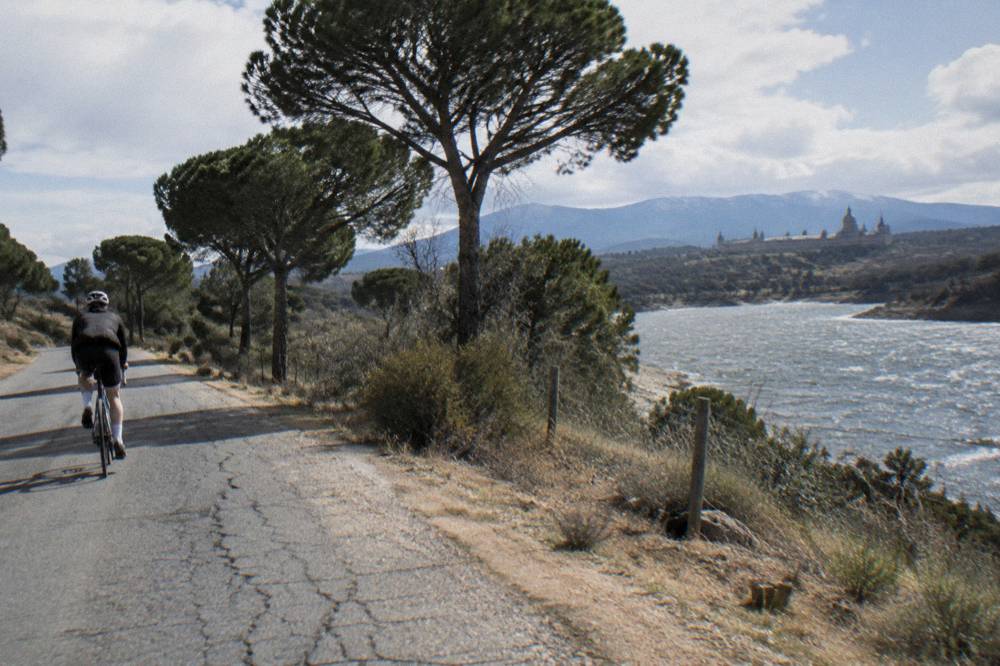
The reform was announced by the traffic authority DGT on 23 June 2026 and entered force at the start of October that year, with a small number of provisions phased to 1 October 2027 for lighting and homologated motorcycle helmets. For a visitor riding inside Madrid the practical impact is limited, because the city ordinance already required helmets for under-18s and the urban adult rule did not change. Its real weight falls on day rides leaving the city: the reform applies to interurban roads, the road type of the El Escorial route is not mentioned, El Pardo lies within the Madrid municipality, and the old exemptions for heat, hills or medical reasons no longer exist there. Everything else covered here is indexed on Madrid Bike Tours.
The reform also tightened rules for powered personal vehicles, raising the minimum age to 15 and requiring helmets and night vests for e-scooter riders, but that is a separate vehicle class from the bicycles this site covers. The delivery-rider provisions, helmet plus reflective vest at all times, are the cases carrying the 200 EUR grave-infraction fine. The regulation number quoted in some news coverage is not confirmed in the official release, so it is left out here.
| Rule | Before 1 Oct 2026 | After 1 Oct 2026 |
|---|---|---|
| Helmet on interurban roads | Mandatory with exemptions for heat, climbs, medical reasons | Mandatory, exemptions removed |
| Overtaking a cyclist, interurban | Standard overtaking rules, 5 m separation urban | Driver must also drop 20 km/h below the limit |
| Delivery riders | General helmet rules | Helmet and reflective vest at all times, 200 EUR grave infraction |
| E-scooter minimum age | Varies by class | 15, with helmet mandatory |
Can You Take A Bike On Public Transport In Madrid?
Only a folding bike travels easily: EMT buses take one folded hand-luggage-size bike per bus, Renfe treats a folding bike as free hand luggage up to 180 cm folded, and the Metro allows folding bikes without time limit on several sections while non-folding bikes face a time restriction. The Tourist Travel Pass does not include BiciMAD.
The folding-bike exception is consistent across every operator. On the city's EMT buses, the bike must be folded before boarding, fit hand-luggage dimensions, ride on the central platform, and give way to wheelchair users; one per bus, subject to space. Renfe's luggage rules count a folding bike as free hand luggage provided the sum of its folded height, length and width stays under 180 cm, a rule confirmed on the operator's own baggage page. The Metro's own bike pages are not reliably accessible, so the safe wording is the official tourism site's: folding bikes are allowed without a time limit on several sections, non-folding bikes face a time restriction, and current detail should be checked with Metro de Madrid directly.
BiciMAD, the municipal electric bike-share, is a different animal: 683 stations across 21 districts and 8,385 electric bikes, with a basic fare of 0.50 EUR for the first 30 minutes, another 0.50 EUR for the second 30, then 3 EUR per further half hour, per the official BiciMAD fare page. The minimum age is 14, helmets are mandatory for under-18s there too, and the bikes stay on the road, never the pavement. Visitors holding a Tourist Travel Pass sometimes assume it unlocks BiciMAD; it does not, per the official tourism site's transport-pass page. Casa de Campo has no docking station inside it, the nearest sits at Principe Pio, and rates rise after the third hour for bikes kept in the park.
| Transport | Folding bike | Non-folding bike |
|---|---|---|
| EMT city bus | Yes, folded, hand-luggage size, one per bus, central platform | No |
| Renfe train | Free hand luggage up to 180 cm folded | Rules vary; check the operator |
| Metro de Madrid | Allowed without time limit on several sections | Time restriction applies; check Metro de Madrid |
| BiciMAD | Not applicable, share bikes stay in the system | Not applicable |
How Do Guided Tours Handle The Rules?
A guided ride outsources the legal homework: the operator picks legal routes, supplies a bike and usually a helmet, briefs the group on road position, and keeps everyone on paths where bikes are permitted. Every Madrid tour on this site states free cancellation except one private option, and all set a fixed street meeting point, though a few can add hotel pickup if you select that option: check the booking page.
This is the quiet argument for a guide over a solo rental, and it is a legal one as much as a navigational one. A guide who rides Madrid daily knows which park entrances welcome bikes, where the pedestrianised stretches begin, and how to move fifteen riders through a roundabout without a pavement detour. The tourist does not need to memorise the ordinance, because the route itself embodies it. The 3-Hour Highlights Bike Ride is the clearest example: it runs from C. de Felipe IV, 10 beside Retiro, costs from $32.14 per person, caps groups at 15, and includes the bike, a helmet, a guide and bottled water, with free cancellation. It rates 4.9 across 1,989 reviews, the largest review pool of any ride covered on this site.
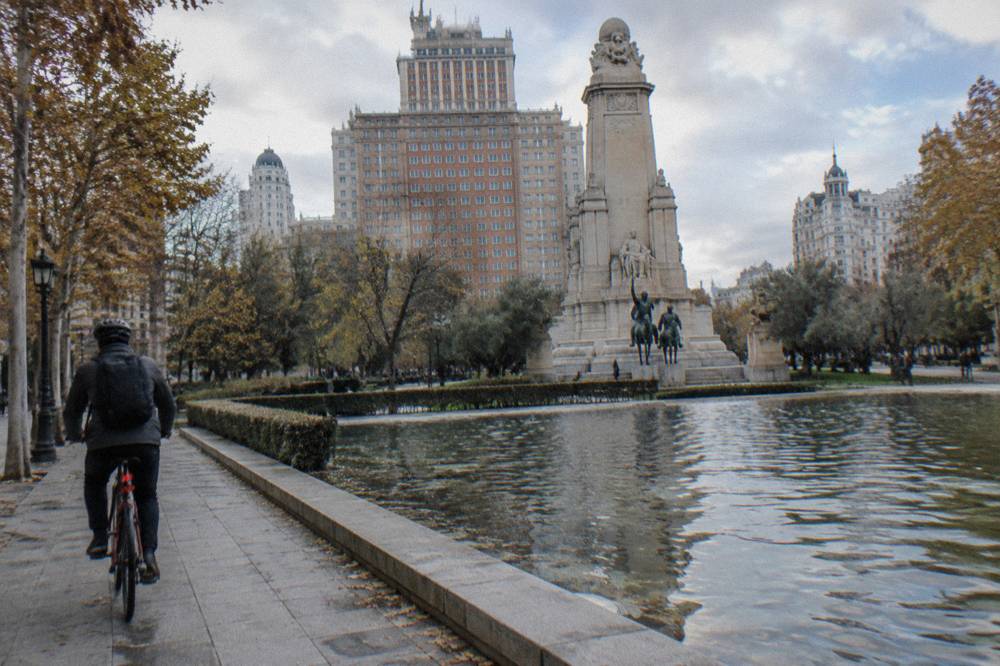
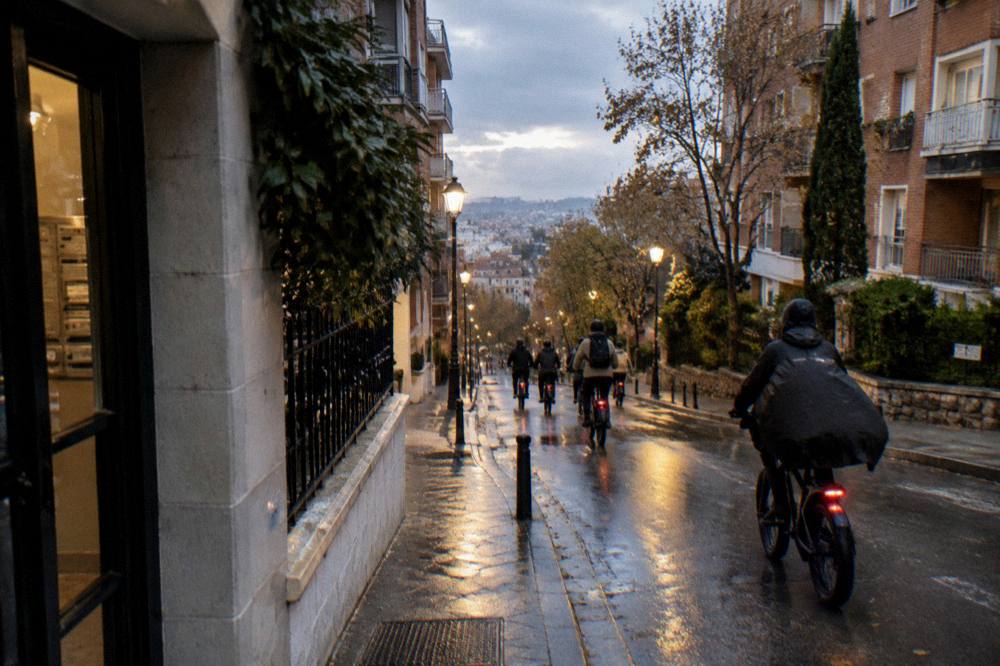
Other formats apply the same rules to different briefs. The "Small-Group Bike or E-Bike" ride, from $37.00 per person and rated 4.9 across 329 reviews, starts on C. de Juan Álvarez Mendizábal in Moncloa and lets each rider choose a regular bike or an e-bike; the booking page notes the tour runs rain or shine, with a 2 EUR poncho if needed. At the other end of the day, the "Sunset and Night Lights E-Bike" ride, 4.9 across 17 reviews and from $45.00 per person, is the format where the lighting rules become practical rather than theoretical; its inclusions run to guide, helmet, raincoats, lock and insurance, with lights not mentioned, so check the booking page. Beginners nervous about holding a lane in Spanish traffic can read the beginner's guide to a Madrid ride before booking.
What Should Visitors Know About Lights, Phones And Alcohol?
At night you need a white front light and a red rear light, with a rear reflector at all times; a phone in hand or headphones connected to an audio device are prohibited while riding; and the alcohol ceiling is 0.5 g/l blood or 0.25 mg/l breath, identical to car drivers. Fines and enforcement vary, so the safe course is simple compliance.
Night riding is where the equipment list earns its place. The city ordinance asks for a white front light and red rear light after dark, plus a rear reflector at all times, and the national regulation's 150-metre visibility standard applies on interurban roads. Riding through the lit centre of Madrid can lull a visitor into skipping the lights, but tunnels are legal for bikes only with front and rear illumination, and lights are not mentioned among the inclusions of the guided sunset and night rides, so check the booking page before you ride. Lighting is only one area where visitors slip up, so the roundup of cycling mistakes to avoid in Madrid makes a handy companion read, covering everything from pavement riding to headphones.
The phone rule is absolute: no handheld phone while riding, and no headphones connected to any audio device, which catches riders using a single earbud for navigation. The alcohol rule surprises people most, because Spain applies the driver's limit to cyclists. A glass of wine at a midday tapas stop is ordinary life; a fourth glass followed by a bike is the same offence it would be behind a wheel. Riders weighing a food-focused format against a classic highlights loop can compare the options in the bike and tapas tour guide, where the all-inclusive 5-Hour Food E-Bike ride, rated 5.0 across 44 reviews and from $102.17 per person, builds the eating into a guided route so nobody rides home self-navigated and over the limit.
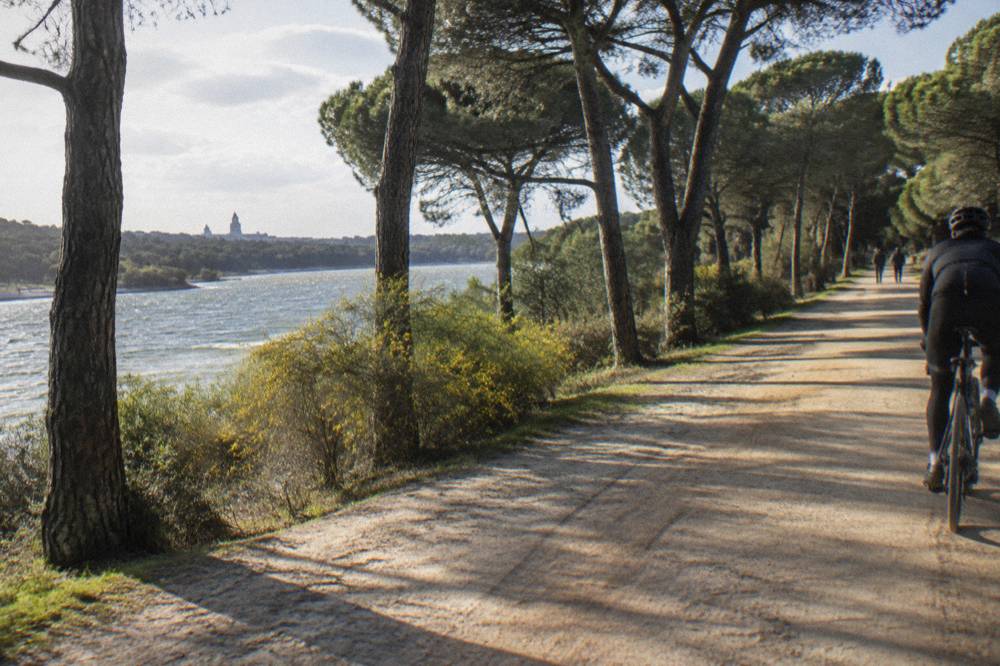
Weather and season shape compliance more than most visitors expect. July in Madrid averages a mean maximum of 32.1 °C with just 1.7 rain days, while October is the wettest month at 60 mm and November follows at 58 mm, per the AEMET climate normals for the Retiro station. A helmet that feels optional on a mild April morning feels non-negotiable on a 32-degree July afternoon, and the reform removed the heat exemption on interurban roads anyway. The full month-by-month picture, including what to wear, is in the Madrid weather guide and what to wear on a Madrid ride.
Safety, in the end, is mostly positioning and predictability rather than paperwork, and the question of how safe Madrid actually feels on two wheels, collision context and all, is treated on its own page. The short version for this page: the rules above are not arbitrary, each one maps to a specific conflict between bikes and cars or bikes and pedestrians, and a rider who follows them is riding the way the city's own planners expect.
Common Questions About Cycling Rules In Spain
What Are The Basic Rules For Cycling In Spain?
Bikes are vehicles under the Reglamento General de Circulacion: ride on the carriageway, obey traffic lights, respect the 0.5 g/l blood alcohol ceiling, avoid handheld phones and connected headphones, and use a white front and red rear light at night. Bike lanes are optional unless a sign makes them mandatory, and two riders may ride abreast in one lane unless risky.
Do You Have To Wear A Helmet On A Bike In Spain?
In Madrid, yes if you are under 18, per the Ayuntamiento rule; adults in the city are advised but not required to wear one, except riders doing so as an economic activity. Nationally, the consolidated text set the age at under 16 on all roads, and since 1 October 2026 helmets are mandatory for every cyclist on interurban roads with no exemptions.
Can You Ride A Bike On The Pavement In Madrid?
No. Pavements, pedestrian streets and pedestrian zones are closed to bikes, except signed bike-pavements where the ceiling is 10 km/h. Under-12s may ride on pavements at up to 5 km/h with an adult on foot where the rules allow. On the road, the city FAQ advises riding in the centre of the lane.
What Is The Alcohol Limit For Cyclists In Spain?
The same as for car drivers: 0.5 g/l blood or 0.25 mg/l breath. Riding above the limit is an offence, and the rule is enforced, so plan food and wine stops with the ride home in mind.
What Changed In The October 2026 Cycling Reform?
From 1 October 2026, the helmet exemptions on interurban roads were removed, delivery riders must wear a helmet and reflective vest at all times, and drivers overtaking cyclists on interurban roads must reduce speed by at least 20 km/h below the posted limit. E-scooter rules were also tightened, with a minimum age of 15 and mandatory helmets.
Are Bikes Allowed In Madrid Parks?
Yes, on paths built for it, ridden slowly with pedestrians given priority. Reported speed figures for city parks conflict between sources, so treat no number as settled there; the one firm park limit is Casa de Campo at 20 km/h, with cross-country riding and single-track trails banned.