Casa De Campo Guide: Size, Lakes And Getting There
Casa de Campo is Madrid's largest park, a former royal hunting ground west of the city centre where cycling is allowed on paved roads and wide dirt paths under a 20 km/h speed cap. Here is what to expect, which guided rides go there, and how to reach it.
Short answer
Casa de Campo is a huge park west of central Madrid with a lake, a zoo, an amusement park and a cable car link to the Pintor Rosales area. Cycling is permitted on paved roads and wide dirt paths, capped at 20 km/h, with no cross-country riding. Guided rides from $40.18 per person visit the park.
What Is Casa De Campo In Madrid?
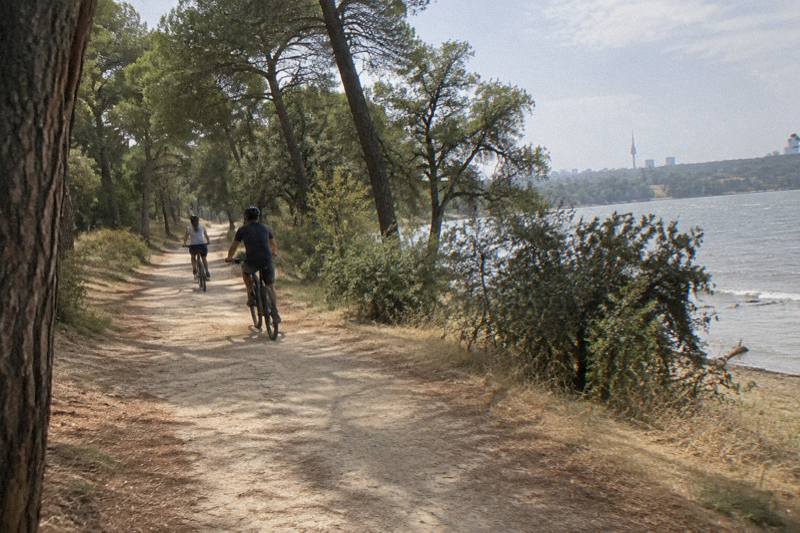
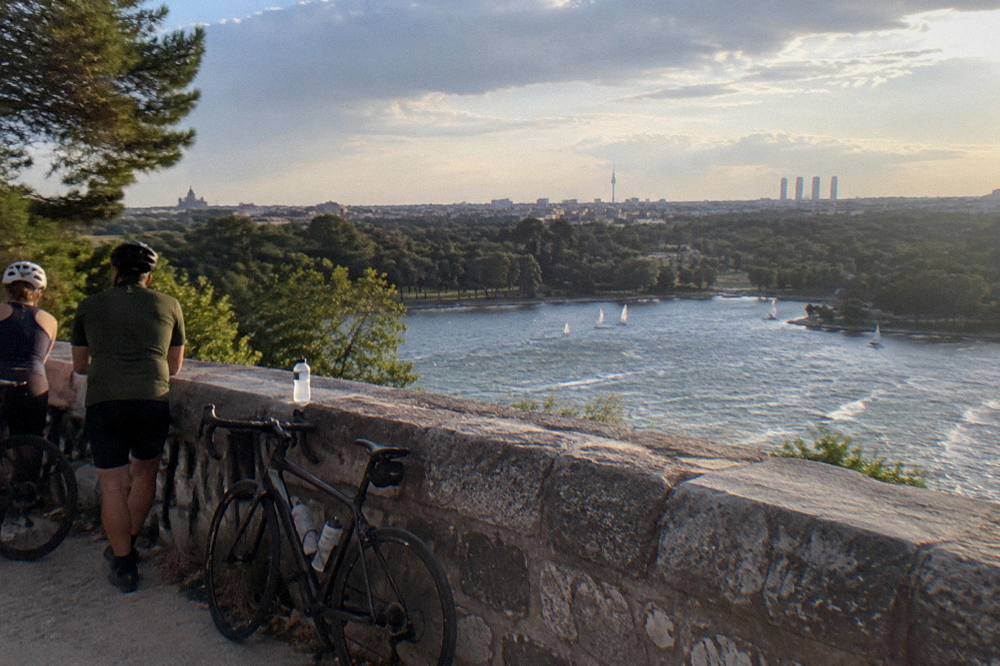
Casa de Campo is Madrid's largest park, a former royal hunting estate set on a hill west of the city centre, across the Manzanares river from the Royal Palace and the Madrid Río parkland below. Its grounds hold a lake with rowing boats, a zoo and aquarium, an amusement park and a swimming pool complex, and a cable car links it to the city centre.
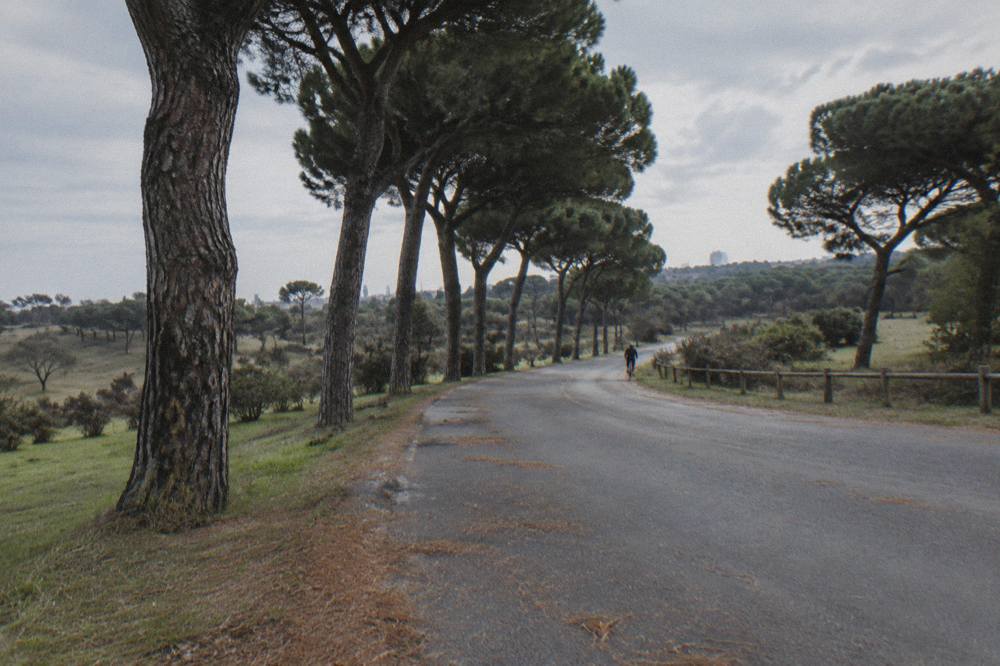
The land belonged to the Spanish crown for centuries, used as a hunting ground close to the palace, before being handed to the city as public parkland in the last century. That history explains the layout: instead of the formal gardens of Retiro, you get wide swaths of holm oak and pine, unpaved tracks, and long sightlines over the scrubland toward the Sierra de Guadarrama on a clear day. The park is part of the same green corridor as Madrid Río, the linear park built along the Manzanares, so a ride from the city centre through Madrid Río and up into Casa de Campo is one of the most natural cycling outings in the capital, covered in detail in the Madrid Río park guide.
For visitors weighing a bike visit against a walking one, the scale is the argument. Retiro can be crossed on foot in twenty minutes; Casa de Campo cannot, and its main sights are spread across separate corners joined by access roads and dirt tracks. That is why several operators run guided two and three hour rides that combine the riverside path with the park interior, and why the question of which bike suits the hills here, answered in the electric bike versus regular bike comparison, matters more than it does on the flat centre.
The park is also the destination of guided Casa de Campo rides, and it earns that status honestly: it is one of the few places in the city where traffic fades, shade is plentiful in summer, and the riding feels like countryside rather than urban commuting.
How Big Is Casa De Campo And What Can You See There?
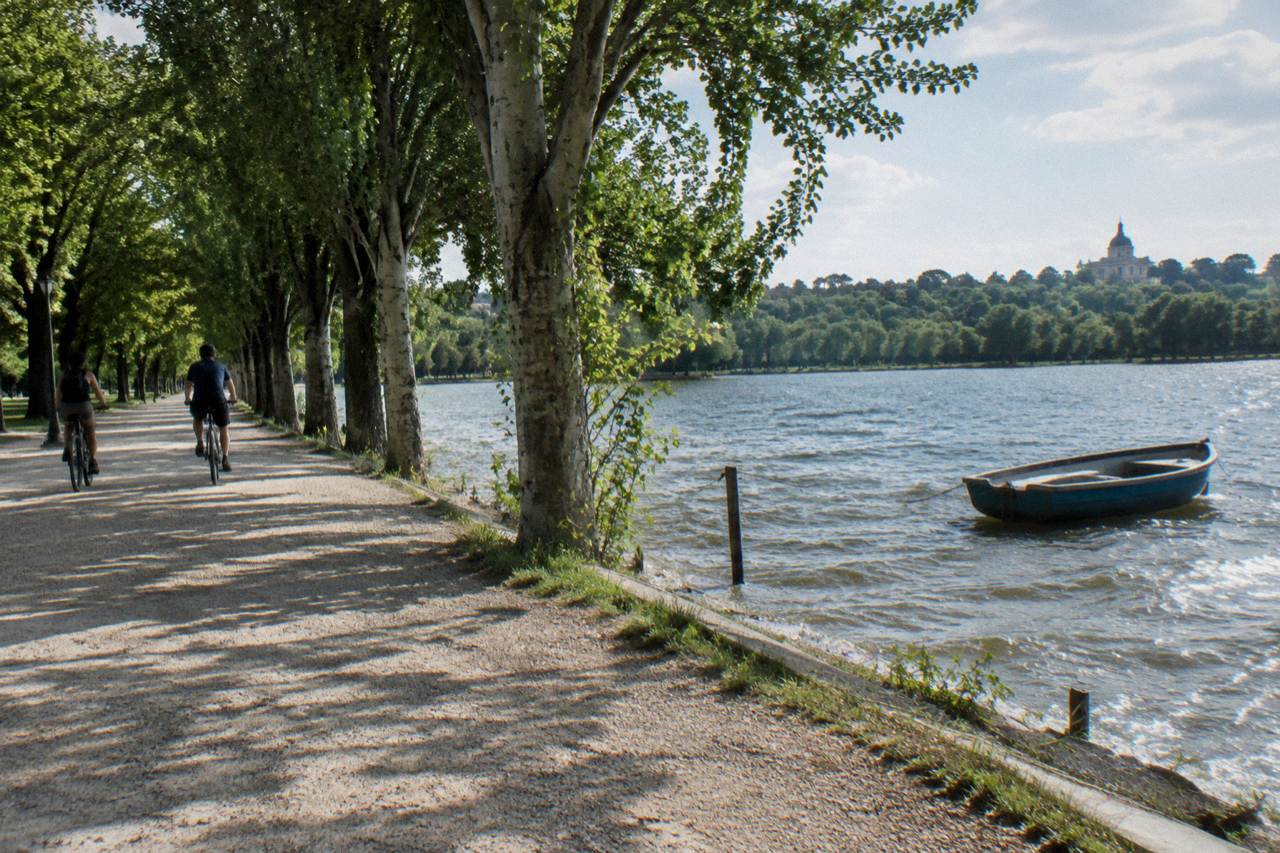
The park covers several square kilometres of wooded hillside, by far the largest green space inside Madrid, and its main sights sit in different corners linked by roads and paths. The lake is the hub most visitors head for, with boat hire, terraces and picnic lawns, and from the western edges there are wide views over the city.
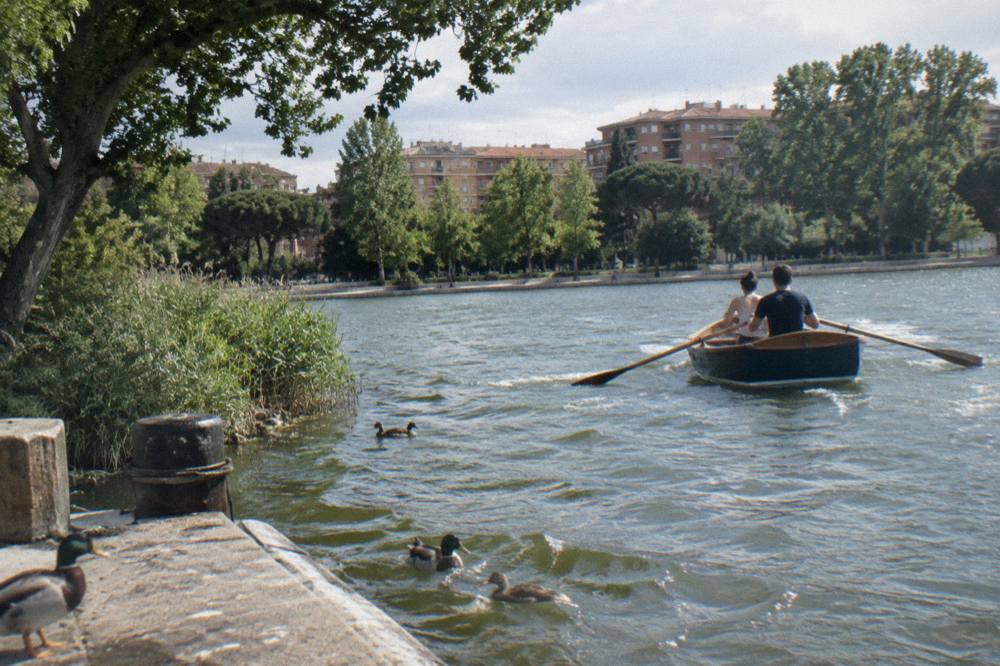
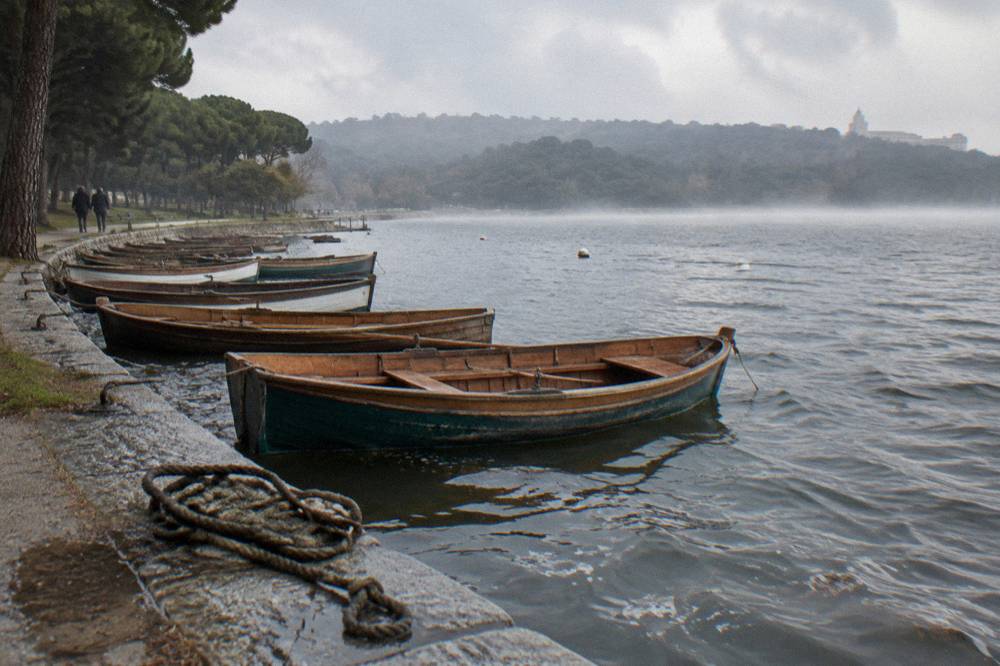
The lake, officially the Lago de la Casa de Campo but usually just called the lake or el lago by locals, is the social centre. Rowing boats, terraced restaurants and lawns sit at its northern end, and the roads around it carry most of the casual bike and scooter traffic in the park. Guides on the Casa de Campo rides take you into the park itself, though a stop at the lake is not mentioned, so check the booking page for each itinerary.
- City Highlights Rides$29
- Parks And Madrid Río Rides$33.29
- Night And Sunset Rides$40.18
- Day Trips From Madrid$40.18
- E-Bike Tours$41.33
- Private Bike Tours$43.63
The other headline attractions cluster along the park's edges. The Zoo Aquarium sits toward the southwest, the Parque de Atracciones amusement park occupies the centre-south, and the cable car terminal on the park's northeastern corner connects across the river to Pintor Rosales near Argüelles. The pools of the Parque Lago complex open in summer. None of these attractions is a cycling destination in itself, but together they shape where paths, car parks and crowds are, which any rider should account for.
A shortlist of what the park holds:
| Sight | Where In The Park | Relevance For Cyclists |
|---|---|---|
| The lake and boat hire | North-central, the main hub | Refreshment stop, busiest paths nearby |
| Cable car terminal | Northeastern corner | Scenic link to the centre, no bikes carried |
| Zoo Aquarium | Southwestern side | Car traffic on access roads nearby |
| Parque de Atracciones | Centre-south | Crowds and buses on event days |
| Pooled woodland tracks | Throughout the interior | The quiet riding most tours come for |
| Viewpoints over the city | Western and northern edges | Reward after the climb from the river |
Because the park is the anchor destination of the riverside rides, three guided options cover it well, and they are worth comparing before you decide how to see it.
Can You Cycle In Casa De Campo?
Yes, cycling is allowed in Casa de Campo, but only on paved roads and wide dirt paths: cross-country riding and narrow trails are prohibited, and the speed cap inside the park is 20 km/h. There is no BiciMAD docking station inside the park itself, the nearest one is at Príncipe Pío, so the bike-share system is an option for reaching the edge rather than touring inside.
Those rules come from the official city guidance on cycling in Casa de Campo, which spells out the 20 km/h cap, the ban on cross-country riding and trails, and the paved-road-and-wide-path rule. In practice this makes the park friendlier to casual riders than it first appears: the interior roads carry little through traffic, the dirt paths that are open to bikes are wide and firm, and the areas closed to bikes are the singletrack that mountain bikers might otherwise seek out. Anyone wanting hard off-road riding should look outside this park.
The same source confirms the BiciMAD detail: docking stations stop at Príncipe Pío, the intermodal hub at the park's northeastern corner, and while the shared bikes may be ridden in the park, the tariff clock keeps running, with rates rising after the third hour. The BiciMAD fare structure charges 0.50 EUR for each of the first two half hours and 3 EUR per further half hour, and the bike must be returned to one of the 683 docking stations rather than left anywhere in the park. A one-day tourist ticket price does not appear in the current official tariff, so treat BiciMAD here as a hop-to-the-park tool, not a park touring bike.
Two more general Madrid cycling rules matter on the approach roads. Under the city cycling FAQ, bikes belong on the carriageway, not the pavement, and helmets are mandatory for riders under 18 in Madrid and recommended for adults. The guided tours in the park include a helmet where the booking page states it, which most of the Casa de Campo options do.
The featured ride for this page, the "Bike or E-Bike Parks Ride", covers the riverside and Casa de Campo in two hours from Calle de Santiago 18 in the centre, from $40.18 per person with the total depending on group size, rated 4.9 across 18 reviews, with a regular bike or an e-bike at the rider's choice, a group cap of 25, bike and helmet included, and free cancellation per the booking page. Read more about it in the Casa de Campo bike tour guide.
Which Bike Tours Visit Casa De Campo?
Three guided rides cover Casa de Campo directly: a two hour "Casa de Campo E-Bike" tour from $44.00 rated 4.6 across 107 reviews, a two hour "Bike or E-Bike Parks Ride" from $40.18 rated 4.9 across 18 reviews, and a three and a quarter hour "Parks and Riverside Bike Ride" from $40.18 rated 4.8 across 29 reviews. All three start from central Madrid meeting points and include the bike and guide.
The differences between them come down to bike type, group size and how much time goes to the riverside versus the park interior. The comparison below uses only the figures stated on each booking page.
| Tour | Duration | Price From | Rating And Reviews | Group Cap | Bike Choice |
|---|---|---|---|---|---|
| Bike or E-Bike Parks Ride | 2 hours | $40.18 per person, total depends on group size | 4.9 across 18 reviews | 25 | Regular or e-bike, rider chooses |
| Casa de Campo E-Bike | 2 hours | $44.00 per person | 4.6 across 107 reviews | Not stated | E-bike |
| Parks and Riverside Bike Ride | 3 hours 15 minutes | $40.18 per person | 4.8 across 29 reviews | 10 | Regular or e-bike, rider chooses |
The e-bike option suits the park's terrain specifically. Casa de Campo sits on a hill above the Manzanares, and every route in from the riverside climbs, gently in places and steadily elsewhere. The "Casa de Campo E-Bike" tour, two hours from Calle de Santiago 18, from $44.00 per person, rated 4.6 across 107 reviews, includes the e-bike, a guide and free cancellation; hotel pickup varies by tour, so check the booking page, and it is the most reviewed of the dedicated park rides.
For a smaller group and a longer loop, the "Parks and Riverside Bike Ride" runs three hours and fifteen minutes from C. de Juan Álvarez Mendizábal 19 in Moncloa, from $40.18 per person, rated 4.8 across 29 reviews, with a group cap of 10, rider's choice of regular bike or e-bike, bike, helmet and guide included, and free cancellation. Its longer runtime is the one that fits both the Madrid Río path and real time inside the park, not just the lake perimeter.
Riders who want a general city tour that still touches greenery rather than a park-focused ride can look at the broader Madrid cycling tour options, and families weighing whether children can join should read the guide to a Madrid bike tour with kids, noting that minimum ages are a booking-page question, since each tour states its own minimum age, if it states one at all.
How Do You Get To Casa De Campo?
The fastest approaches are the metro and the cable car: Príncipe Pío station sits at the park's northeastern corner with metro, commuter rail and BiciMAD connections, the Lago and Batán metro stations serve the lake and the western side, and the cable car runs from Pintor Rosales near Argüelles across the river into the park. Cyclists coming from the centre ride up through Madrid Río.
Príncipe Pío is the practical gateway. It is a major interchange, the nearest BiciMAD docking station to the park, and a short roll from the Madrid Río riverside path that leads under the royal palace toward the city centre. Riders arriving by their own two wheels should note the transport rules: city buses carry only a folded bike of hand-luggage size, one per bus, and for rail travel Renfe treats a folding bike as free hand luggage up to 180 cm folded. Metro rules for non-folding bikes carry time restrictions on several sections, so check Metro de Madrid before planning a metro leg with a bike.
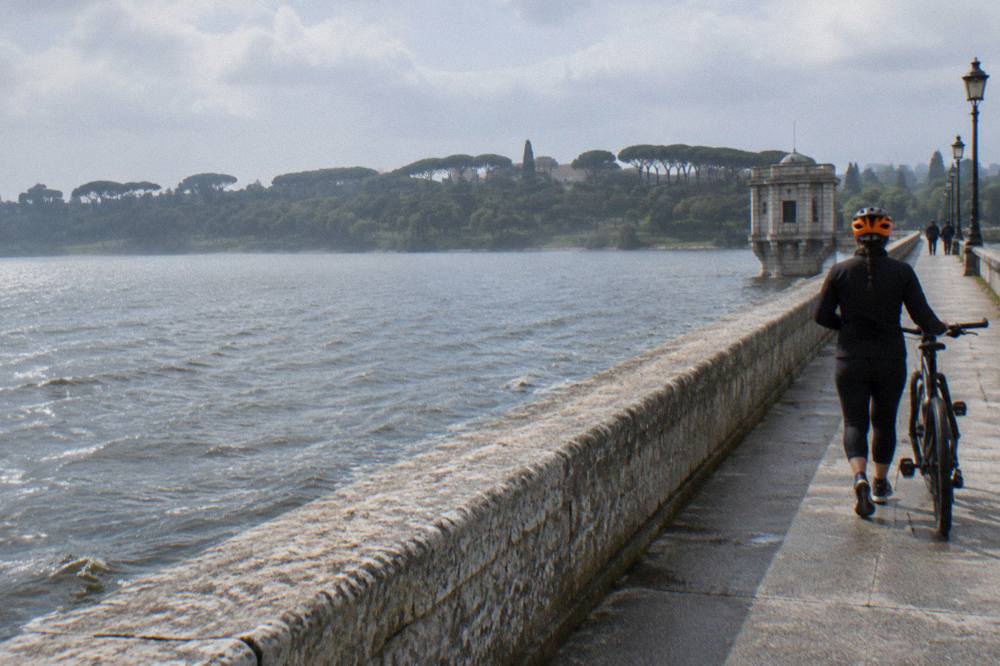
The cycling approach from the centre is the one the guided tours use, and it is genuinely pleasant: the riverside path north from around the Matadero area runs flat and traffic-free, then climbs into the park near the lake. Expect the climb to be the hardest few minutes of an otherwise gentle ride, which is one reason the e-bike options exist. The tour meeting points reflect this geography: two of the park rides start on Calle de Santiago in the Palacio quarter, near the Royal Palace, and one starts at Juan Álvarez Mendizábal in Moncloa, already on the park side of the city.
For visitors relying on the tourist transport pass, the Tourist Travel Pass covers metro, bus and commuter rail in the zones it covers, with the Zone A one-day card at 10.30 EUR, but it does not include BiciMAD, so the bike-share system is a separate purchase.
What Is There To Do Besides Cycling?
The lake offers rowing boat hire and waterfront terraces, the zoo and aquarium sit in the southwest of the park, the Parque de Atracciones amusement park fills the centre-south, and the cable car gives an aerial crossing over the Manzanares to the city side. In summer a municipal pool complex opens near the lake. Together these make the park a half-day destination even without a bike.
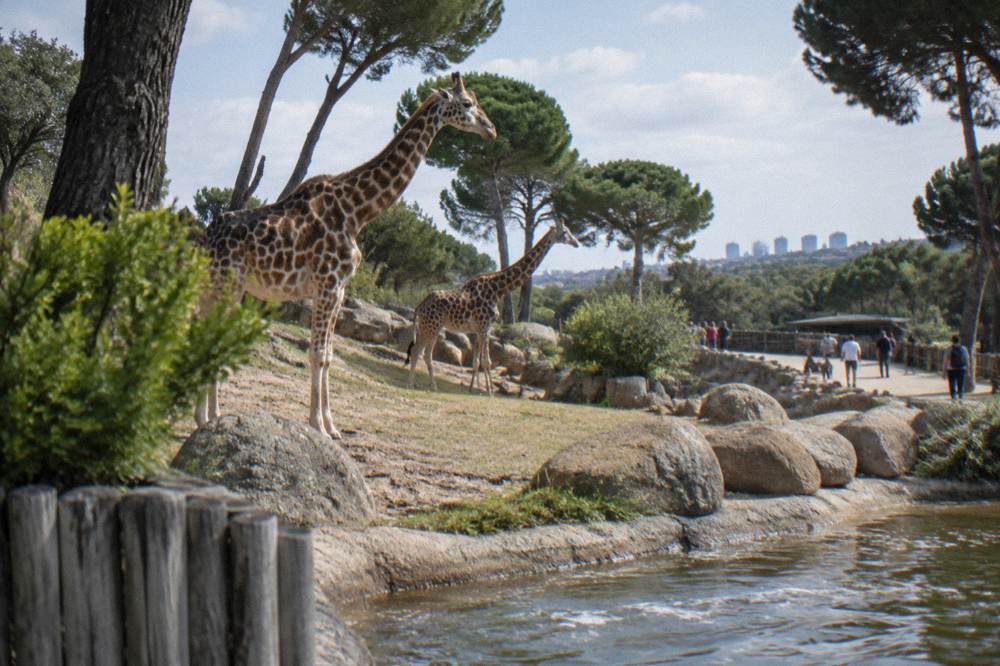
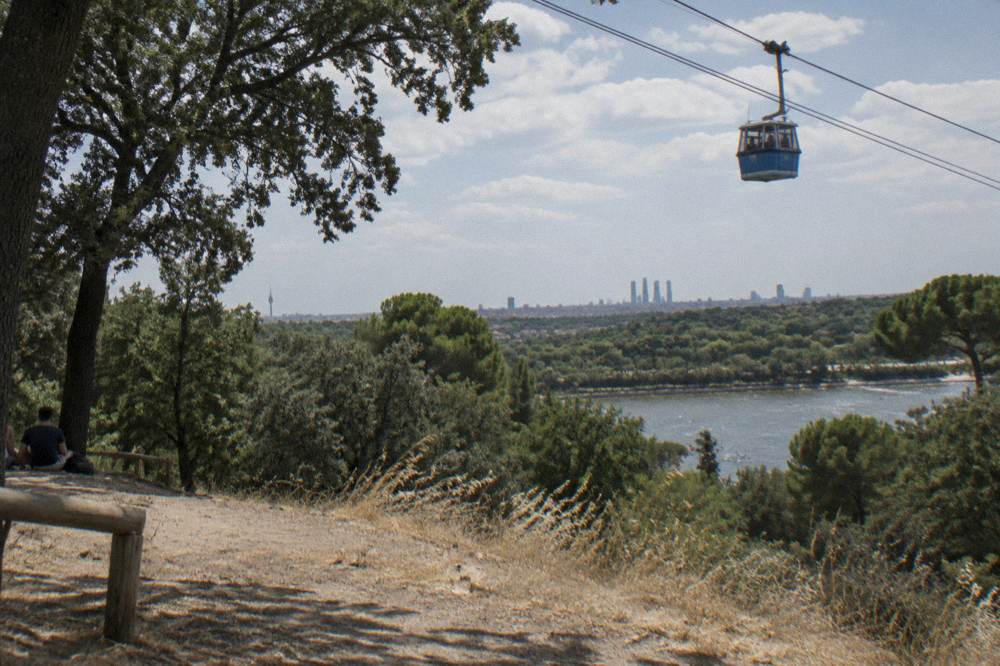
The non-cycling attractions are what turn a park ride into a full day if that appeals. Families often combine a morning guided ride with an afternoon at the zoo or the amusement park, and the lake terraces work as a long lunch stop. The cable car deserves special mention for photographers: the crossing from Pintor Rosales delivers one of the better elevated views of the Royal Palace and the city skyline, and it lands riders a short walk from the lake.
Timings for the guided rides matter here. The "Bike or E-Bike Parks Ride" and the "Casa de Campo E-Bike" both run about two hours, which pairs neatly with an afternoon in the park afterwards. The longer "Parks and Riverside Bike Ride" at three hours fifteen minutes is closer to a half-day commitment on its own. Riders considering a different but nearby format can compare the Madrid sunset bike tour options, several of which also touch the riverside, or the wider night riding options if an evening visit appeals. Once you've settled on a ride length, the guide to Madrid's cycling routes lays out where each tour actually takes you, from the riverside paths to Retiro's shaded lanes.
A small note on food: the tours generally exclude food and drinks unless the tour details say otherwise, so budget separately for the lake terraces. Only one tour in the whole Madrid selection includes a full meal, the five hour food ride, and it does not visit this park, so plan lunch around the lake on your own account.
When Is The Best Time To Visit?
The most comfortable months for riding in Casa de Campo are April, May, June, September and October, when daytime highs average between 18 and 28 °C; July and August average daily maxima above 31 °C with almost no rain, making shade and early starts important; October and November are the wettest months at 60 and 58 mm. Winter riding is viable, with January means around 6.3 °C.
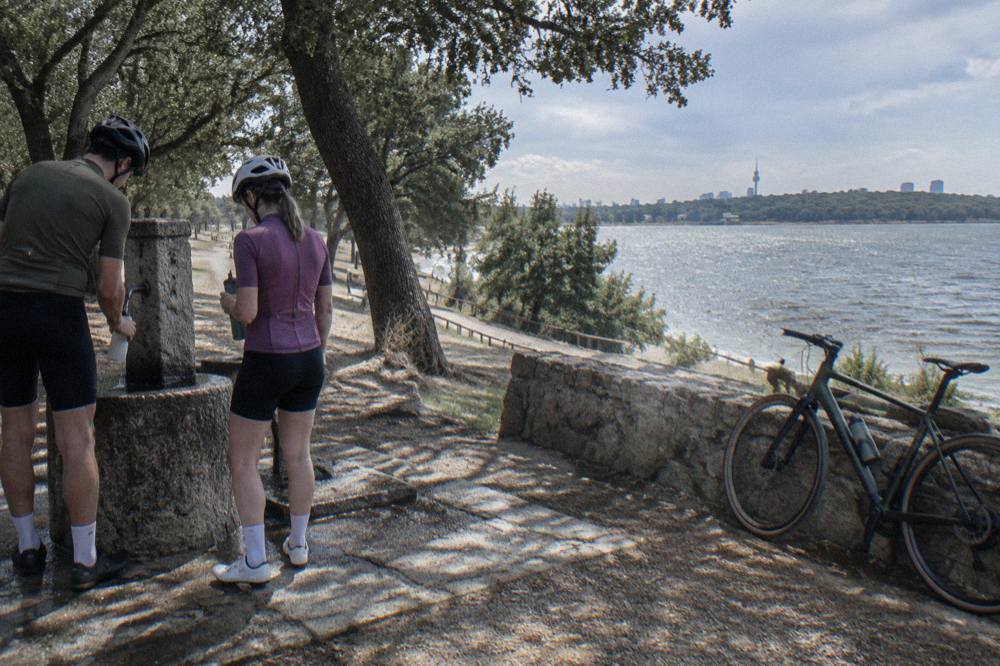
Those figures come from the AEMET climate normals for Madrid Retiro, the standard 1981 to 2010 reference series. Casa de Campo sits at a similar elevation a short distance west, so the numbers transfer well. Summer deserves real respect: with a July mean maximum of 32.1 °C and just 1.7 rain days, the park's saving grace is its tree cover, which is denser than almost anywhere else in central Madrid. Guided operators run through summer regardless, and the general guidance in the cycling Madrid in summer heat guide applies here with extra force on the exposed western slopes.
| Month | Mean Temp C | Mean Daily Max C | Rain Days | Notes For Park Visitors |
|---|---|---|---|---|
| January | 6.3 | 9.8 | 5.7 | Cold mornings, quiet paths |
| April | 12.9 | 18.2 | 6.7 | Mild, occasional showers |
| July | 25.6 | 32.1 | 1.7 | Heat, use shade, start early |
| September | 20.9 | 26.4 | 3.3 | Warm and dry, excellent |
| October | 15.1 | 19.4 | 6.9 | Wettest month at 60 mm |
| November | 9.9 | 13.5 | 6.5 | Second wettest at 58 mm |
Riders who want to combine the park with a sunset viewpoint often extend the day toward the Templo de Debod or the riverside, routes covered in the Temple of Debod at sunset guide. Sunset times themselves vary through the year and are not printed here; the booking pages state each tour's start time for the date you choose.
What Should You Know Before You Go?
Take water, sun protection and comfortable shoes; helmets are mandatory for under 18s in Madrid and recommended for adults, and of the park rides only one states in its tour details that a helmet is included, so check the booking page for the others; food and drinks are excluded on all three park rides unless the tour details say otherwise; rain does not stop some operators, but one small-group city operator charges a small fee for a poncho and a euro for bottled water, so check the inclusions.
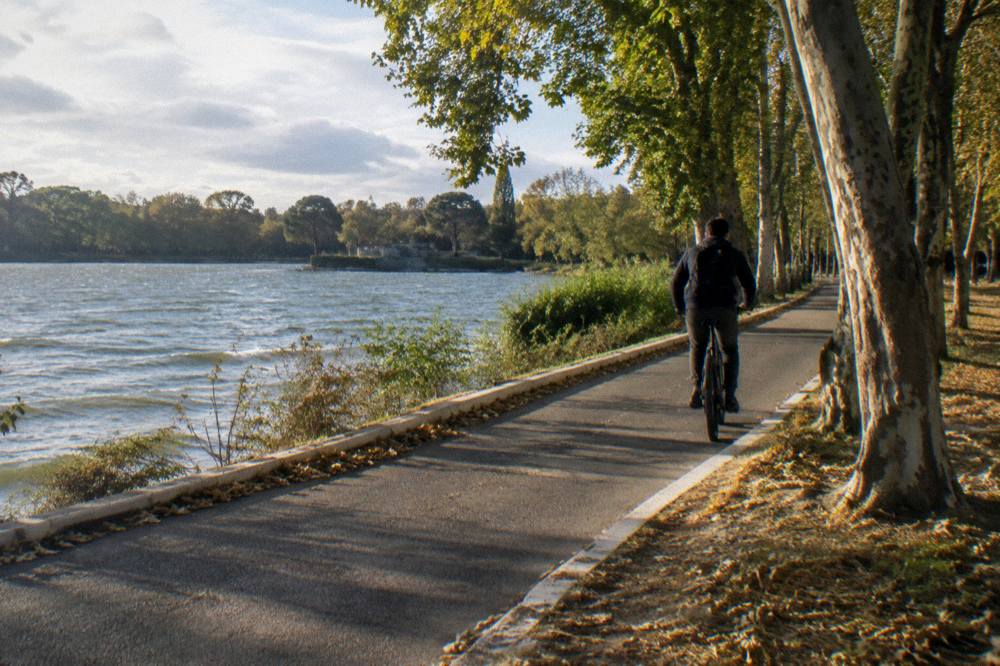
The park's own rules bear repeating in planning terms. Inside Casa de Campo the speed cap is 20 km/h, generous for a family ride but a constraint for anyone used to road pace. Cross-country riding is off the table, so keep to the paved roads and the wide dirt paths. If you arrive on BiciMAD from Príncipe Pío, remember the tariff rises after the third hour, which a full park day would exceed.
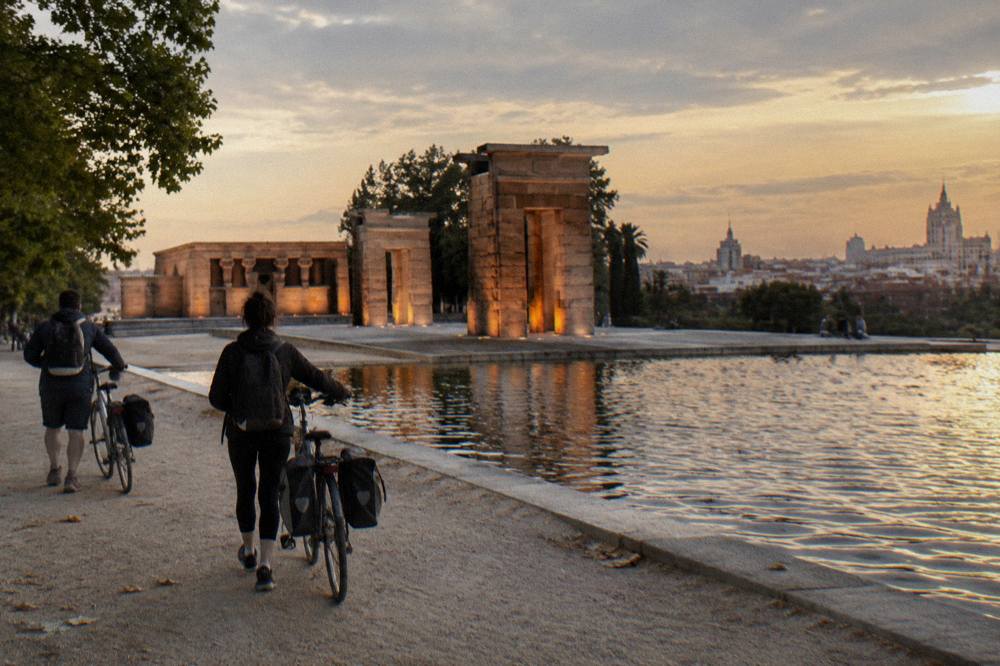
For riders unsure about fitness or format, the park rides are a gentler introduction than the traffic of Gran Vía, which is why they appear in the advice for beginners; see a beginner's Madrid bike tour for the wider picture. And if you are weighing a self-guided loop against a guided one, the safety picture in is cycling in Madrid safe covers the city streets; inside the park itself the main hazards are pedestrians near the lake and loose gravel after rain, so ride slow and give way.
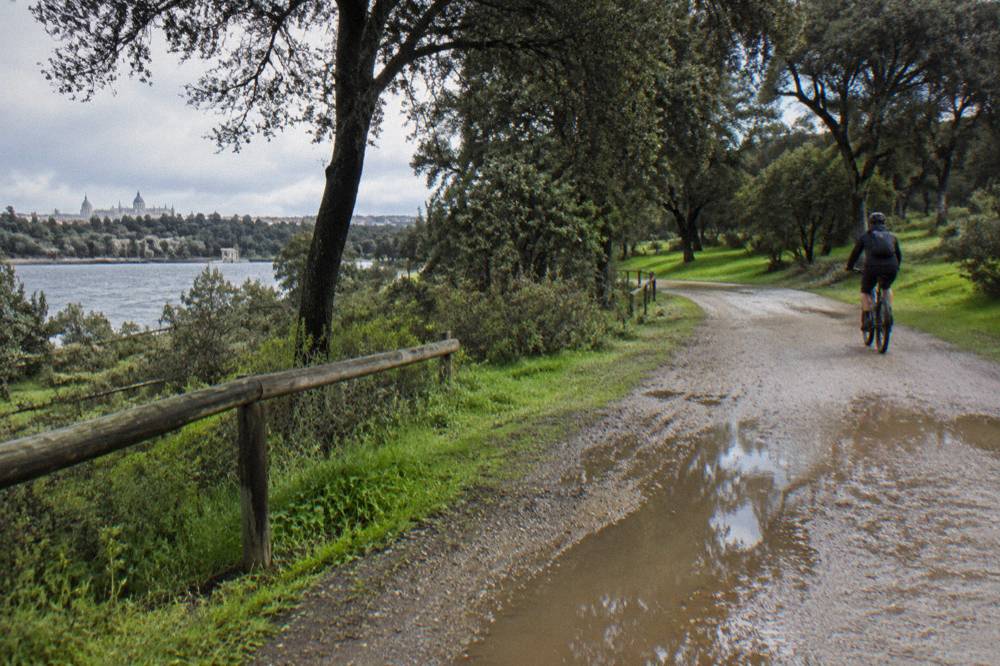
A final packing thought: neither two hour park ride mentions bottled water as an inclusion, and the smallest-group park ride excludes drinks and lunch, so bring your own. Operators describe riding in rain or shine on some city tours, and the park turns muddy quickly on the dirt paths after the October and November rains, so closed shoes beat sandals in the wet months. Madrid Bike Tours keeps a full set of park, riverside and sunset ride guides if this one has settled the where and left the which-tour question open.
Before that question closes, here are the three rides that fit this park best, one more time side by side.
Common Questions About Casa De Campo
Can You Cycle In Casa De Campo?
Yes. Cycling is allowed on the paved roads and wide dirt paths, capped at 20 km/h, with cross-country riding and narrow trails prohibited. The rules are published by the city's official tourism information on cycling in the park.
Is Casa De Campo Worth Visiting?
For most visitors yes, especially by bike. The park combines a lake with boat hire, a zoo, an amusement park, a cable car and quiet woodland tracks, and it is the largest green space inside Madrid. Two hour guided rides from $40.18 per person cover it with a guide.
How Do I Get To Casa De Campo By Public Transport?
Príncipe Pío station at the park's northeastern corner connects metro, commuter rail and BiciMAD bikes. Lago and Batán stations serve the lake and the western side, and the cable car runs from Pintor Rosales near Argüelles. The Tourist Travel Pass covers metro and rail but not BiciMAD.
Which Bike Tours Visit Casa De Campo?
Three guided rides cover the park directly: the Bike or E-Bike Parks Ride, two hours from $40.18 per person; the Casa de Campo E-Bike tour, two hours from $44.00 per person; and the Parks and Riverside Bike Ride, three hours fifteen minutes from $40.18 per person. All include the bike and a guide.
Do You Need A Helmet In Casa De Campo?
Helmets are mandatory in Madrid for riders under 18 and recommended for adults. Most of the park tours state that a helmet is included with the booking; check the booking page of the specific ride to confirm.
When Is The Best Time To Cycle In Casa De Campo?
April to June and September to October offer the most comfortable temperatures. July and August average daily maxima above 31 °C, so ride early and use the tree cover. October is the wettest month at 60 mm, and the dirt paths turn muddy after rain.