Is Cycling In Madrid Safe? Traffic, Surfaces And Rules
Madrid is a big capital city with trams of traffic on Gran Via and calm lanes in Retiro, and safety on a bike here depends mostly on knowing which is which.
Short answer
Yes, for a city of its size Madrid is reasonably safe to cycle. The city FAQ puts bikes on the carriageway, not the pavement, and guided rides such as the 3-Hour Highlights Bike Ride, from $32.14 per person with a 15-rider cap, handle the route, the traffic and the rules for you.
Madrid sits on a plateau at 667 metres, spreads across 21 districts and moves several million people a day through a grid that mixes six lane avenues with single platform residential streets. For a cyclist that mix is the whole story. The wide avenues feel intimidating and are actually straightforward, the pretty cobbled lanes in the old centre feel safe and are where your wheels slip most. The question of whether cycling here is safe has a real answer, and it is mostly a question of knowing the rules, picking your streets and understanding what a guided ride takes off your plate. Safety is only half the picture, so pair it with the full verdict on Madrid as a cycling city, which weighs the hills, heat and bike-share options against the traffic.
The city itself publishes a cycling FAQ through its Oficina de la Bici, and it is unusually clear about where bikes belong. That document, plus the national traffic regulation and the reform that came into force on 1 October 2026, covers almost every rule a visitor will actually meet. This guide walks through those rules, the traffic and surface realities, the parks, the heat, and how the guided options covered here, from $29.00 per person upward, fit into the picture. For the flip side of the rulebook, our guide to the cycling mistakes that most often catch visitors out in Madrid pairs each blunder with the rule behind it and explains how guided rides steer you clear of trouble.
Is Madrid A Bike Friendly City?
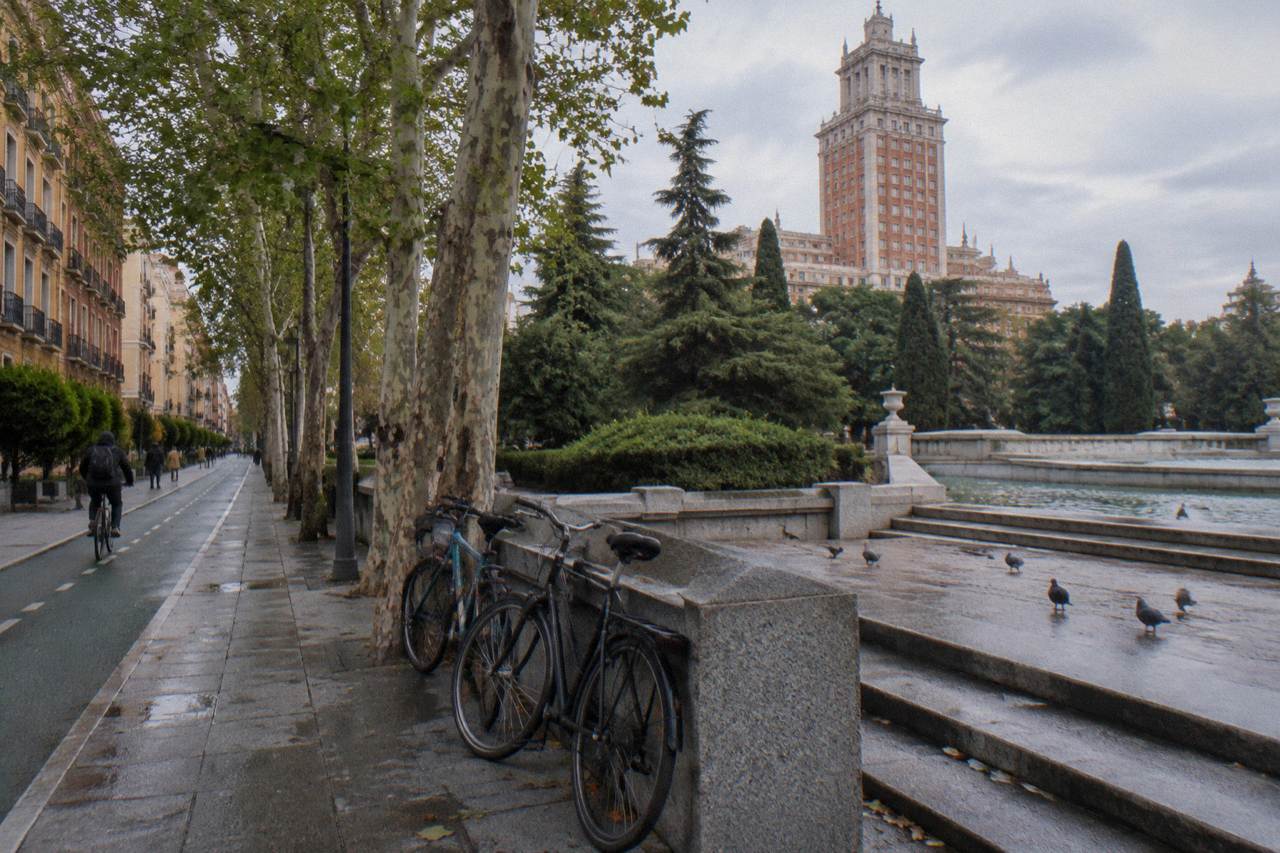
Broadly yes, and improving, but bike friendly here means a city that tolerates and regulates bikes rather than one built around them. Bikes legally belong on the carriageway in the centre of the lane, side by side riding is allowed, and drivers are used to sharing space with cyclists, delivery riders and the BiciMAD share fleet of 8,385 electric bikes across 683 stations. The friendliness is real but it is earned through rules, not separated infrastructure everywhere.
That BiciMAD figure matters more than it looks. Madrid's share system runs a fleet of 8,385 electric bikes, and drivers in the city share lanes with cyclists as a routine fact of driving, not an exception. A visitor on a bike is joining a pattern the city already runs.
The layout helps too. The dense centre, the Paseo del Arte corridor, Retiro and the Madrid Rio parkland chain close together, which means a three hour ride can cover the Royal Palace, Plaza Mayor, Retiro and the river without ever needing the fast multi lane arterials. Madrid is also flattish in the centre with its hills pushed to the edges, which keeps speeds low and control easy. For riders curious about the electric option in those edge neighbourhoods, the Madrid hills by bike guide covers where the gradients actually bite.
Friendliness has limits. Bike lanes exist but using them is optional unless a sign makes one mandatory, pavement riding is banned, and the M-30 ring and its ramps are closed to bikes entirely. The city regulates cyclists as vehicle traffic, with rights and duties, rather than as fast pedestrians.
- City Highlights Rides$29
- Parks And Madrid Río Rides$33.29
- Night And Sunset Rides$40.18
- Day Trips From Madrid$40.18
- E-Bike Tours$41.33
- Private Bike Tours$43.63
What Are The Cycling Rules In Madrid?
The core rules from the city FAQ: ride on the carriageway, centre of the lane, not on pavements or pedestrian streets, with bike lanes optional unless signed. Two riders side by side are allowed in one lane unless it is risky. Helmets are mandatory for under 18s and recommended for adults, phones and headphones are banned, and bikes may not use the M-30 or its access ramps. Red lights apply to bikes like any other vehicle. If you'll be pedalling after sunset, our guide to Madrid after dark explains the lighting rules and which districts feel comfortable for an evening ride.
The Ayuntamiento cycling FAQ is the reference document for the city, and the national regulation behind it adds the physics: drivers overtaking must keep at least 5 metres behind a cyclist in the same lane, and cyclists face the same alcohol limits as any driver, 0.5 g/l blood. One detail worth internalising is the centre of the lane rule: hugging the kerb invites close passes, while holding the lane makes a bike visible and forces a proper overtake.
| Rule | What the city says | What it means for a visitor |
|---|---|---|
| Where to ride | Carriageway, centre of the lane; bike lanes optional unless signed | Ride confidently in traffic, do not sneak along kerbs |
| Pavements | Prohibited, except signed bike pavements at max 10 km/h | Walk the bike on sidewalks and in pedestrian streets |
| Side by side | Two abreast in one lane allowed unless risky, never in bus lanes | Group rides are legal, which is why guided tours work |
| Helmet | Mandatory under 18 in the city, recommended for adults | Tours that include one hand it over with the bike |
| Phone, headphones | Banned while riding | Earbuds out, even for navigation audio |
| M-30 | Bikes prohibited on the ring and its access ramps | No riding between ring road junctions, ever |
A reform of the national regulation, in force since 1 October 2026, tightened several points, and the DGT announcement of 23 June 2026 sets them out. The helmet exemptions that used to apply on interurban roads are removed, so a helmet is now required on those roads for everyone, and drivers overtaking a cyclist on an interurban road must drop at least 20 km/h below the limit first. Inside the city the centre of the lane position and the 5 metre following distance carry into the consolidated text. None of this changes the core message for a visitor: the rules are written to make bikes normal traffic, and following them is the main safety tool you have.
For the wider national picture beyond the capital, the cycling rules in Spain guide covers interurban riding, lights and the under 18 helmet duty in more depth.
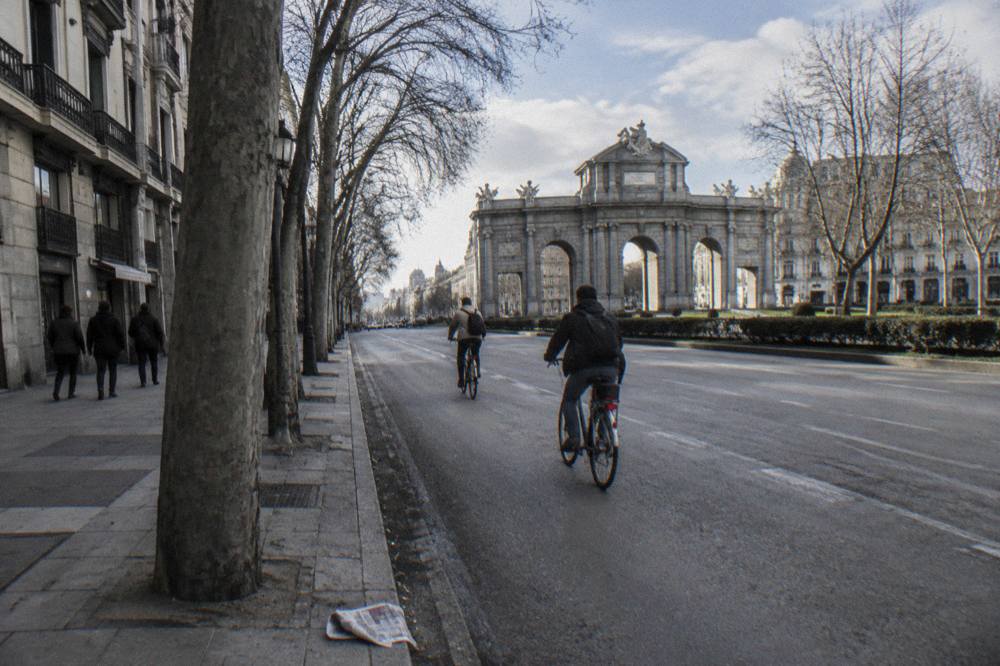
For most visitors the rules question is really a worry about doing something wrong by accident, and that is precisely what a guided ride removes. The guide sets the line, the pace and the crossings, and the group rides legally two abreast as one visible unit.
Where Do You Actually Ride, Road Or Path?
In central Madrid the honest answer is road, mostly. Bikes belong on the carriageway, bike lanes are optional unless signed, and the famous parks, Retiro and Casa de Campo, are where path riding happens, with pedestrian priority and slow speeds. A typical highlights ride mixes quiet streets, calmed 30 km/h zones and park paths, with the guide choosing the balance.
The calmed street network is the quiet success story. Residential single platform streets run at 20 km/h, signed 30 km/h streets are common in the centre, and on these a bicycle moves at roughly the speed of everything else. Ciclocalles, streets with two way bike flow, add to the mesh. The intimidating spaces are the multi lane avenues, and even there the FAQ simply says prefer the right hand lane: the traffic is fast but predictable, and lane changes are the only complicated move.
Parks run on a different logic. Paths are shared with pedestrians, pedestrians have priority, and the guidance is slow riding, full stop. The city FAQ caps bike pavements at 10 km/h and park riding is pedestrian first, so a park is where you relax, not where you train. Riders planning park time should read the Retiro Park bike tour guide for how the loops work, and the Madrid Rio bike ride guide for the river corridor.
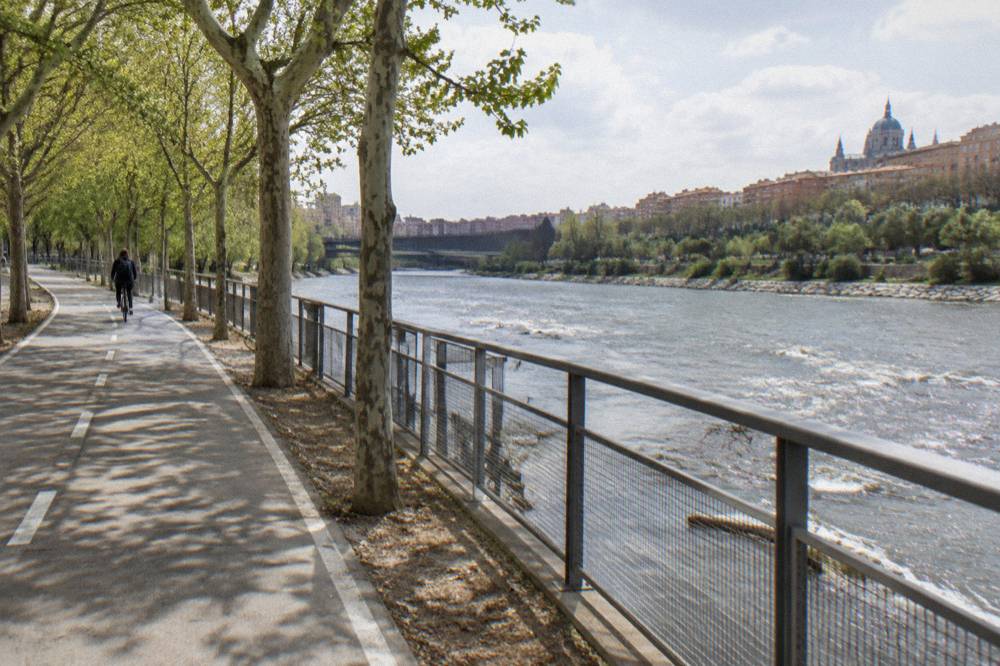
If reading about carriageway riding in a foreign capital raises your pulse, the group format is the standard fix. A bunch of up to 15 riders with a guide at the front is one of the most visible objects on a street, and drivers treat it accordingly.
The 3-Hour Highlights Bike Ride is the busiest version of that fix: from $32.14 per person, rated 4.9 across 1,989 reviews, bike, helmet, guide and bottled water included, meeting at C. de Felipe IV, 10 by Retiro, with free cancellation. Regular bike or e-bike is the rider's choice. You can see the highlights tour details and check availability if that format suits you.
How Bad Is Madrid Traffic For Cyclists?
As capital traffic goes, manageable. Madrid traffic is dense, and the legal framework actively protects cyclists: a 5 metre distance applies when overtaking in urban same-lane situations, and cyclists should preferably ride in the centre of the lane when safe. The genuinely uncomfortable moments are rush hour on the big avenues and the mess around older intersections, not aggression.
Rush hours are real and worth planning around. Weekday mornings and the late afternoon exit flow fill the arterials, and that is when a less confident rider should be in a park or on a calmed side street rather than holding a lane on a six lane avenue. Outside those windows the centre is calm by big city standards, though how quiet a given morning feels varies. Exact departure times are on the booking page.
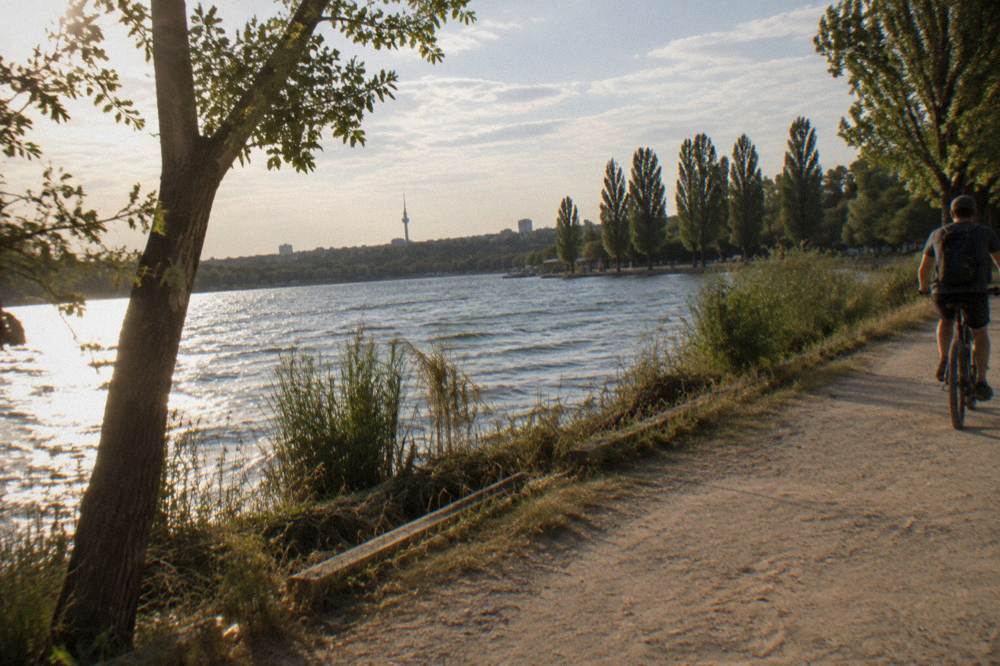
One structural point works in cyclists' favour: bikes are banned from the M-30 and its ramps, so the fastest, least forgiving road in the city is simply off the menu. Cyclists never share space with 100 km/h traffic anywhere inside the ring. Every conflict a visitor meets happens at calmed urban speeds.
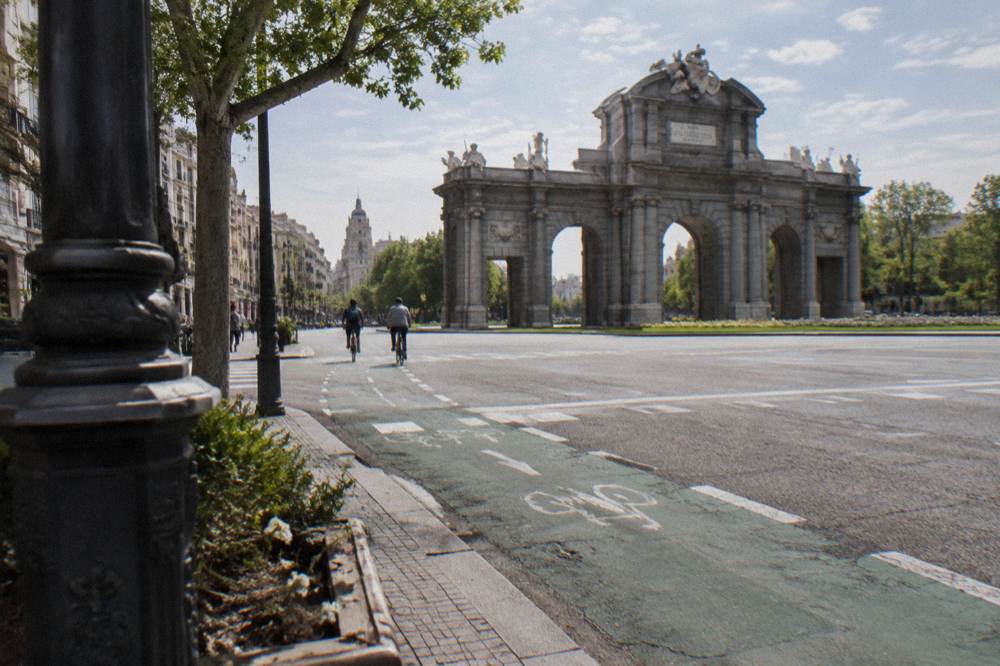
Confidence, not technique, is usually the gap for visitors, and a group ride closes it. The Madrid bike tour for beginners guide goes deeper on pacing and fitness, but the short version is that a guide absorbs the navigation and the judgement calls, and you just pedal.
Are Madrid Streets And Cobbles Hard To Ride?
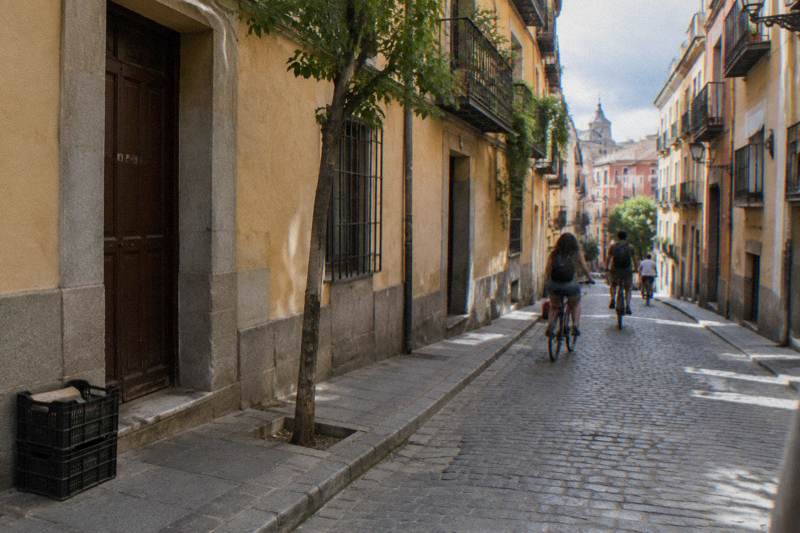
Some of them, yes. The historic centre has cobbled lanes and granite setts, which are slick when wet and never entirely smooth. The rule of thumb is simple: cross cobbles straight on, at moderate speed, without sharp turns, and treat painted and stone surfaces as slippery after rain. Most tour routes keep cobbled sections short.
Cobble strategy matters most at corners and on descents, where a front wheel that slips sideways is the classic novice crash. Straight lines, steady speed and weight off the saddle do most of the work. Granite setts in Habsburg Madrid are the roughest patches, and the streets around the Royal Palace and La Latina concentrate them. After rain, which in Madrid means mostly October and November, every polished stone surface assumes a film of water.
Rain itself is rare and comes in bursts. The AEMET normals for Madrid Retiro put October at 60 mm and November at 58 mm, against roughly 12 mm in July and 10 mm in August, so for most of the year surface grip is a dry surface question. Riders with kids should also note that trailers and child seats change how bumps feel, a topic the Madrid bike tour with kids guide covers.
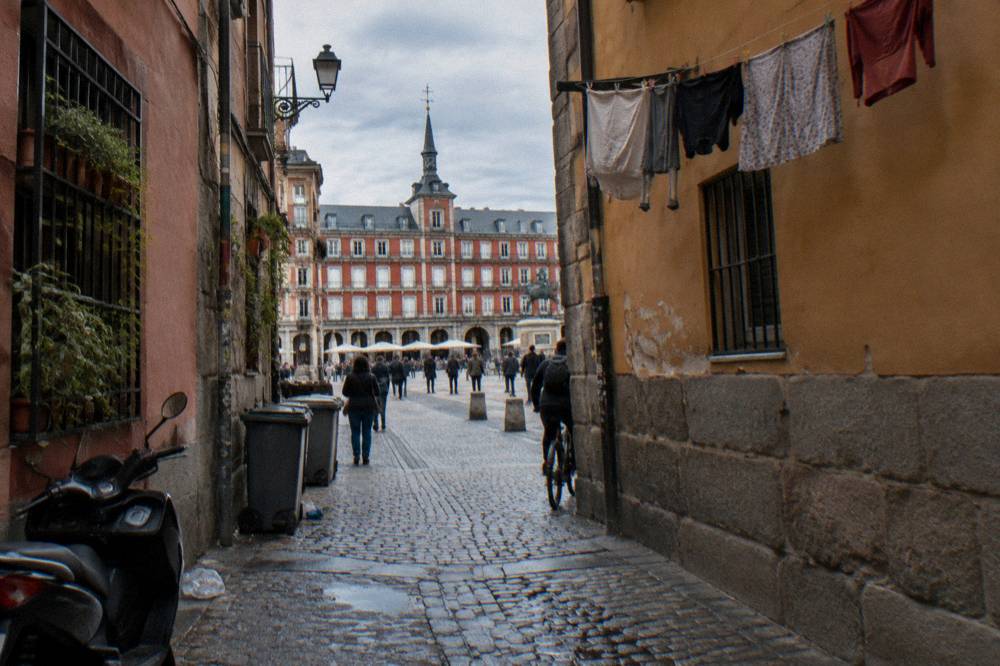
Vintage style bikes, wide tyres and an unhurried pace are the local answer to cobbles, and one ride leans into it fully.
The Vintage Bike, Optional Tapas ride runs 3 hours from $29.00 per person on a vintage bike, rated 4.9 across 1,151 reviews, with helmet, guide, bottled water and a group cap of 50, the largest in the options here. Its meeting point is C. del Espejo, 9, shared with three other tours. It is also the lowest from-price of any ride with a substantial review count.
Is Casa De Campo Safe To Cycle?
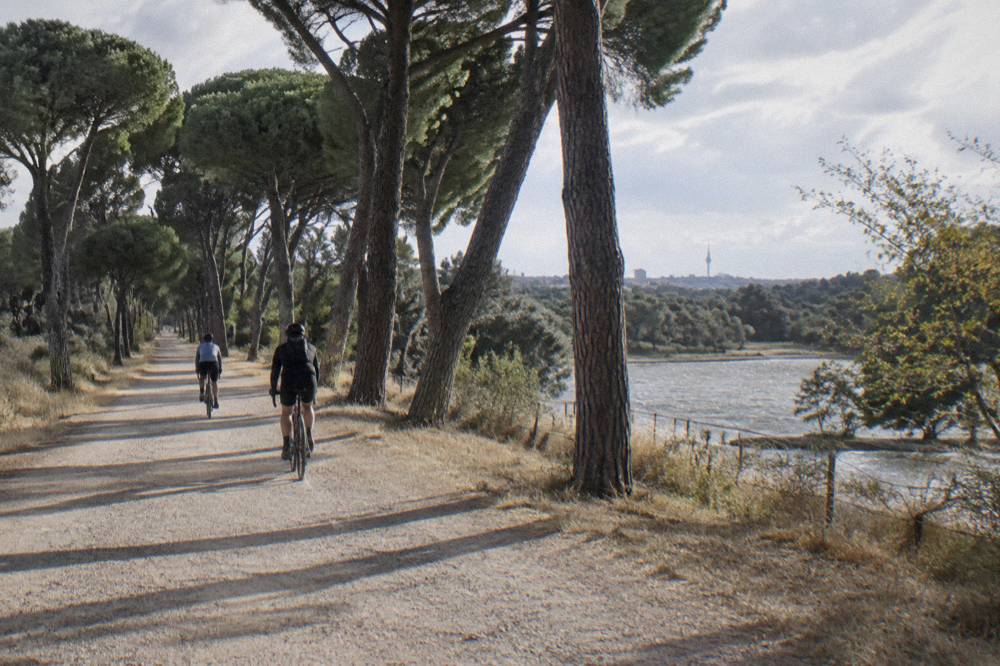
Yes, and it is one of the safest big spaces to ride in Madrid: cycling is permitted on the paved roads and wide dirt paths, the speed limit is 20 km/h, and cross country riding and trails are not permitted. The catch is access, there is no BiciMAD station inside, the nearest dock is at Principe Pio.
The official Casa de Campo cycling guidance is explicit: 20 km/h maximum, paved roads and wide dirt paths only, cross country riding and informal trails are not allowed, and guided rides operate by reservation. For a visitor that makes the park the low stress end of Madrid cycling, a huge forested space where the danger model is pedestrians, not cars, because outside the access roads there are almost none.
Getting there is the only friction. The park sits west of the river, and riders coming from the centre either cross via the Madrid Rio corridor or arrive with a tour that has already solved the routing. Several rides in the options here do exactly that: the Casa de Campo E-Bike, 2 hours from $44.00, rated 4.6 across 107 reviews, and the Parks and Riverside Bike Ride, 3 hours 15 minutes from $40.18, rated 4.8 across 29 reviews with a group cap of 10. The Casa de Campo bike tour guide maps the options.
Which Months Are Best For A Safe Ride?
March through June and September through October offer the best mix of grip, visibility and comfortable temperatures. July and August bring highs frequently past 30 degrees, so heat, not traffic, becomes the safety issue, while winter rain can leave the cobbles slick.
| Month | Mean temp C | Mean daily max C | Rain mm | Riding note |
|---|---|---|---|---|
| January | 6.3 | 9.8 | 33 | Cold mornings, quiet streets |
| March | 11.2 | 16.3 | 25 | Comfortable, longer days |
| May | 16.7 | 22.2 | 50 | Warm, watch thunderstorms |
| July | 25.6 | 32.1 | 12 | Heat management dominates |
| October | 15.1 | 19.4 | 60 | Wettest month, slick setts |
| November | 9.9 | 13.5 | 58 | Second wettest, early dark |
The AEMET climate normals for Madrid Retiro back those figures, and the pattern they describe is a city that is cyclable year round but shifts its risk profile by season. Summer riding means water, shade and morning starts, which is why several tours here include bottled water in the ticket. The cycling Madrid summer heat guide covers timing and gear in detail, and the best time to cycle Madrid guide ranks the months.
Does A Guided Ride Make Cycling In Madrid Safer?
In practice, yes, on three fronts. A guide who rides the route daily picks the calmed streets and the safe crossings, a group is legally and visibly a unit that drivers give room, and the logistics, bike, helmet, route, water, are handled, which removes the errors tired newcomers make. Every Madrid ride in the options here includes the bike, a guide is not mentioned for a few of them, and several state free cancellation.
The group cap is the hidden safety spec. A cap of 8 or 10 keeps the bunch agile at crossings, while larger caps trade intimacy for momentum. The table shows the spread across popular choices.
| Ride | Duration | From price | Rating | Group cap |
|---|---|---|---|---|
| Small-Group Bike or E-Bike | 3 hours | $37.00 | 4.9 from 329 reviews | Not stated |
| Optional Tapas Highlights Ride | 3 hours | $33.00 | 4.9 from 1,633 reviews | Not stated |
| 2.5-Hour Bike or E-Bike | 2.5 hours | $31.00 | 4.5 from 815 reviews | Not stated |
| Small-Group E-Bike Gems | 3 hours 15 minutes | $51.66 | 4.9 from 189 reviews | 10 |
| Vintage Bike, Optional Tapas | 3 hours | $29.00 | 4.9 from 1,151 reviews | 50 |
E-bikes deserve a mention in any safety conversation, because pedal assist flattens the Madrid hills at the city edges and lets a rider keep pace with urban traffic without redlining. The comparison is laid out in the electric bike vs regular bike Madrid guide.
For a first taste with a small bunch, one mid priced option stands out.
The Optional Tapas Highlights Ride runs 3 hours from $33.00 per person on a regular bike, rated 4.9 across 1,633 reviews, meeting at C. del Espejo, 9 in the centre, with free cancellation per the booking page and an optional tapas add on, which is optional, not part of the ticket. Bottled water and Royal Palace admission are not included.
Short on time, the 1.5-Hour Express Ride covers the core from $30.00 per person, rated 4.8 across 31 reviews, with bottled water and a guide included and a cap of 20.
One more practical layer: getting a bike to a start point on public transport is tight. EMT buses carry only a folded bike of hand luggage size, one per bus, and Renfe treats a folding bike as free hand luggage up to 180 cm folded. Non folding bikes on the Metro face time restrictions, so check Metro de Madrid before carrying one. Guided rides sidestep all of it, since the bike waits at the meeting point, and the where Madrid bike tours start guide lists the addresses.
To close the loop on the original question: how safe cycling in Madrid feels depends on where and how you ride, but the rules lean toward riders, with guidance to hold the centre of the lane in cities when safe, 1.5 m of lateral separation required when drivers overtake, and 5 m of distance in urban same-lane scenarios. The residual risks, cobbles in the rain, summer heat, rush hour avenues, are all things you can see coming and plan around, and a guided group ride plans around them for you. This site, Madrid Bike Tours, exists because the guided format genuinely suits the city.
Common Questions About Cycling Safety In Madrid
Is Madrid A Bike Friendly City?
Reasonably so. Bikes belong on the carriageway as normal traffic, drivers are used to sharing lanes with the 8,385 bike BiciMAD fleet, and centre speeds are calmed to 30 km/h or less on most streets. It is a regulated, tolerated kind of bike friendliness rather than a fully separated network.
Do You Have To Wear A Helmet In Madrid?
Inside Madrid city the helmet is mandatory for riders under 18 and recommended for adults, per the Ayuntamiento FAQ. Since 1 October 2026 the helmet is required for all cyclists on interurban roads. Many tours include a helmet with the bike, check the tour details on each booking page.
Can You Ride A Bike On The Pavement In Madrid?
No. Pavements and pedestrian streets are closed to bikes except signed bike pavements, which are capped at 10 km/h. Under 12s may ride on pavements at walking pace with an adult on foot. In parks, bikes use the wide paths with pedestrian priority at slow speed.
Is Casa De Campo Safe For Cycling?
Yes. Cycling in Casa de Campo is capped at 20 km/h and limited to paved roads and wide dirt paths, with cross-country riding and trails not permitted. The nearest BiciMAD station is at Principe Pio, so arrive by guided tour or your own bike.
When Is The Riskiest Time To Cycle In Madrid?
Rush hours on the big avenues are the least comfortable windows, and October and November bring the heaviest rain, 60 and 58 mm respectively, which makes the centre's granite setts slick. July and August flip the problem to heat, with mean daily maximums above 31 degrees.
Does A Guided Bike Tour Make Riding In Madrid Safer?
Generally yes. A guide picks the calmed streets, a group rides as one visible legal unit, and the bike, helmet and water come with the ticket. Options run from $29.00 per person, and most state free cancellation.