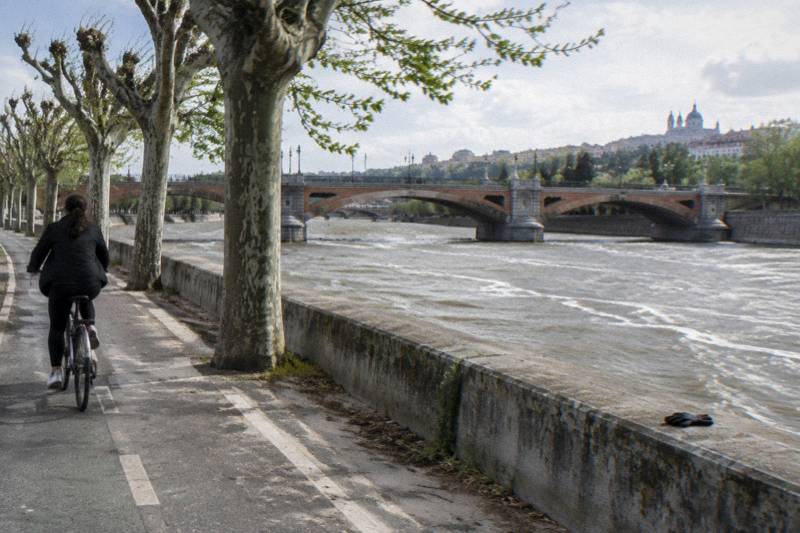
Madrid Río By Bike: Riverside Rides And Park Stops
Madrid Río is the riverside park that turned the Manzanares from a traffic trench into one of the city's most pleasant places to ride. Here is how to see it by bike, which guided tours follow the water, and what the rules say before you set off.
Short answer
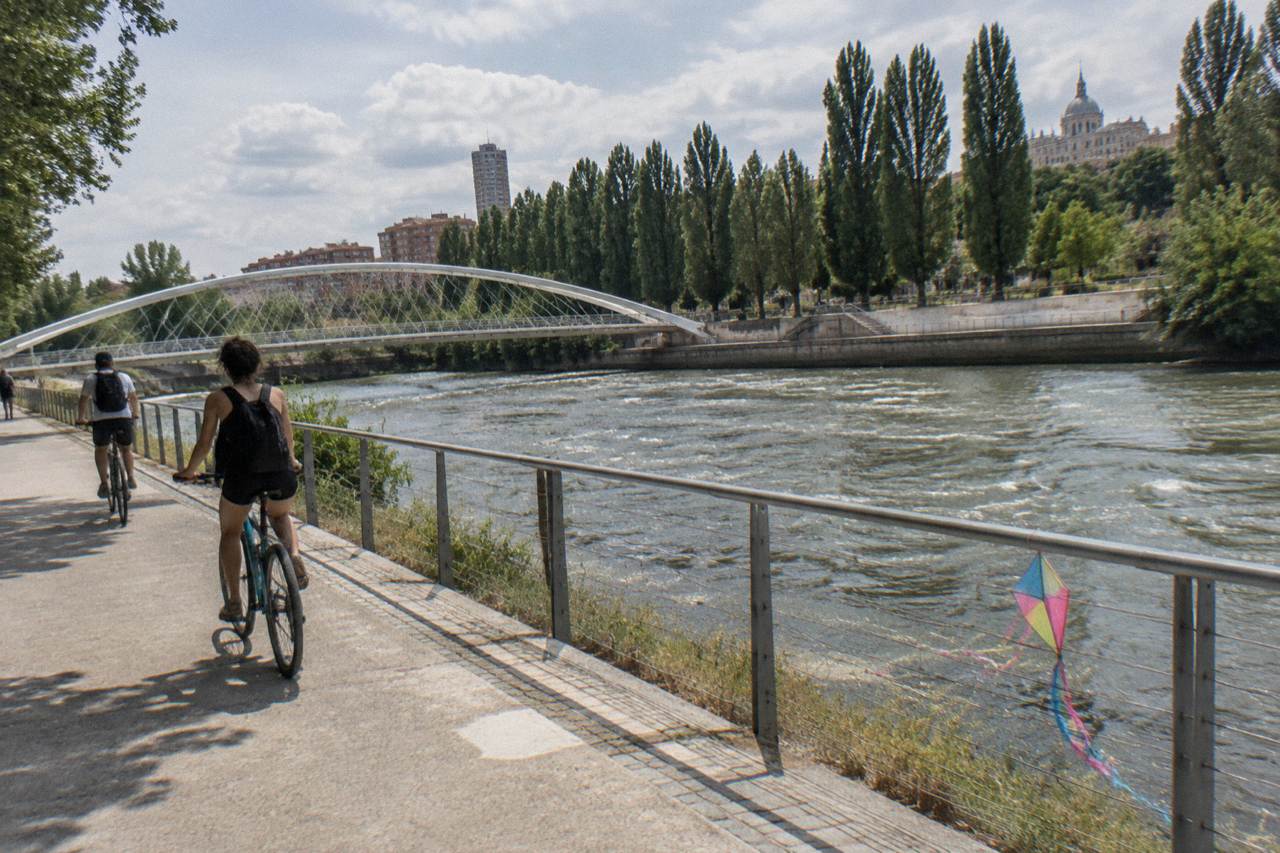
Three guided rides cover the Madrid Río riverside directly: the Casa de Campo E-Bike at from $44.00 per person, the Parks and Riverside Bike Ride at from $40.18, and the Bike or E-Bike Parks Ride at from $40.18. Most run 2 to 3 hours 15 minutes, start at fixed central meeting points, and state free cancellation.
What Is Madrid Río And Why Ride It By Bike?
Madrid Río is the linear park that runs along the Manzanares river on the city's western side, built after the M-30 motorway was tunnelled underground, and it is one of the flattest, most bike-friendly corridors in the capital. Guided riverside rides cover it in 2 to 3 hours 15 minutes, from $40.18 per person, with e-bikes and regular bikes both on offer.
The park stitched together a stretch of riverbank that was cut off from the city for decades by surface motorway lanes. Today it connects mature gardens, playgrounds, footbridges and the Matadero Madrid cultural centre, and it sits directly beside Casa de Campo, the huge wooded park to the west. For a cyclist, that combination is hard to beat elsewhere in central Madrid: wide paths, water on one side, and no climb worth mentioning until you head into Casa de Campo's interior.
The tours covered here approach the river from several angles. Some ride it as part of a parks loop that adds Casa de Campo, others pair it with Retiro on the opposite side of the centre, and one short e-bike option concentrates on the river and the park alone. All of them are guided, all include the bike, and the ones that state it show free cancellation on the booking page. The choice comes down to duration, bike type and how much of the city you want beyond the water.
A note on the word "riverside" itself. Madrid Río is not a single trail with a signposted start and finish, and no distance figure is printed here because none of the verified sources supply one. It is a chain of park sections along the Manzanares, and the way to think about a ride there is by its stops, which is exactly how the guided tours describe them.
Which Guided Tours Ride The Madrid Río Riverside?
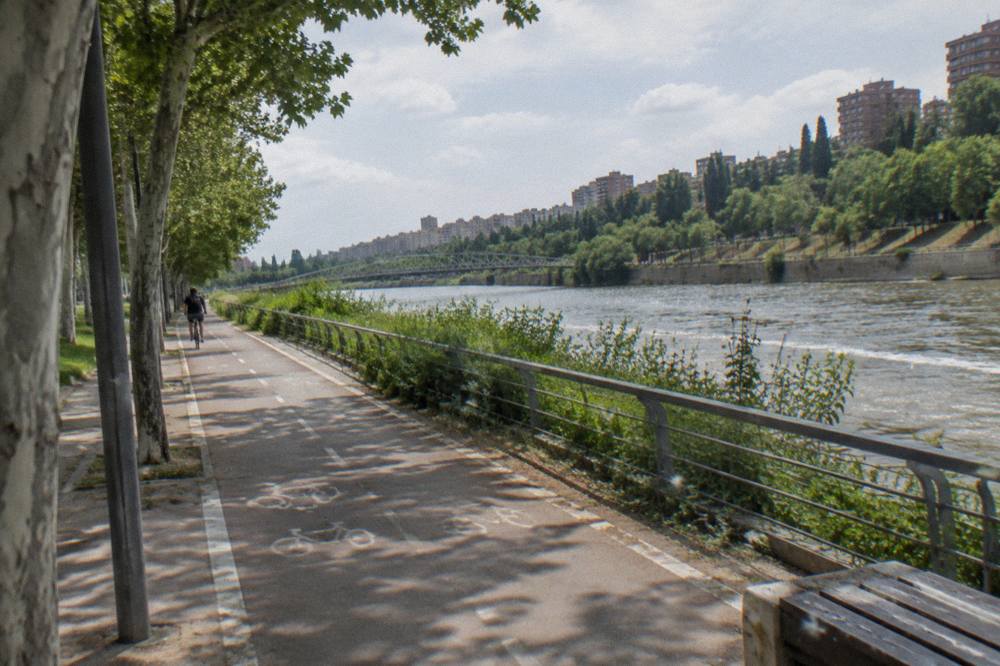
Three guided options touch the river directly. The Casa de Campo E-Bike (2 hours, 4.6 across 107 reviews, from $44.00) is the dedicated river-and-park ride; the Parks and Riverside Bike Ride (3 hours 15 minutes, 4.8 across 29 reviews, from $40.18) adds Madrid's other parks; the Bike or E-Bike Parks Ride (2 hours, 4.9 across 18 reviews, from $40.18) lets you choose your bike. Once you've picked a tour, the guide to cycling routes across Madrid shows which riverside and park paths you can also explore on your own.
The first is the closest thing to a pure Madrid Río experience on the list. The "Casa de Campo E-Bike" starts at Calle de Santiago, 18 in the centre, runs 2 hours on an electric bike with a guide, and rates 4.6 across 107 reviews from $44.00 per person. Free cancellation applies, and you make your own way to the meeting point. It is the most river-focused ride on this page for a simple reason: it is the only one whose whole itinerary is the river corridor and the park it flows into.
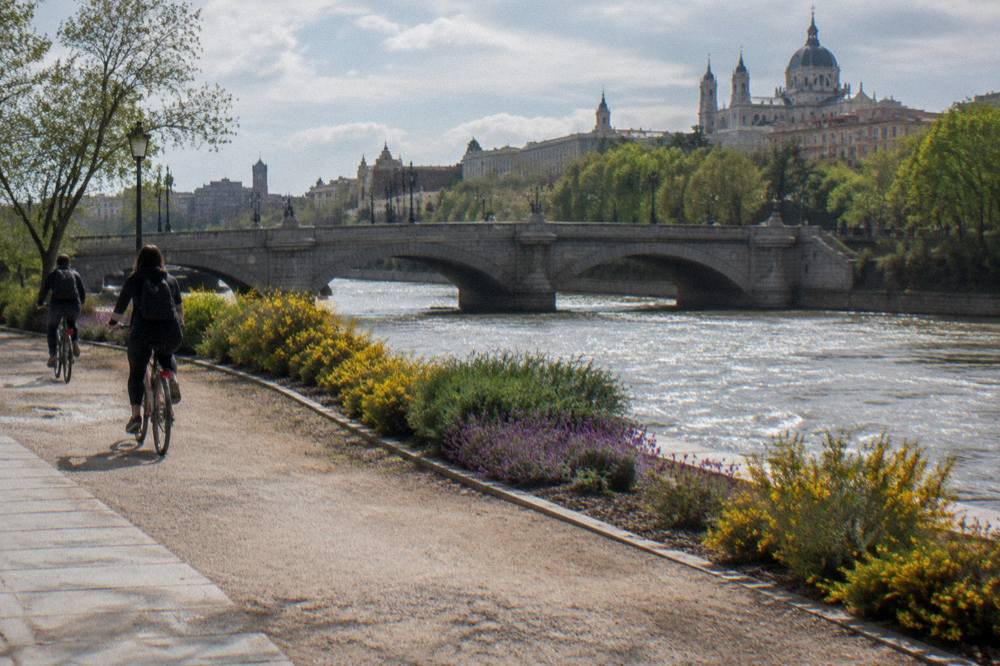
The second, the "Parks and Riverside Bike Ride", is the longer option at 3 hours 15 minutes. It rates 4.8 across 29 reviews, costs from $40.18 per person, and takes a small group capped at 10 riders from C. de Juan Álvarez Mendizábal, 19 in Moncloa, with the bike, helmet and guide all included and the choice of a regular bike or an e-bike. Riders who want the river inside a fuller loop of Madrid's green spaces tend to land here.
Between them they span $40.18 to $44.77 in from-prices and 2 to 3 hours 15 minutes in the saddle.
| Tour | Duration | Rating and reviews | From price | Bike type |
|---|---|---|---|---|
| Casa de Campo E-Bike | 2 hours | 4.6 across 107 reviews | $44.00 | E-bike |
| Parks and Riverside Bike Ride | 3 hours 15 min | 4.8 across 29 reviews | $40.18 | Regular or e-bike, rider chooses |
| Bike or E-Bike Parks Ride | 2 hours | 4.9 across 18 reviews | $40.18 | Regular or e-bike, rider chooses |
| Retiro E-Bike, Semi-Private | 2 hours | 4.1 across 28 reviews | $44.77 | E-bike |
For a river-first plan, the Casa de Campo E-Bike wins on focus. For a day when you want gardens, river and park in one loop with a small group, the Parks and Riverside Bike Ride is the stronger fit, with helmet, bike and local guide all included. Neither includes food, so plan a stop at Matadero Madrid or back in the centre afterwards.
How Much Does A Riverside Bike Ride In Madrid Cost?
Riverside-guided rides cluster tightly between $40.18 and $44.77 per person, with the dedicated Casa de Campo E-Bike at from $44.00 and the two parks-and-river options at from $40.18 each. That $4 spread buys differences in duration, group size and bike type rather than quality, and every figure here is a from-price per person as shown on each booking page.
The value logic is straightforward. The Bike or E-Bike Parks Ride, at from $40.18 with a group cap of 25, is the budget route to the same river and Casa de Campo territory, and it rates 4.9, though from a pool of just 18 reviews. The Parks and Riverside Bike Ride, same from-price, caps the group at 10 and runs over an hour longer, which explains its appeal to riders who dislike crowds on shared paths. The e-bike premium is modest: the dedicated Casa de Campo E-Bike at $44.00 costs about four dollars more than the cheapest regular-bike option while removing the one real climb in the area, the drag up into Casa de Campo's wooded interior.
- City Highlights Rides$29
- Parks And Madrid Río Rides$33.29
- Night And Sunset Rides$40.18
- Day Trips From Madrid$40.18
- E-Bike Tours$41.33
- Private Bike Tours$43.63
Watch the exclusions. The Parks and Riverside Bike Ride lists transportation to and from attractions and insurance as not included; the Bike or E-Bike Parks Ride excludes drinks, lunch, and hotel pickup and drop-off, while the Casa de Campo E-Bike offers hotel pickup as an option when booking. None of the three lists food or drink as included. These are standard exclusions on Madrid bike tours, but they matter on a riverside ride in July, when you will want water whatever the booking page says. The city's July climate averages a mean maximum of 32.1 °C with just 1.7 rain days, per the AEMET normals for Madrid Retiro.
Is the Casa de Campo E-Bike worth booking for a first Madrid ride? Check availability alongside the fuller guide to the tour, and read on for what the route actually covers.
What Do You See On A Madrid Río Riverside Ride?
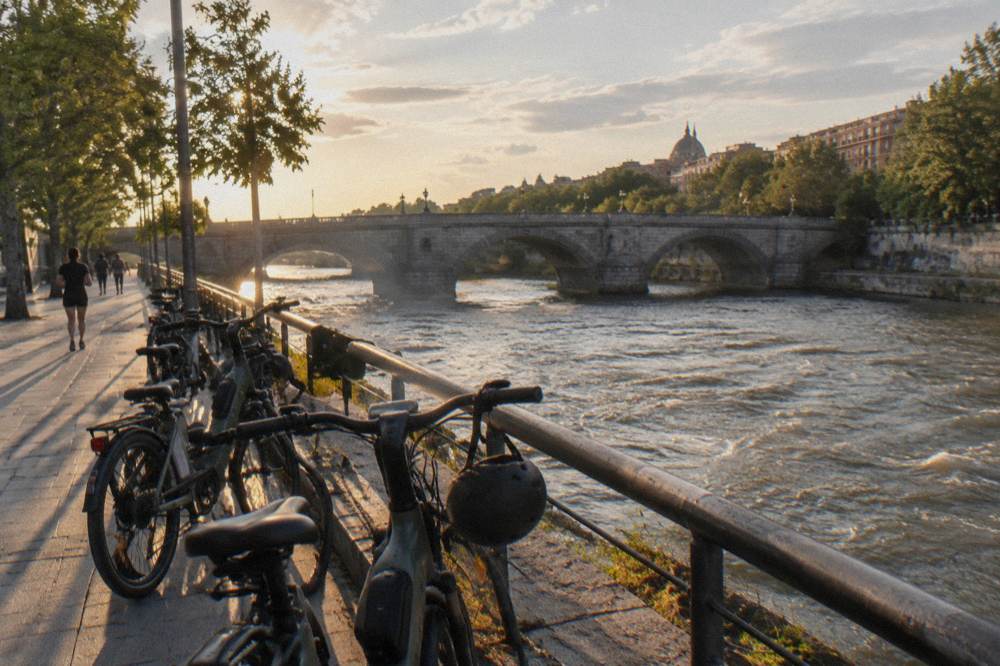
The core stops are the Manzanares riverbank paths, the modern footbridges that cross it, the Matadero Madrid cultural centre, and the transition into Casa de Campo, Madrid's largest park, where the ride moves from riverside promenade to wooded roads. Expect gardens, water views and the Royal Palace visible on the ridge above the river from several angles.
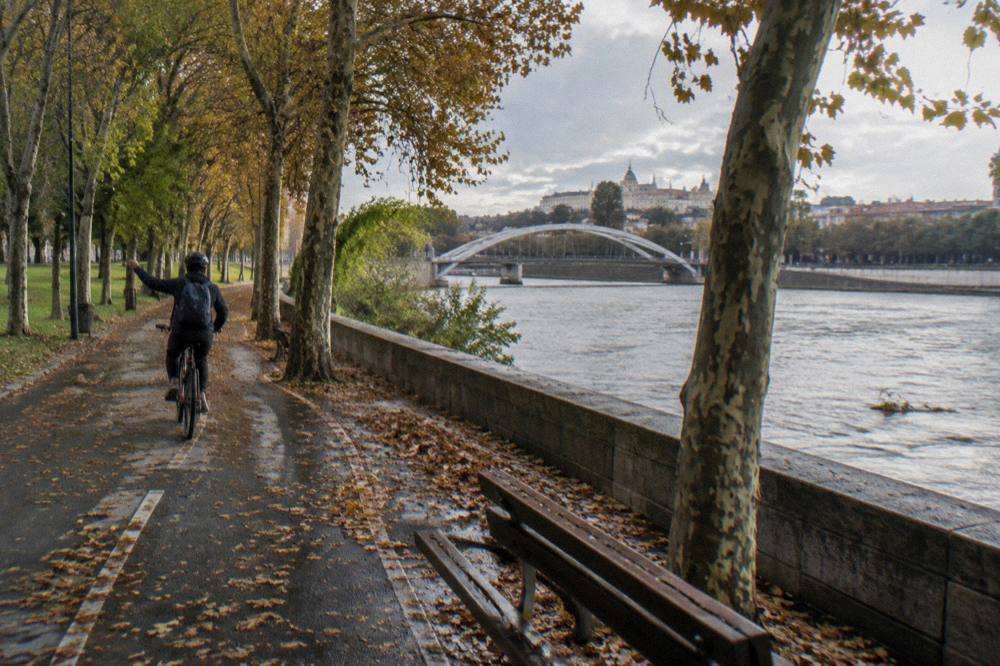
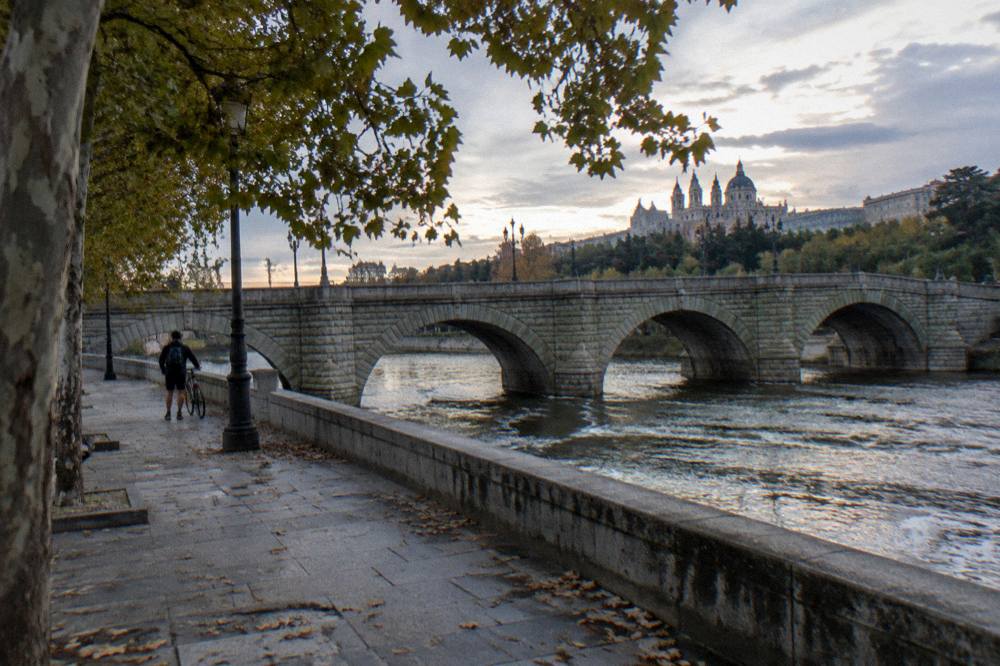
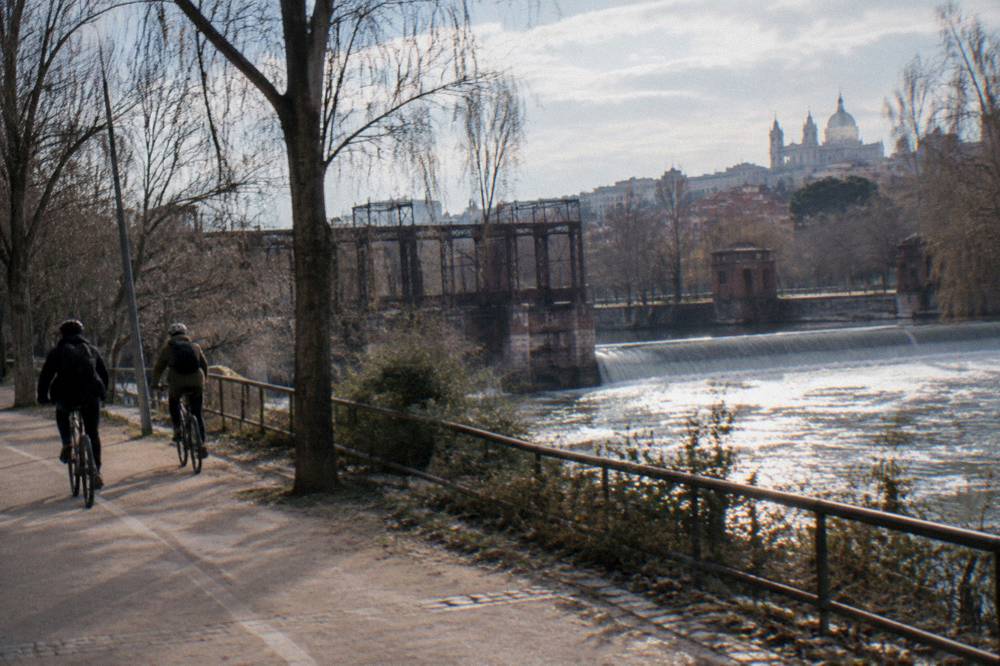
The river section is the visual heart of the ride. The paths follow the water past a chain of bridges, some historic stone, some contemporary curved steel, and the planting along the banks has matured enough to give shade through most of the corridor. Matadero Madrid, the converted slaughterhouse turned arts venue, is the landmark stop on the southern stretch and the natural pause point a guided ride uses. None of the tour lines print an interior admission or an opening hour for any of these stops, because they are public spaces ridden through, not ticketed attractions.
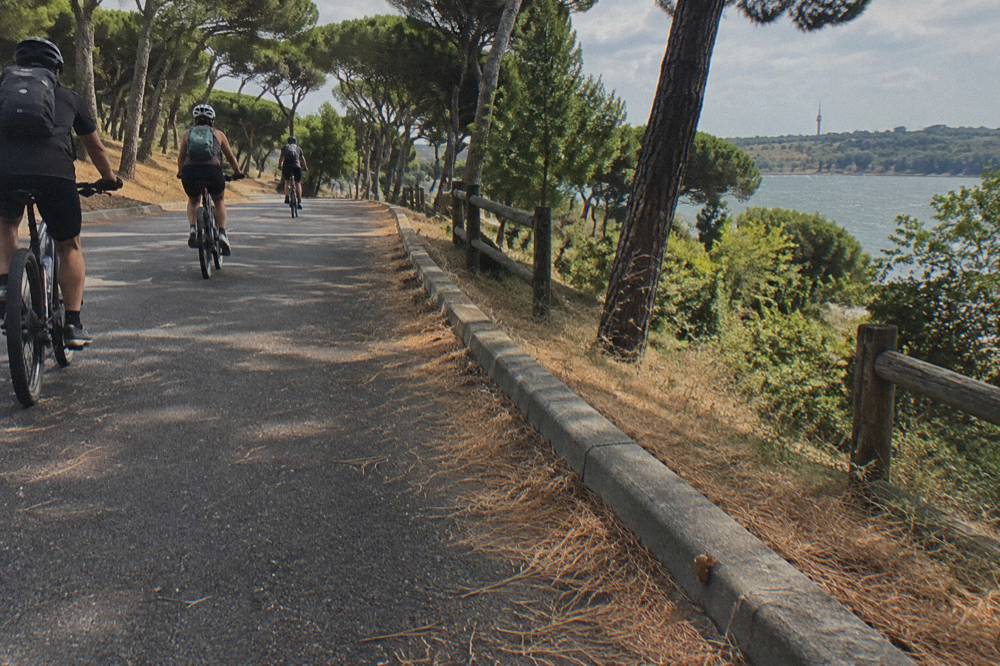
Crossing west takes you into Casa de Campo, and the character changes immediately: promenade gives way to pine and oak woodland on paved roads and wide dirt paths. The park authority's guidance for cyclists, published on esmadrid.com, sets a maximum speed of 20 km/h, prohibits cross-country riding and narrow trails, and directs bikes to the paved roads and wide dirt paths only. That is the one verified numeric limit in the area, and a guided ride stays well inside it. The lake, the cable car terminus and views back over the city and the Royal Palace are the reward for the climb.
Two practical points shape the experience. First, there is no BiciMAD docking station inside Casa de Campo, per the same esmadrid guidance, so the public hire network is not an option for the park leg; the nearest station sits at Principe Pio. Second, the parks-focused tours on this page bundle the river with either Retiro or Casa de Campo rather than riding the corridor end to end, which keeps every option inside its stated 2 to 3 hour 15 minute duration. Riders who want more can pair a river ride with the Casa de Campo bike tour guide and build a full western-Madrid day.
E-Bike Or Regular Bike For The River?
For the Madrid Río riverbank itself, a regular bike is enough: the corridor is flat. For anything that climbs into Casa de Campo, an e-bike earns its premium, and every riverside tour priced here offers either the choice of bike or an e-bike as standard, with the dedicated Casa de Campo E-Bike at from $44.00 covering the full river-and-park loop on electric power.
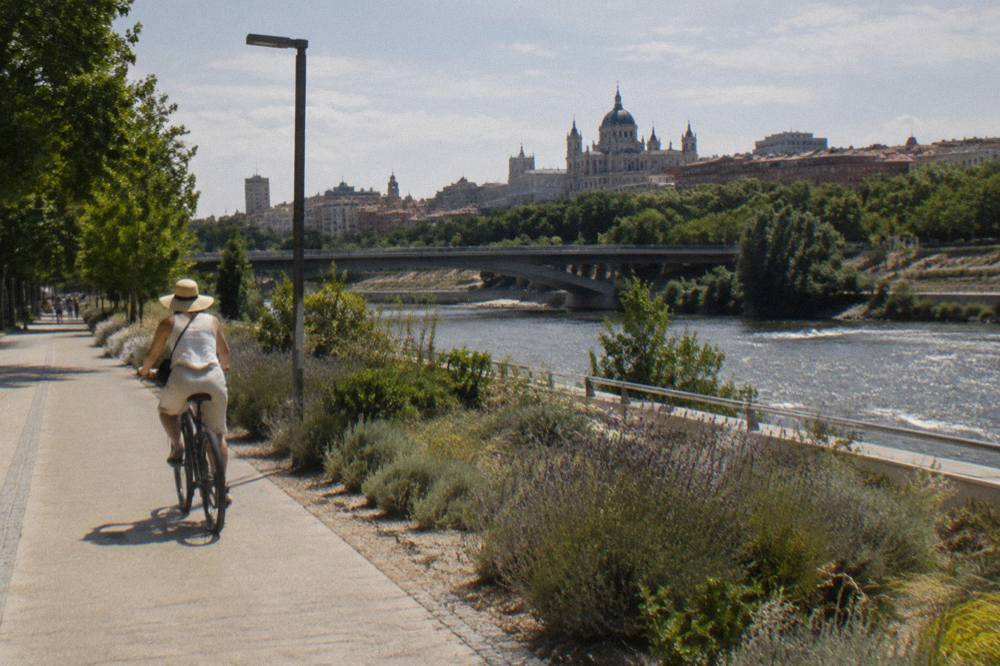
The terrain decides it. Along the Manzanares you barely notice gradient, and in summer heat a light regular bike with a breeze is genuinely pleasant. Casa de Campo is different: it rises steadily from the river, and on a 30 °C afternoon the climb from the riverbank to the lake area is where unassisted riders slow down. The Casa de Campo E-Bike exists precisely for that profile, and its 107-review pool at 4.6 suggests the format works, even if it is not the highest-scoring option on the page. The choice-based tours, the Parks and Riverside Bike Ride and the Bike or E-Bike Parks Ride, leave the decision to you on the day, which is worth having if your group splits between confident and occasional cyclists.
There is a comfort angle too. E-bikes on these tours are easier for riders in summer clothes or anyone recovering from a long walking day, and the e-bike question in Madrid is covered in more depth in the site's e-bike versus regular bike comparison. The short version for the river: take the e-bike if Casa de Campo is on the itinerary or the forecast is hot, take the regular bike if you are riding the corridor only and enjoy pedalling.
| Option | Bike offered | From price | Group cap | Best for |
|---|---|---|---|---|
| Casa de Campo E-Bike | E-bike | $44.00 | Not stated | The full river and park loop, no sweat |
| Parks and Riverside Bike Ride | Rider chooses | $40.18 | 10 | Small groups, mixed abilities |
| Bike or E-Bike Parks Ride | Rider chooses | $40.18 | 25 | Budget flexibility |
What Are The Cycling Rules Along The Manzanares?
Bikes ride on the carriageway in the centre of the lane on city streets, pavements are closed to bikes except signed bike-pavements limited to 10 km/h, and in parks the rule is slow riding with pedestrian priority. In Madrid the helmet is mandatory for riders under 18 and recommended for adults, per the city's Oficina de la Bici FAQ.
The city FAQ from the Ayuntamiento de Madrid sets out the basics that apply to any ride that leaves the park corridor for connecting streets. Bike lanes are optional unless a sign makes them mandatory; two cyclists may ride side by side in one lane unless it is risky; and the M-30 and its access ramps are closed to bikes entirely, which is why every tour reaches the river by surface streets rather than the motorway corridor above the tunnel. Headphones connected to an audio device and phone use are both prohibited. The same FAQ allows children under 12 to ride on pavements at up to 5 km/h with an adult on foot, a detail that matters to families, and the full family picture is in the Madrid bike tour with kids guide.
National rules layer on top. The consolidated Reglamento General de Circulacion caps rider blood alcohol at 0.5 g/l, requires a light or reflective element visible at 150 m at night on interurban roads, and obliges motor vehicles to keep at least 5 m behind a cyclist in the same lane. A reform announced by the DGT on 23 June 2026, in force from 1 October 2026, removed the helmet exemptions for cyclists on interurban roads, so a helmet is now required there for everyone; inside Madrid city the under-18 rule already went further than the old national text. For tour riders the practical point is simpler: the tours that state helmet provision include it, the others leave it to the booking page's gear notes, and the city's own cycling FAQ is the source to trust on any edge case.
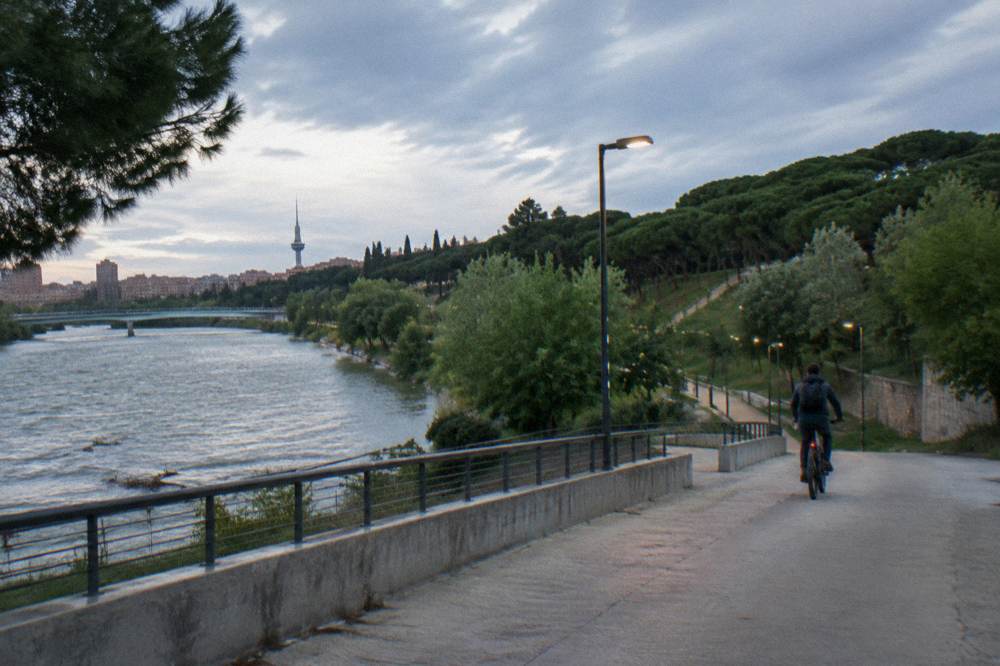
On park paths specifically, sources conflict on a single number, with the city FAQ saying paths wider than 3 m allow riding and a later order cited at 10 km/h, so the honest instruction is the one both imply: ride slowly, pedestrians first. The Casa de Campo cycling guidance confirms the 20 km/h park limit and the paved-roads-only rule, and the wider legal background is covered in the site's cycling rules in Spain guide.
When Is The Best Time Of Year To Ride Madrid Río?
May, June, September and October are the sweet spots, with means of 16.7, 22.2, 20.9 and 15.1 °C respectively. July and August average mean maximums of 32.1 and 31.3 °C with only 1.7 rain days each, hot but dry; October is the wettest month at 60 mm, and January rides at a 6.3 °C mean are cold rather than unpleasant.
The AEMET climate normals for Madrid Retiro give the planning frame. Summer heat in Madrid is a dry heat with long clear spells, 17.5 clear days in July, and a river corridor with mature shade and water alongside is one of the better places to be on a bike in those months, provided the ride is the 2-hour format rather than the 3-hour 15-minute one. Riders heading out in high summer should follow the pacing advice in the cycling in Madrid summer heat guide, and note that one tour on this page, the small-group bike or e-bike option from Moncloa, states plainly that it runs rain or shine with a rain poncho available for 2 EUR, a hint that Madrid weather is not always postcard-perfect.
Autumn is the underrated window. September still averages a 26.4 °C mean maximum but on shorter, cooler days than August, and by October the mean drops to 15.1 °C at the cost of the year's heaviest rainfall. November, at 58 mm over about 6.5 rain days, is nearly as wet. Winter riding is entirely workable: January's mean of 6.3 °C with a 9.8 °C mean maximum is jacket weather, not impossible weather, and the free-cancellation terms stated on the tours here mean a rain forecast does not lock you in. Sunset timings are not printed here because no verified source supplies them, but a late-afternoon river ride is popular enough that the site keeps a separate Madrid sunset bike tour guide for exactly that plan.
| Month | Mean C | Mean max C | Rain mm | Rain days |
|---|---|---|---|---|
| May | 16.7 | 22.2 | 50 | 7.3 |
| June | 22.2 | 28.2 | 21 | 3.4 |
| July | 25.6 | 32.1 | 12 | 1.7 |
| September | 20.9 | 26.4 | 22 | 3.3 |
| October | 15.1 | 19.4 | 60 | 6.9 |
| January | 6.3 | 9.8 | 33 | 5.7 |
Can You Ride Madrid Río Without A Guided Tour?
Yes, the corridor is public and rideable on any bike, including the BiciMAD hire fleet of 8,385 electric bikes across 683 stations, but the nearest BiciMAD dock to Casa de Campo is at Principe Pio, and a guided tour buys a route, a guide and a bike delivered to the meeting point for $40.18 to $44.00, which many visitors judge cheaper than half a day of solo logistics.
The self-guided version starts with either a rental bike or BiciMAD. The public system's basic fare is 0.50 EUR for the first 30 minutes and 0.50 EUR for the second, then 3 EUR per further 30 minutes, with a 10 EUR 30-day pass for unlimited short trips; the minimum age is 14, and a helmet is mandatory for under-18 riders on the system. Registration runs through the operator's app, and the official BiciMAD page carries the current fares and rules. One trap to plan around: the Tourist Travel Pass that covers Madrid's metro and buses does not include BiciMAD, so do not budget it as part of that card.
Getting a non-BiciMAD bike to the river is its own question. EMT city buses carry only a folded bike of hand-luggage size, one per bus, and Renfe treats folding bikes as free hand luggage up to 180 cm folded, which makes a folding bike the practical answer for anyone arriving by train. What you lose without a guide is the narrative and the curation: which bridge matters, why Matadero exists, where the good Casa de Campo climb starts and where it should not. For a first visit, the two-hour Casa de Campo E-Bike or the small-group Parks and Riverside Bike Ride cover in one loop what a solo rider spends half a day assembling. The site's wider Madrid bike rental guide handles the independent route in detail.
What Should You Bring On A Riverside Ride?
Bring water, sun protection and comfortable shoes, and check the weather the morning of the ride. Most tours here include the bike and a guide; bottled water and food are not mentioned as included on these booking pages, one option lists drinks and lunch as exclusions, and rain gear is worth packing from October onwards, when the city averages 60 mm of rain in the month.
Go option by option, because the inclusions differ. The Casa de Campo E-Bike line states the e-bike and guide with hotel pickup available as an option. The Parks and Riverside Bike Ride states bike, helmet, guide and the choice of bike type, with transport and insurance listed as not included. The Bike or E-Bike Parks Ride states bike, helmet and guide, with drinks, lunch and hotel pickup excluded. None of the river options states a meal; the only tour on the wider list that includes lunch is a 5-hour food-focused e-bike ride from $102.17, which is a different plan for a different day. The full packing logic, including what to wear by season, is in the what to bring on a Madrid bike tour guide.
Summer riders should double down on water and shade breaks: July averages 355 hours of sunshine in the month, and a 3-hour 15-minute ride in that light is a different undertaking from the 2-hour version. Winter riders need layers and lights for the ride home; national rules require a light or reflective element visible at 150 m at night on interurban roads, and city rules require front white and rear red lights after dark, so a phone torch does not qualify for the ride back to a hotel.
| Item | Why | Season |
|---|---|---|
| Water bottle | Food and drink excluded on the river options | All year, twice in summer |
| Sunscreen and cap | July mean maximum 32.1 °C, high UV on open riverbank | April to September |
| Light rain layer | October 60 mm and November 58 mm averages | October to November |
| Layers and lights | January mean 6.3 °C, night lighting rules apply | November to March |
How Does Madrid Río Compare With Retiro For Cycling?
Madrid Río offers a long, flat, modern riverside corridor beside Casa de Campo; Retiro offers a compact, classic garden park in the city centre with its own monuments and lake. The riverside options run $40.18 to $44.00 from-price; the Retiro semi-private e-bike runs from $44.77 with a group cap of 8, rated 4.1 across 28 reviews. Since the riverside route runs right beside the park, our Casa de Campo cycling and lake guide explains how to extend your ride into it.
They are different products. Retiro is dense, shaded and ornamental, a park built for strolling that tolerates bikes on its wider paths under the slow-riding, pedestrian-first rules described above. Madrid Río is linear infrastructure turned landscape, longer sightlines, bridges and river, better for the feeling of covering ground, and it connects into Casa de Campo for a genuinely wooded leg that Retiro cannot match. Families with young children often prefer Retiro's scale; riders who want distance and variety prefer the river. If Retiro's calmer, pedestrian-first character suits your group better, our guide to cycling in Retiro Park covers the exact rules and the guided tours that ride there.
The Retiro semi-private e-bike listed above is the east-side comparator: 2 hours, e-bike, helmet and guide included, from $44.77, capped at 8 riders, meeting at Calle de Santiago, 18. Its 4.1 across 28 reviews is the lowest rating on this page, which is worth knowing rather than hiding, but the sample is small and the format, a small group on an easy route, is exactly what many casual riders want. The deeper comparison of the two parks, and whether a guided format helps in each, is covered in the are bike tours worth it in Madrid piece and the site's overview of Madrid Bike Tours options as a whole.
| Factor | Madrid Río | Retiro |
|---|---|---|
| Terrain | Flat corridor, climb into Casa de Campo | Flat garden park |
| Character | Modern riverside, bridges, woodland link | Classic ornamental park, lake |
| Tour from-price | $40.18 to $44.00 | $44.77 semi-private e-bike |
| Typical tour length | 2 to 3 hours 15 minutes | 2 hours |
Common Questions About Madrid Río Bike Rides
Can You Cycle Along Madrid Río?
Yes. The riverside park is public and open to bikes on its paths, under the city's slow-riding, pedestrian-first park rules, and several guided tours ride it as part of their route, including the Casa de Campo E-Bike and the Parks and Riverside Bike Ride.
How Long Does A Madrid Río Bike Ride Take?
The guided options that include the river run 2 hours for the Casa de Campo E-Bike and the Bike or E-Bike Parks Ride, and 3 hours 15 minutes for the Parks and Riverside Bike Ride. No verified distance figure exists for the corridor itself.
Is Madrid Río Flat Enough For A Regular Bike?
The riverbank itself is flat and easy on any bike. The climb into Casa de Campo is the only real gradient on these routes, which is why the dedicated river-and-park tour uses e-bikes and the choice-based options let you decide on the day.
Do You Need A Helmet On A Madrid Río Ride?
Madrid city rules make helmets mandatory for riders under 18 and recommend them for adults. Several tours on this page state a helmet is included; for the others, check the gear notes on the booking page.
Can You Use BiciMAD To Ride Madrid Río?
Yes, BiciMAD bikes can be ridden in the corridor and in Casa de Campo, but there is no docking station inside the park; the nearest is at Principe Pio. Basic fares are 0.50 EUR for each of the first two 30-minute blocks, then 3 EUR per further 30 minutes.
What Is The Best Time Of Day To Ride The River?
Morning or late afternoon in summer, when July averages a 32.1 °C mean maximum, and midday is fine from October to April. No verified sunrise or sunset times are published here, so check the forecast for your date.